How to Align Your LinkedIn Profile, Resume, and Cover Letter for Better Job Opportunities
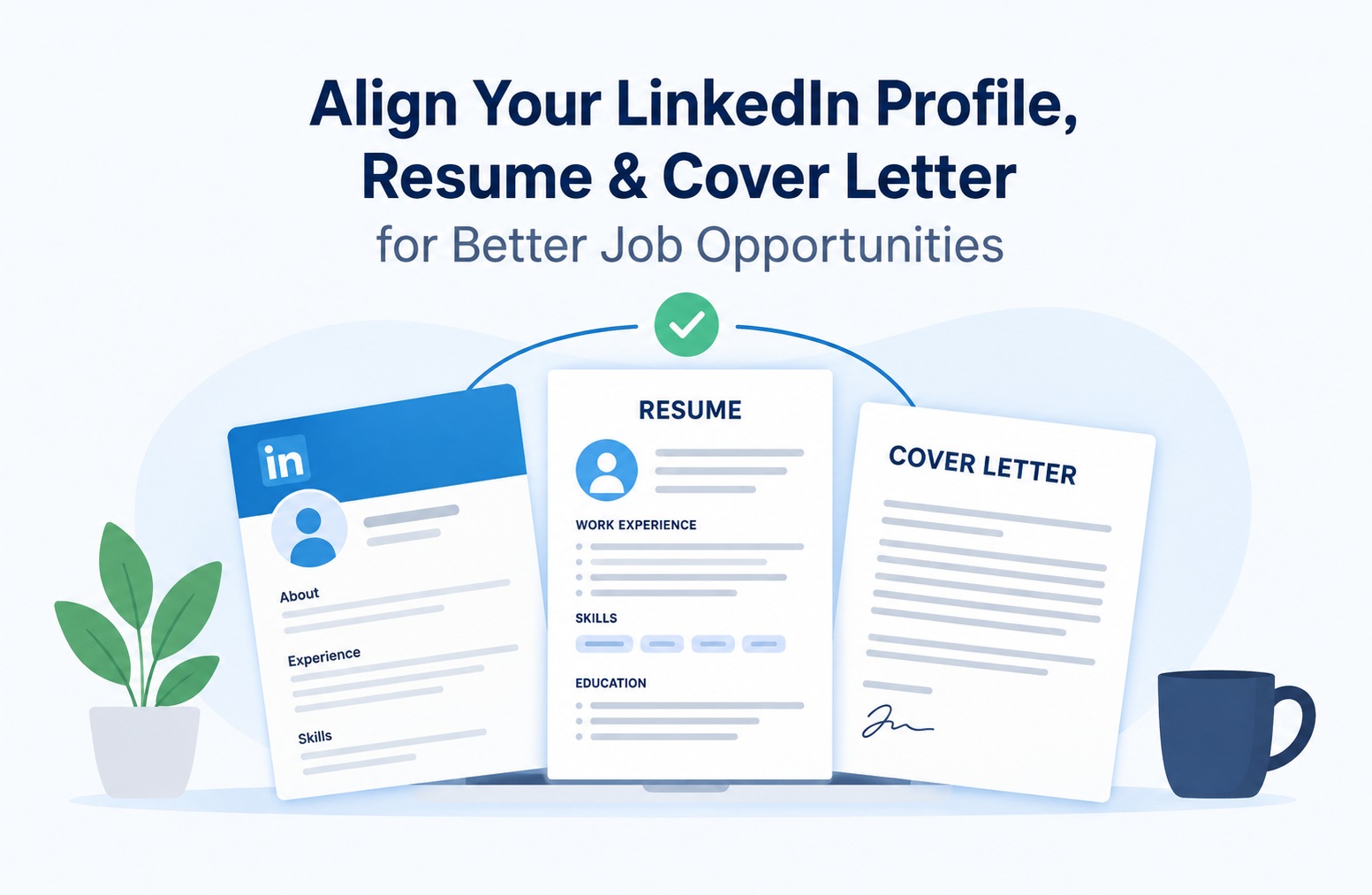
Finding a job involves more than having the right qualifications. Employers want to understand your experience, skills, achievements, and career goals before deciding whether you are a suitable candidate. Your resume, LinkedIn profile, and cover letter each help communicate this information, but they should tell a consistent professional story.
When these three elements work together, recruiters can better understand your value and how you fit a particular role. From LinkedIn profile optimization to choosing the right cover letter examples, a consistent approach can help you present yourself more effectively during your job search.
1. Start With a Clear Career Goal
Before updating your resume or LinkedIn profile, identify the type of role you want to pursue. Your career goal should guide the information you highlight across all three documents.
For example, if you are applying for digital marketing positions, emphasize relevant experience in SEO, content strategy, campaign management, analytics, or paid advertising.
Review job descriptions for your target positions and identify recurring skills, responsibilities, and qualifications. Use these insights to decide which achievements and experiences deserve the most attention.
A clear career direction helps you avoid presenting yourself as a generalist when an employer is looking for a specific skill set.
2. Focus on LinkedIn Profile Optimization
Your LinkedIn profile gives recruiters an overview of your professional background and allows them to explore your experience beyond a traditional resume.
Effective LinkedIn profile optimization starts with your headline, About section, experience, and skills.
Your headline should communicate your professional role and key areas of expertise. Instead of using only a job title, include relevant specializations that reflect your career goals.
In the About section, summarize your experience, strengths, and professional interests. Use a natural tone and highlight achievements that demonstrate your capabilities.
Your Experience section should also support the same professional direction as your resume. Make sure your job titles, employment dates, and major responsibilities are consistent across both.
You can also include relevant projects, certifications, and recommendations to provide additional context for recruiters.
3. Build a Resume That Highlights Relevant Achievements
Your resume should provide a concise, targeted summary of your qualifications. Unlike LinkedIn, which can include a broader professional history, a resume should prioritize the information most relevant to the specific job.
Start with a professional summary that reflects the role you are applying for. Follow it with relevant work experience, skills, education, and certifications.
Whenever possible, describe achievements rather than listing responsibilities.
For example, instead of writing, “Responsible for managing social media accounts,” you could write, “Managed social media campaigns across three platforms and improved audience engagement by 25%.”
Only include measurable results that you can substantiate.
Use a clean format, consistent headings, and readable fonts. You should also incorporate relevant keywords from the job description naturally, without stuffing the document with phrases that do not reflect your experience.
4. Use Cover Letter Examples as a Starting Point
A cover letter gives you an opportunity to explain why you are interested in a particular position and how your experience relates to the employer’s needs.
Reviewing cover letter examples can help you understand how to structure your introduction, highlight relevant achievements, and close with a clear expression of interest.
However, avoid copying a template word for word. A generic letter may fail to explain why you are a suitable candidate for the specific role.
A strong cover letter should include three main elements:
- A relevant introduction: Mention the position and briefly explain your interest.
- Evidence of your skills: Highlight one or two achievements that relate directly to the job requirements.
- A clear closing: Express your interest in discussing how you could contribute to the organization.
For example, if a job requires content marketing experience, describe a relevant project or result rather than repeating every skill listed on your resume.
Your cover letter should add context to your application, not simply restate your professional history.
5. Keep Your Information Consistent Across All Three
Consistency is essential when presenting yourself to potential employers. Your LinkedIn profile, resume, and cover letter should reinforce the same professional identity.
Review the following details before applying:
- Job titles, company names, and employment dates.
- Key responsibilities and achievements.
- Technical skills, certifications, and qualifications.
- Career focus and professional specialization.
- Contact information and relevant portfolio links.
Consistency does not mean copying the same content everywhere. Your resume should be tailored to the position, your LinkedIn profile can provide a broader overview, and your cover letter should explain your fit for that specific opportunity.
The goal is to ensure that all three documents support the same story without unnecessary repetition.
6. Customize Your Application for Every Role
Sending the same resume and cover letter to every employer can make it harder to demonstrate your suitability for different positions.
Before applying, review the job description and identify the employer’s main requirements. Adjust your resume to prioritize relevant skills and achievements, and customize your cover letter to explain how your experience addresses the organization’s needs.
You can also refine your LinkedIn profile over time to reflect your broader career direction.
For example, a marketing professional applying for an SEO role might emphasize keyword research, technical SEO, organic growth, and analytics. Someone pursuing a content strategy position might highlight editorial planning, audience research, and content performance instead.
These adjustments help recruiters identify the most relevant parts of your experience.
7. Review and Update Your Professional Materials Regularly
Your professional materials should evolve as your career develops. New projects, certifications, responsibilities, and achievements may change how you want to position yourself.
Review your resume and LinkedIn profile every few months, or whenever you gain significant experience. Update your cover letter for each application rather than relying on an old version.
Before submitting an application, check for spelling errors, outdated details, inconsistent dates, and formatting issues. Ensure that your resume is easy to read and your LinkedIn profile reflects your current professional goals.
Conclusion
Your LinkedIn profile, resume, and cover letter serve different purposes, but they should work together to communicate your strengths and career direction.
Through thoughtful LinkedIn profile optimization, a targeted resume, and relevant cover letter examples, you can create a more consistent and compelling professional presentation.
Start by defining your career goals, highlighting relevant achievements, and customizing your materials for each opportunity. A coordinated approach will not guarantee an interview, but it can help recruiters understand your qualifications and evaluate your fit more clearly.