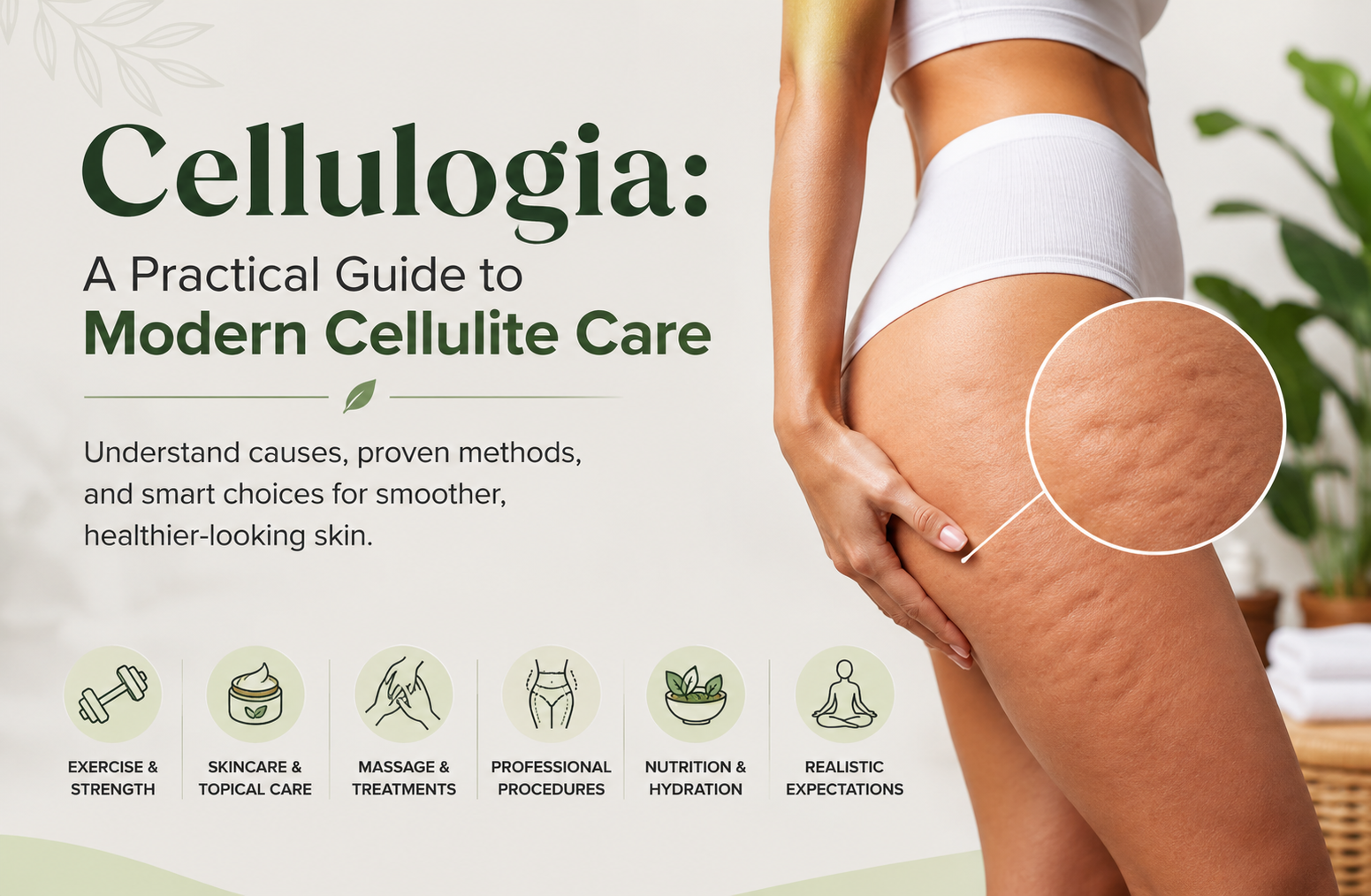
Cellulogia: A Practical Guide to Modern Cellulite Care
Cellulogia is a term increasingly used online to describe the understanding and management of cellulite, skin texture, and body care. The important point is that cellulogia is not an officially recognized medical specialty or diagnosis. Instead, it is generally used as a broad wellness and beauty concept that brings together skincare, exercise, massage, lifestyle habits, and professional cosmetic treatments aimed at making cellulite less noticeable.
That distinction matters because cellulite is often surrounded by exaggerated promises. Creams, supplements, massage devices, body treatments, and cosmetic procedures are frequently marketed as if they can permanently remove cellulite. In reality, cellulite is a structural feature involving skin, connective tissue, and underlying fat. Some approaches can improve its appearance, sometimes substantially, but results vary and maintenance may be necessary.
This guide explains what cellulogia means, why cellulite develops, what approaches have credible evidence behind them, which popular claims deserve caution, and how to build a sensible approach without wasting money on unrealistic promises.
What Is Cellulogia?
Cellulogia does not have one universally accepted scientific definition. Online, the word is generally associated with a holistic approach to cellulite and skin texture.
The concept may include:
- Understanding the structure of cellulite
- Improving overall skin health
- Strength training and physical activity
- Weight management where appropriate
- Topical skincare
- Massage and mechanical treatments
- Professional cosmetic procedures
- Healthy nutrition and hydration
- Realistic expectations about appearance
- Body confidence and acceptance
Some websites present cellulogia as a wellness philosophy, while others use it to describe particular beauty treatments or anti-cellulite routines. Because the term is not standardized, consumers should pay attention to the actual method being offered rather than assuming that the name itself proves a treatment is medically established.
This is one of the most useful ways to approach cellulogia: evaluate the individual treatment, ingredient, device, or habit rather than the label itself.
Why Cellulogia Has Become Popular
The popularity of cellulogia reflects a larger change in how people approach cosmetic concerns.
For years, cellulite was commonly described as something that needed to be eliminated. That created an enormous market for quick fixes. People were promised that a particular cream, diet, massage technique, or supplement could completely transform their skin.
Modern discussions are becoming more realistic.
People increasingly want to know:
- What actually causes cellulite?
- Can exercise make a difference?
- Do cellulite creams work?
- Are massage treatments temporary?
- Which professional treatments have research behind them?
- Is cellulite related to body weight?
- How much improvement is realistic?
- How can someone avoid wasting money?
Cellulogia fits into this broader conversation because it encourages people to look at cellulite from several angles instead of assuming that one product is the answer.
That is a more useful mindset because cellulite is not caused by one single factor.
Understanding What Causes Cellulite
To understand cellulogia properly, it helps to understand cellulite itself.
Cellulite occurs when the structures beneath the skin create an uneven surface. Fat sits beneath the skin, while connective tissue helps anchor the skin to deeper structures. The interaction between these tissues can create areas that appear raised and areas that look depressed.
The result is the familiar dimpled or uneven appearance.
Cellulite commonly appears on:
- Thighs
- Buttocks
- Hips
- Abdomen
- Upper arms in some people
Importantly, cellulite is not simply a sign of having excess body fat.
A person can be lean, physically active, and healthy while still having visible cellulite. Genetics, skin structure, connective tissue arrangement, age, hormonal influences, and body composition can all affect how noticeable it becomes.
This is why telling someone to simply “lose weight” is an incomplete answer.
Cellulite Is Not the Same as Fat
One of the biggest misunderstandings surrounding cellulite is the belief that cellulite is simply fat that needs to be removed.
That is not accurate.
Fat reduction and cellulite improvement are separate goals.
A treatment that reduces fat does not automatically correct the connective tissue structures responsible for dimpling.
This distinction can prevent people from spending money on the wrong type of procedure.
Cellulogia and the Role of Genetics
Genetics can strongly influence how visible cellulite becomes.
Genes can affect characteristics such as:
- Fat distribution
- Skin structure
- Connective tissue organization
- Metabolism
- Circulation
- Body shape
This explains why two people with similar body weights and similar lifestyles can have very different levels of visible cellulite.
It also explains why comparing your skin with someone else’s is rarely useful.
A routine that appears to work dramatically for one person may produce only modest results for another.
Does Age Affect Cellulite?
Age can also influence the appearance of cellulite.
As skin ages, changes can occur in collagen, elasticity, thickness, and overall tissue structure. When the skin becomes less firm, underlying irregularities may become easier to see.
This does not mean cellulite is inevitable with age, nor does it mean younger people cannot have it. It simply means that skin structure changes over time and can influence visibility.
For that reason, a realistic cellulogia approach should consider both the cellulite itself and the quality of the surrounding skin.
Can Exercise Improve Cellulite?
Exercise cannot guarantee that cellulite will disappear, but it can improve the overall appearance of the affected area.
Strength training is particularly useful because increasing muscle development can make the body look firmer and more defined.
Useful forms of activity can include:
- Squats
- Lunges
- Step-ups
- Glute bridges
- Resistance-band exercises
- Leg presses
- Regular walking
- Cycling
- Swimming
- General cardiovascular activity
The goal should not be to punish the body in an attempt to erase cellulite.
A better objective is to improve muscle strength, physical fitness, body composition, and overall health.
There is no magic movement that selectively removes cellulite.
Why Strength Training Makes Sense
Consider two surfaces with the same amount of fat underneath them.
The visual appearance can differ depending on the muscle and tissue structure beneath the skin.
Building muscle may create a firmer foundation and improve body contour. It does not necessarily eliminate the connective tissue features associated with cellulite, but it can change how the area looks.
This is why consistency matters more than chasing a special “cellulite exercise.”
The Role of Nutrition
Nutrition deserves a careful explanation because the internet often turns cellulite into a diet problem.
There is no scientifically established food that can simply eliminate cellulite.
However, a balanced diet supports general health, healthy body composition, and normal skin function.
A practical eating pattern can emphasize:
- Vegetables
- Fruits
- Whole grains
- Beans and legumes
- Lean protein sources
- Nuts and seeds
- Healthy sources of dietary fat
- Adequate fluids
Instead of following an extreme “anti-cellulite diet,” focus on sustainable nutrition.
Extreme restriction can be difficult to maintain and may distract from the factors that actually influence the appearance of cellulite.
Hydration and Skin Appearance
Adequate hydration is important for normal body function and skin health.
However, it is misleading to claim that drinking large amounts of water will dissolve cellulite.
Hydration should be viewed as part of healthy living rather than a cellulite cure.
If someone promises that a particular amount of water will permanently remove cellulite, that is a warning sign.
Do Cellulite Creams Work?
Topical products are among the most heavily marketed cellulite solutions.
Some ingredients may produce modest improvements in appearance, but expectations should remain realistic.
Caffeine-containing products and certain retinol-based products are commonly discussed as topical options that may make cellulite less noticeable. Retinol may require many months of consistent use before an effect becomes noticeable.
This illustrates an important principle.
A product can have a measurable cosmetic effect without being a permanent solution.
Caffeine-Based Products
Caffeine is commonly used in cellulite creams.
It may temporarily make the appearance of cellulite less noticeable, partly through effects on the skin and fluid balance. However, regular application is generally necessary to maintain cosmetic results.
Consumers should therefore judge a product by realistic expectations rather than advertising language.
Retinol Products
Retinol has a different rationale.
Topical retinol can support changes in skin structure and may help make cellulite less apparent by improving skin thickness over time.
But it is not an overnight treatment.
If someone chooses a retinol body product, they should follow the manufacturer’s directions and introduce it carefully because irritation can occur.
People with sensitive skin should be particularly cautious.
What About Massage?
Massage is frequently included in cellulogia routines.
Mechanical massage, rollers, vacuum-based treatments, and similar techniques may temporarily improve the appearance of cellulite.
The reason is not necessarily that massage “breaks up fat.”
Massage can influence fluid movement and temporarily change the appearance of the tissue. Some professional devices combine massage with other technologies.
Certain mechanical approaches are used for temporary improvement in the appearance of cellulite, while possible side effects can include discomfort and bruising.
This is a good example of why the word “temporary” matters.
If a treatment produces a temporary improvement, that does not make it useless. It simply means the expected result should be understood correctly.
Professional Treatments and Cellulogia
Professional cellulite treatments generally fall into several categories.
These may include:
- Acoustic wave therapy
- Radiofrequency treatments
- Certain laser procedures
- Subcision
- Vacuum-assisted tissue release
- Mechanical massage systems
- Selected injectable or minimally invasive procedures
Their effectiveness varies considerably.
A professional treatment should therefore be evaluated according to its actual technology, evidence, provider qualifications, possible complications, expected duration of results, and total cost.
Acoustic Wave Therapy
Acoustic wave therapy uses sound-wave energy applied to the affected area.
Research has found that multiple treatment sessions can reduce the appearance of cellulite in some patients. It is generally considered a treatment for appearance rather than a way to eliminate cellulite permanently.
If considering this option, ask how many sessions are normally recommended and how the provider measures improvement.
Radiofrequency
Radiofrequency uses energy to heat tissue.
Some systems combine radiofrequency with other technologies such as massage or suction. The intended effects can include temporary improvements in skin tightness and cellulite appearance.
However, radiofrequency is not risk-free.
Depending on the device and treatment method, possible complications can include pain, redness, swelling, bruising, burns, changes in skin color, or other tissue reactions.
This is why professional evaluation matters.
Laser Treatments
Certain laser treatments are designed to address the structures beneath cellulite.
Some minimally invasive laser approaches use energy beneath the skin to affect fibrous bands and may also influence skin thickness.
The evidence varies by technology, and not every laser marketed for body contouring should be assumed to provide the same result.
The device, indication, provider, and published evidence all matter.
Subcision
Subcision is a procedure in which a medical professional releases fibrous bands beneath the skin that contribute to visible dimples.
This approach directly targets one of the structural components involved in cellulite.
Some studies of subcision have demonstrated reductions in cellulite dimpling and that some results can persist for years.
Because this is a medical procedure, it should not be treated like an ordinary spa service.
What Cellulogia Should Not Promise
A trustworthy cellulogia approach should never depend on unrealistic promises.
Be cautious when you see claims such as:
- “100% permanent cellulite removal”
- “Cellulite disappears in seven days”
- “One cream destroys cellulite”
- “Detoxes remove cellulite”
- “A supplement melts cellulite”
- “Massage permanently breaks down cellulite”
- “You only have cellulite because you are overweight”
- “This treatment works for everyone”
The problem is not simply that these statements may be exaggerated.
They can lead people toward unnecessary spending, unsafe practices, or unhealthy relationships with their bodies.
Good information acknowledges limitations.
Supplements and Cellulite
Supplements are another area where marketing often gets ahead of evidence.
Products may contain ingredients such as caffeine, botanical extracts, vitamins, minerals, or other compounds.
But the presence of a “natural” ingredient does not establish that the supplement can treat cellulite.
There is not strong evidence that dietary supplements can reliably reduce cellulite.
This is an important consumer lesson: a supplement should not be treated as an evidence-based cellulite treatment simply because its ingredients sound beneficial.
Cellulogia and Body Confidence
There is another part of the conversation that deserves attention.
Cellulite is extremely common, yet beauty marketing has historically presented completely smooth skin as the normal standard.
That creates an unrealistic comparison.
A person can want to reduce the appearance of cellulite while also recognizing that cellulite is not a personal failure.
Both ideas can exist together.
Cosmetic care is a personal choice. It becomes problematic when people are made to believe that a normal physical characteristic makes them unhealthy, unattractive, or inadequate.
A healthier approach is to focus on informed choice.
If you want improvement, investigate credible options.
If you are comfortable with your cellulite, there is nothing medically wrong with choosing not to treat it.
How to Build a Practical Cellulogia Routine
A sensible routine does not need to contain ten products and several expensive procedures.
Start with the basics.
Step 1: Define Your Actual Goal
Ask yourself what you want to change.
Do you want:
- Smoother-looking skin?
- Firmer-looking thighs?
- Better muscle definition?
- A temporary improvement for an event?
- A longer-lasting cosmetic result?
- Better overall fitness?
The answer affects which options make sense.
Step 2: Establish Healthy Basics
Before investing in expensive treatments, build a foundation around:
- Regular physical activity
- Strength training
- Balanced nutrition
- Adequate hydration
- Consistent skincare
- Sufficient sleep
- Sustainable body-weight habits where appropriate
These habits support overall health even if cellulite remains visible.
Step 3: Add Topical Care If You Want It
A body lotion containing ingredients with some evidence can be considered.
However, give the product enough time to demonstrate whether it helps.
Take consistent photographs under similar lighting if you want to compare changes objectively.
This is much more reliable than checking your skin several times a day.
Step 4: Consider Professional Treatment Only After Research
If cellulite remains a major concern, investigate professional options.
Do not choose a treatment solely because of its brand name.
Ask:
- What technology is being used?
- What exactly is it designed to change?
- What evidence supports it?
- How many treatments are normally required?
- How long do results typically last?
- What are the common side effects?
- Who performs the procedure?
- What happens if the result is disappointing?
These questions can reveal the difference between professional care and aggressive marketing.
How to Compare Cellulogia Treatments
A simple comparison framework can make decisions easier.
| Approach | Main purpose | Typical expectation |
| Strength training | Improve muscle tone and body composition | Gradual visual improvement |
| Balanced nutrition | Support health and body composition | Indirect benefit |
| Topical caffeine | Temporary cosmetic improvement | Requires ongoing use |
| Topical retinol | Support skin structure | Gradual improvement |
| Massage | Temporary texture improvement | Often requires repeat sessions |
| Acoustic wave therapy | Reduce visible cellulite | Multiple sessions may be needed |
| Radiofrequency | Skin tightening and cellulite appearance | Often temporary or modest |
| Subcision | Release fibrous bands | Potentially longer-lasting improvement |
| Laser-based treatment | Address tissue beneath dimpling | Depends on technology and patient |
The key takeaway is that these options do not all work in the same way.
Comparing them simply by asking “Which one removes cellulite?” misses the point.
When You Should Talk to a Dermatologist
A dermatologist can help determine whether a cosmetic treatment is appropriate and what kind of result is realistic.
Professional assessment is especially useful when:
- You are considering an invasive procedure
- You have unexplained changes in the skin
- A treatment causes persistent pain
- You develop significant swelling or skin changes
- You are unsure whether a treatment is appropriate
- A provider is making unusually strong medical claims
Professional guidance can be especially important because the safety and effectiveness of cosmetic procedures depend heavily on the treatment and the experience of the person performing it.
Common Mistakes People Make
Understanding what not to do can be just as valuable as knowing what to try.
Expecting Permanent Results From Temporary Treatments
If a treatment temporarily changes fluid movement or skin appearance, the effect may fade.
That does not necessarily mean the treatment failed.
It means the mechanism and expected duration were different from a permanent structural correction.
Spending Money Before Understanding the Technology
A fancy treatment name is not enough.
Find out what the device or procedure actually does.
Confusing Fat Reduction With Cellulite Reduction
Reducing fat does not automatically remove cellulite.
This distinction should be part of every consultation.
Using Too Many Products
More products do not automatically mean better results.
A complicated routine can increase irritation and make it difficult to determine what is actually helping.
Trusting Before-and-After Photos Without Context
Before-and-after images can be useful, but lighting, camera angle, posture, hydration, muscle contraction, and image editing can change the appearance of skin.
Ideally, evaluate results under similar conditions.
How to Judge a Cellulogia Claim
Whenever you encounter a new product or treatment, use a simple evidence filter.
Claim
What exactly is the company promising?
Mechanism
How is the treatment supposed to work?
Evidence
Are there credible human studies supporting the claim?
Duration
How long are the results expected to last?
Risk
What are the possible side effects?
Provider
Who is qualified to perform the procedure?
Cost
How much will the complete course cost rather than a single session?
This framework is useful far beyond cellulite.
It is a general method for evaluating cosmetic health claims.
Is Cellulogia a Medical Treatment?
Not by itself.
The term cellulogia is better understood as an informal umbrella concept used in beauty and wellness discussions.
Individual treatments discussed under that umbrella may have medical or cosmetic applications, but the label itself does not establish that a particular method is clinically proven.
This distinction is especially important online because scientific-sounding terminology can create an impression of authority.
Always investigate the underlying treatment.
The Future of Cellulogia
The future of cellulite care is likely to involve increasingly targeted approaches rather than one universal solution.
Researchers and clinicians continue to study how skin thickness, connective tissue, fat compartments, and tissue architecture contribute to visible cellulite.
Technology may improve the ability to target specific structures.
At the same time, consumers are becoming more skeptical of miracle claims.
That combination could lead to a healthier beauty market.
Instead of asking whether a product “destroys cellulite,” people may increasingly ask:
- What does it actually change?
- How strong is the evidence?
- How long do results last?
- What are the risks?
- Is the improvement worth the cost?
Those are much better questions.
FAQs About Cellulogia
What does cellulogia mean?
Cellulogia is an informal beauty and wellness term generally associated with understanding and managing cellulite and uneven skin texture. It is not an officially recognized medical specialty.
Is cellulogia a medical treatment?
No. Cellulogia itself is not a standardized medical treatment. The term may describe a broad collection of skincare, lifestyle, massage, and cosmetic approaches.
Can cellulogia permanently remove cellulite?
There is no universal cellulite treatment that guarantees permanent removal. Some professional procedures can produce longer-lasting improvements, while other methods provide temporary cosmetic changes.
Does exercise reduce cellulite?
Exercise can make cellulite less noticeable for some people by improving muscle tone, body composition, and overall firmness. It does not guarantee complete removal.
Do cellulite creams work?
Some topical products may modestly improve the appearance of cellulite. Evidence varies by ingredient. Caffeine-containing products and certain retinol-based products are examples of topical approaches that may provide cosmetic benefit, but results are not guaranteed.
Are cellulite supplements effective?
There is not good evidence that dietary supplements can reduce cellulite. Be especially cautious with products promising rapid or permanent results.
Conclusion
Cellulogia is best understood as a broad, informal approach to cellulite care rather than a formally recognized medical discipline. Its value comes from encouraging a more complete understanding of why cellulite appears and why different approaches produce different results.
The most important lesson is that cellulite is not simply excess fat. Skin structure, connective tissue, genetics, age, and body composition all contribute to its appearance. That is why a sensible strategy focuses on realistic improvement rather than promising complete elimination.
Exercise and healthy lifestyle habits can support firmer-looking skin and overall body composition. Certain topical ingredients may offer modest cosmetic benefits with consistent use. Massage and some non-invasive technologies can temporarily improve appearance, while selected professional procedures can produce more substantial or longer-lasting changes.
The smartest approach is therefore not to chase the newest product with the strongest marketing claim. It is to understand the problem, identify the result you actually want, evaluate the evidence behind each option, consider risks and costs, and maintain realistic expectations.
Most importantly, improving the appearance of cellulite should remain a personal choice, not a requirement for feeling healthy or confident.