Choosing Tooth Replacement Options in Naples, Florida: Implants, Bridges, and Dentures
Key Takeaways
- Tooth replacement options include dental implants, crowns, bridges, partial dentures, complete dentures, and implant-supported restorations.
- The most suitable treatment depends on gum health, jawbone support, remaining teeth, bite alignment, medical history, and personal goals.
- Dental implants may provide independent support for replacement teeth, while bridges and dentures offer alternatives for patients with different needs.
- Patients missing several teeth or an entire arch may consider implant-supported bridges, overdentures, or fixed full-arch restorations.
- Treatment costs, healing time, potential risks, and long-term maintenance should be considered alongside the initial price.
- A thorough consultation can determine whether an existing tooth can be saved and whether preparatory procedures are necessary.
- Requesting a written treatment plan and comparing alternatives can help Naples patients make informed decisions about comfort, function, budget, and long-term oral health.
Missing teeth can change everyday routines, from enjoying a meal along the Naples waterfront to speaking confidently with friends, family, and colleagues. The right solution depends on far more than filling a visible space. When considering tooth replacement options with dental implants, it is helpful to assess the condition of your gums, jawbone, remaining teeth, bite, health history, lifestyle, treatment timeline, and budget. There is no universal “best” treatment. A single missing front tooth, several missing back teeth, and a full arch of missing teeth each call for a different conversation. A careful dental examination can identify whether a damaged tooth can be preserved and, when replacement is needed, which path is realistic and maintainable over time.
Why Replacing Missing Teeth Matters
A missing tooth may affect chewing, speech, appearance, and the way teeth meet when you bite. Over time, neighboring teeth can shift toward an open space, and bone changes may occur in the area of tooth loss. The American Dental Association notes that missing teeth can influence chewing and speech, while remaining teeth may shift in some cases. Replacing missing teeth can therefore be about protecting function as well as restoring a smile.
That does not mean every gap requires the same urgency or treatment. The location of the tooth, the condition of opposing teeth, and a person’s oral health all matter. A dentist should first determine whether the existing tooth can be repaired before recommending extraction and replacement.
The Main Tooth Replacement Options
Most treatment plans involve one of four broad approaches:
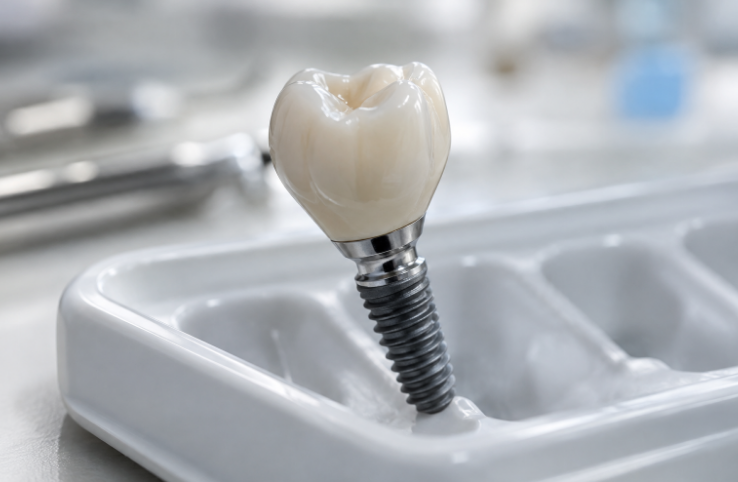
- Dental implant and crown: An implant is placed in the jaw and supports a single custom crown.
- Dental bridge: A fixed restoration fills a gap by relying on nearby teeth or implants for support.
- Removable partial or complete denture: A removable appliance replaces several teeth or an entire arch.
- Implant-supported denture: A removable or fixed full-arch restoration uses implants for added support and stability.
In simple terms, implants generally involve surgery and a longer planning process, bridges often rely on adjacent teeth, and dentures are removable. Implant-supported dentures combine a removable or fixed restoration with implant anchorage.
Choosing an Option for One Missing Tooth
Dental Implant and Crown
An implant-supported crown replaces both the visible portion of the tooth and its supporting foundation. Because it stands independently, nearby teeth usually do not need to be reshaped to support it. Implant care requires surgery, healing, regular professional follow-up, and consistent daily cleaning around the restoration.
Traditional Dental Bridge
A traditional bridge uses the teeth beside the gap to hold a replacement tooth in place. It may be appropriate when those supporting teeth already need crowns or are strong enough to carry the restoration. A bridge can often be completed without implant surgery, but it may require alteration of supporting teeth.
Removable Partial Denture
A partial denture can replace one or more teeth without the need for implant placement. It may be considered a temporary solution, a non-surgical option, or a more budget-conscious approach. It must be removed for cleaning and may require adjustments as the mouth changes.
Solutions for Several Missing Teeth
When multiple teeth are missing in one area, the choices may include an implant-supported bridge, a traditional bridge, several individual implants, or a removable partial denture. For example, someone missing three consecutive teeth may compare a bridge supported by natural teeth with one supported by implants. The health of nearby teeth is central to that decision. A fixed bridge is not automatically preferable to a removable partial, and an implant-supported bridge is not automatically necessary. Bite forces, gum health, cleaning ability, bone support, and treatment goals should guide the plan.
Full-Arch Replacement Choices
People missing all teeth in an upper or lower arch may consider complete dentures, implant-supported overdentures, or fixed full-arch restorations. Complete dentures are removable and do not require implant surgery. Overdentures attach to implants but can usually be removed for cleaning. Fixed full-arch restorations remain in place and require specific hygiene techniques beneath the restoration. For removable appliances, daily care is essential. The ADA explains that dentures should be cleaned regularly and that a loose or uncomfortable denture may need professional evaluation rather than simply more adhesive. Daily denture care helps protect the appliance and the tissues underneath it.
Factors That Shape the Decision
Gum Health, Bone Support, and Nearby Teeth
Active gum disease should be addressed before restorative treatment. Bone volume can affect implant planning, and some patients may need additional procedures before implants are placed. The condition of the teeth adjacent to a gap also matters: healthy teeth may support a bridge, while heavily restored or compromised teeth may alter the recommendation.
Comfort, Habits, and Function
- Do you prefer a fixed solution or are you comfortable removing an appliance?
- Do you clench or grind your teeth?
- Can you clean thoroughly around a bridge, implants, or a full-arch restoration?
- How important are treatment speed, chewing comfort, and appearance?
Budget and Long-Term Planning
Initial cost is only one part of the decision. Ask about future maintenance, relines, repairs, replacement restorations, follow-up visits, and possible gum or bone treatment. A written estimate based on your specific needs is more useful than a general price range.
What to Expect at a Treatment Consultation
- Health review: Discuss medications, medical conditions, tobacco use, and past dental care.
- Clinical exam: Evaluate gums, remaining teeth, bite, and oral tissues.
- Imaging: X-rays or three-dimensional imaging may be used to assess bone and anatomy.
- Option comparison: Review benefits, limitations, timing, risks, and maintenance needs.
- Written plan: Confirm treatment stages, estimated fees, and expected follow-up care.
Cost, Treatment Time, and Maintenance
Bridges and dentures may sometimes be completed more quickly than implant treatment. Implant care can involve surgical placement, healing, and restoration appointments, although the exact sequence varies by case. Every option requires ongoing care, including brushing, cleaning between teeth or around restorations, and regular dental visits.
Questions to Ask Before Choosing
- Can the existing tooth be saved?
- Which options are realistic for this specific gap?
- Will nearby teeth need to be reshaped?
- Is there enough bone for implant treatment?
- Will gum treatment be needed first?
- How long will each option take?
- What daily cleaning will be required?
- Which future repairs or replacements should I expect?
- What is included in the written estimate?
Final Thoughts
Choosing tooth replacement in Naples, Florida, is a personal health decision, not a competition between implants, bridges, and dentures. Each option has different benefits, limitations, costs, and care requirements, so the most suitable choice depends on your oral health, remaining teeth, bone support, lifestyle, and long-term goals. Dental implants may provide stable support for replacement teeth, while bridges and dentures can offer alternatives for patients with different clinical needs or budget considerations. The strongest plan is one that supports comfortable function, fits your oral health needs, respects your preferences, and remains practical for daily life. During a consultation, ask about the expected treatment timeline, healing process, possible complications, cleaning requirements, and any additional procedures that may be needed. It is also helpful to request a written estimate that explains the total cost, including examinations, imaging, temporary restorations, and follow-up visits. A thoughtful discussion with a qualified dental professional can clarify the differences between treatment options and help you understand what to expect before, during, and after care. Taking time to review these details can help you make an informed decision that supports your comfort, confidence, and oral health over the long term.