Stitched or Unstitched: Which Eid Collection Option Is Right for You?
Every year, the same question comes up as Eid gets closer. Should you buy fabric and have it stitched, or pick something ready to wear? Both options have loyal fans, and both can give you a beautiful Eid look.
The right answer depends on your time, your budget and how much control you want over the final outfit. This guide breaks down the difference, the pros of each and a few simple questions that will help you decide.
Two Ways to Buy Your Eid Outfit
Brands like Maria.B. now release their Eid collection in both formats, so the choice is entirely yours.
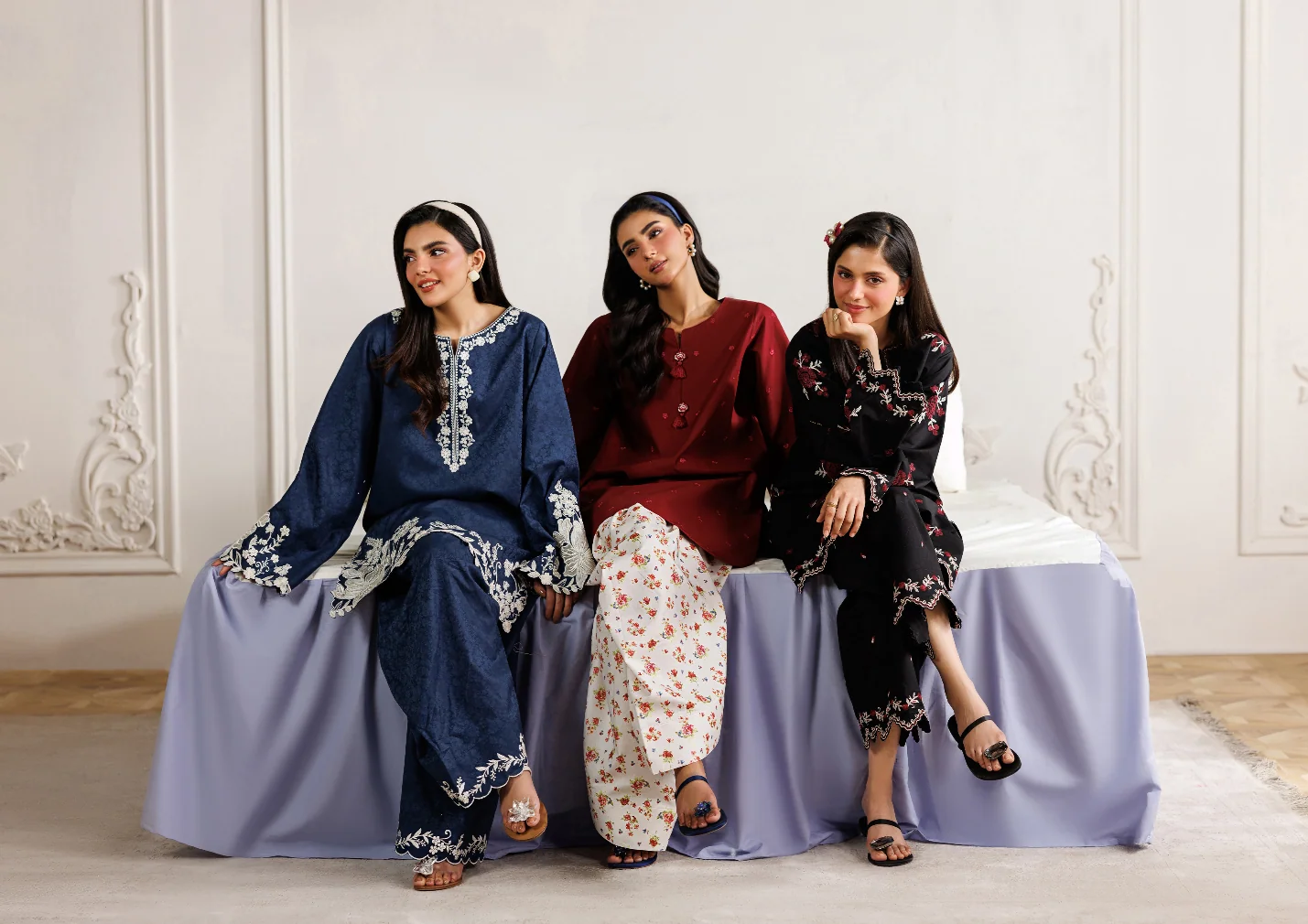
An unstitched suit is a set of fabric pieces. It usually includes an embroidered shirt front, back and sleeves, a dupatta and trouser fabric. Some sets add embroidered borders or patches. You take it to a tailor, choose the cut and get it stitched to your measurements.
A stitched suit, often called pret or ready to wear, arrives fully made. It comes in standard sizes with the neckline, length and finishing already decided by the designer. You simply pick your size and wear it.
Why Choose Unstitched
Unstitched is all about control. You decide the neckline, the sleeve style, the shirt length and the trouser cut. If you love a long straight shirt with wide trousers, or a short kurta with a sharara, your tailor can make exactly that.
The fit is the other big plus. A good tailor works from your exact measurements, so the outfit sits perfectly on your body. This matters a lot if you fall between standard sizes or have a longer or shorter frame.
Unstitched sets can also feel more personal. Two women can buy the same fabric and end up with completely different outfits. Ask your tailor to return any leftover fabric, since it is handy for future repairs or a matching potli bag.
The catch is time. You need a reliable tailor, at least one fitting and a few weeks of buffer before Eid, when every tailor in town is busy.
Why Choose Stitched
Stitched wins on convenience. There is no tailor to chase, no fitting to schedule and no risk of a wrong neckline. What you see in the product photos is what you get.
It is also the faster option. You can order a week or two before Eid and still be ready, as long as shipping allows. That makes it a lifesaver for working women, busy mothers and anyone who forgot about an event until the last minute.
For women living abroad, stitched is often the only practical choice. A skilled tailor who understands Pakistani cuts can be hard to find outside Pakistan.
The trade off is fit. Standard sizes suit most people well, but small alterations may still be needed. Check the size chart carefully, since sizing varies from brand to brand.
Side by Side
Here is a quick comparison to make the choice easier.
| Factor | Unstitched | Stitched |
| Fit | Made to your measurements | Standard sizes |
| Design control | You choose the cut | Designer decides the cut |
| Time needed | Several weeks with fittings | Ready on arrival |
| Cost | Lower upfront, plus tailoring fees | Higher upfront, nothing extra |
| Tailor needed | Yes | Rarely, only for small fixes |
| Best for | Planners with a trusted tailor | Busy schedules, shoppers abroad |
Questions to Ask Yourself
Still unsure? Answer these honestly, and the choice usually becomes clear.
- Do I have a tailor I trust? If not, stitched is the safer bet.
- How many weeks are left before Eid? Fewer than three weeks points toward stitched.
- Do I usually fit well into standard sizes? If you often need major changes, unstitched may suit you better.
- Do I want a unique design? Unstitched gives you more freedom to be different.
- What is my total budget? Remember to add tailoring costs when comparing prices.
- Will I wear this again after Eid? Choose the option that gives you a fit and style you will reach for later.
Why Not Both?
You do not have to pick just one. Many women mix both options across the three days of Eid.
A popular approach is to buy unstitched early in Ramadan for the main Eid day outfit. That gives your tailor enough time and lets you design something special. Then add a stitched pret piece or two for the second and third days, when you want something easy.
This mix also protects you if the tailor runs late. A ready to wear backup means you will never be stuck without an outfit on Eid morning.