Passner: Hungarian Frozen Food Brand, Products, and Quality
Introduction
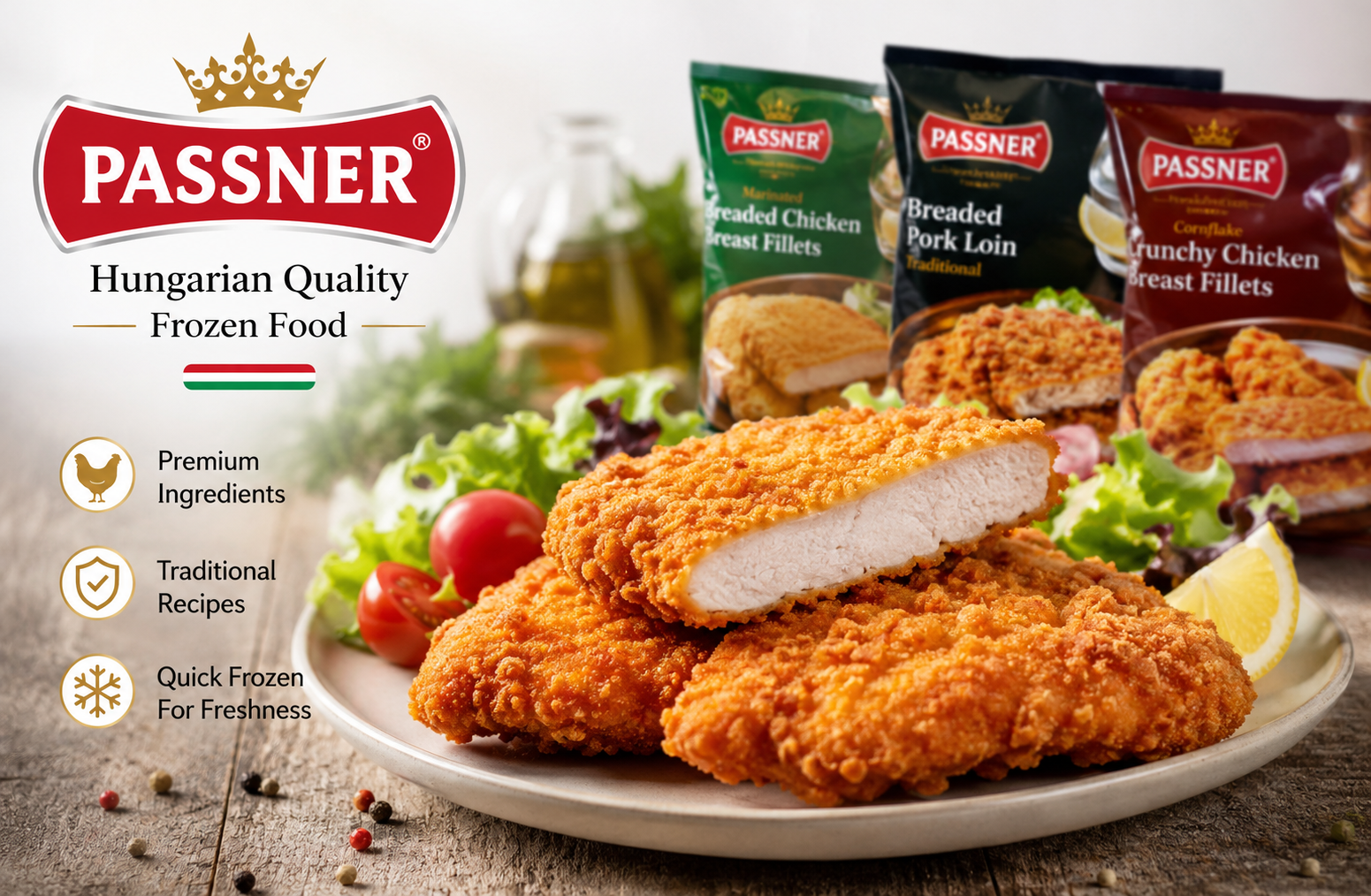
Passner is a Hungarian frozen-food brand recognized for its breaded, marinated, and pre-fried meat products. It brings traditional Central European food preparation together with modern production methods, offering convenient options for households, retailers, and professional kitchens. From breaded chicken breast to traditional pork cutlets, the brand focuses on familiar meals that require less preparation time without abandoning the taste associated with homemade cooking. Understanding Passner means looking beyond its product range and exploring its manufacturing background, food preparation methods, quality standards, distribution network, and place in Hungary’s frozen-food industry.
Frozen food has become an important part of modern food shopping. Busy households want meals that are practical to prepare, while restaurants and catering businesses need products that offer predictable portions and consistent results. This creates demand for prepared food that combines convenience with recognizable ingredients. The Hungarian brand addresses this demand through products made from meat cuts, marinades, and breadcrumb coatings.
One particularly interesting aspect of its approach is the emphasis on whole-muscle meat rather than entirely formed meat products. This distinction matters because the structure, texture, and eating experience of a breaded chicken fillet can differ considerably from those of a product made from processed meat mixtures.
The company’s manufacturing activities began in 2004 at its facility in Szada, Hungary. Its products are connected to the wider distribution network of BA-HA-MA’S, a Hungarian family-owned food wholesale business that has operated since 1994.
This article explores the brand’s background, manufacturing approach, product categories, potential consumer benefits, preparation considerations, and practical points buyers should understand before purchasing frozen breaded foods.
What Is Passner?
Passner is a Hungarian food brand specializing in quick-frozen, breaded, marinated, and pre-fried meat products. Its product range is designed to make familiar meals easier to prepare at home and in professional foodservice environments.
The brand is particularly associated with traditional-style breaded meat dishes. These include poultry and pork preparations made using selected meat cuts and breadcrumb coatings.
Unlike a restaurant meal that requires preparation from the beginning, these frozen products arrive with several preparation stages already completed. The meat may have been sliced, marinated, coated, and partially fried before being frozen.
This approach reduces the amount of work required from the customer. However, the products generally still require proper cooking before consumption.
The company’s official information describes its products as non-formed meat preparations. This means the products are based on recognizable meat cuts rather than being presented as entirely reshaped meat mixtures.
The manufacturing operation is based in Szada, in Hungary’s Pest County. The business uses modern production equipment while maintaining an emphasis on traditional recipes and familiar regional flavors.
Its main product ingredients include:
- Boneless pork loin.
- Pork collar.
- Chicken breast fillets.
- Turkey breast fillets.
- Breadcrumb coatings.
- Marinades and seasonings.
The exact composition varies by product. Consumers should always check individual packaging for ingredient information, allergens, nutritional values, and preparation requirements.
The History and Development of Passner
Understanding a food brand’s background can help consumers recognize how its products fit into the wider food market.
The history behind this Hungarian manufacturer is closely connected to the development of BA-HA-MA’S, a family-owned food distribution business.
The Early Business Background
BA-HA-MA’S began its frozen-food distribution activities in 1994. Its business developed around supplying frozen food products to commercial customers and other buyers in Hungary.
The company gradually expanded its distribution activities and product selection. Its portfolio came to include different meat products, vegetables, fruits, bakery items, desserts, pasta, and other frozen foods.
This distribution experience provided a foundation for developing an associated food manufacturing operation.
The Establishment of Manufacturing in 2004
An important milestone came in 2004, when a manufacturing facility was established in Szada.
The facility began producing breaded meat products under the Passner name. The objective was to offer convenient products that reflected familiar homemade cooking traditions.
The business focused on meat preparations made from recognizable cuts, including chicken breast and boneless pork.
This approach helped distinguish its products from some other convenience foods that rely heavily on formed meat preparations.
Expansion of Product Distribution
Over time, the business developed connections with retail stores, wholesale customers, and hospitality companies.
Its distribution activities were supported by the wider BA-HA-MA’S organization, which provided commercial relationships and frozen-food logistics.
The company also introduced direct distribution opportunities for residential customers in 2020, according to its published company information.
These developments reflect a broader change in frozen-food purchasing. Consumers increasingly expect convenient access to prepared products, while professional buyers require dependable supply arrangements.
Maintaining Traditional Food Values
The manufacturer’s published background emphasizes traditional Austrian and Hungarian gastronomic influences.
Its approach combines familiar recipes with modern freezing and production technology.
This balance is important because consumers do not necessarily want convenience food to taste completely different from traditional meals.
Instead, they often look for products that reduce preparation time while retaining familiar textures and flavors.
What Products Does Passner Offer?
The product range focuses mainly on breaded poultry and pork preparations.
Each category has different characteristics, making it useful to understand what separates the available options.
1. Breaded and Marinated Chicken Breast Fillets
Chicken breast is one of the most recognizable ingredients in prepared frozen meals.
The brand offers chicken breast fillets that are marinated and coated in traditional-style breadcrumbs.
The combination provides several practical advantages.
First, the chicken is already prepared for the breading process. Second, the marinade contributes flavor before the customer begins cooking. Third, the breadcrumb coating creates the familiar exterior associated with traditional breaded chicken.
These products may be suitable for:
- Family lunches.
- Quick evening meals.
- Sandwich fillings.
- Restaurant main courses.
- Catering menus.
Chicken breast is relatively versatile, so it can be served with vegetables, potatoes, salads, rice, or other side dishes.
2. Kentucky Chicken Breast Fillets
Another poultry option is Kentucky-style chicken breast.
The product is described as having a special, slightly spicy seasoning and a breadcrumb coating.
This makes it different from a more traditional breaded chicken preparation.
The seasoning offers an alternative for consumers who prefer a stronger flavor profile.
It can be served as a main meal or included in a casual dining menu.
However, the precise spice composition and intensity should be checked against the product’s ingredient declaration rather than assumed from its name.
3. Crunchy Chicken Breast Fillets
Crunchy chicken products offer a different texture compared with traditional breadcrumb-coated preparations.
The manufacturer’s product range includes specially seasoned chicken breast fillets coated with cornflakes.
Cornflake coatings are commonly used to create a distinctive crunchy exterior.
This type of preparation can work well in several meal formats, including:
- Chicken strips with dipping sauces.
- Casual family dinners.
- Chicken wraps.
- Sandwiches.
- Restaurant-style snack plates.
The difference between a conventional breadcrumb coating and a cornflake coating is mainly the texture and flavor experience.
4. Breaded and Marinated Pork Loin
Pork loin is another important part of the product range.
The manufacturer describes its breaded pork preparations as being made from boneless pork loin, with a marinade and traditional breadcrumb coating.
Pork loin is commonly used in Central European cooking, especially for schnitzel-style meals.
The prepared format reduces several steps involved in making a traditional breaded pork dish.
Instead of cutting the meat, preparing a marinade, coating each portion, and organizing the initial frying process, customers can start with a product that has already undergone these stages.
It is still essential to follow the cooking instructions provided for the specific product.
5. Stuffed Breaded Pork Loin
Stuffed pork preparations offer another variation within the range.
The brand’s published information describes filled pork loin products using different fillings, including cheese, mushrooms, sausage, marrow, and chicken liver in its product descriptions.
Fillings create a different eating experience from ordinary breaded pork.
They can add richness, texture, and additional flavor to the meat.
However, buyers should check the exact product label because available fillings and recipes can change.
Stuffed meat products also require particular attention during cooking. The center must reach a safe temperature, not just the outer breadcrumb coating.
6. Traditional Passner Fried Pork Cutlets
Traditional pork cutlets represent another familiar food preparation.
The product uses pork collar with traditional seasoning and a breadcrumb coating.
This type of preparation is particularly relevant to consumers interested in traditional Central European meals.
Pork collar has different characteristics from pork loin because it generally contains more fat within the meat.
That difference can influence tenderness, flavor, and the overall eating experience.
How Are These Frozen Products Manufactured?
Manufacturing methods play a major role in the quality and consistency of frozen prepared food.
Although individual recipes and production specifications may differ, the general process behind breaded meat products involves several stages.
Selecting the Meat
The starting point is the selection of appropriate meat cuts.
Chicken breast, turkey breast, pork loin, and pork collar have different structures and cooking characteristics.
The choice of meat influences the final product’s texture, flavor, and intended use.
The manufacturer states that it purchases meat from controlled suppliers and aims to preserve the quality of the raw materials during processing.
For consumers, this makes the ingredient declaration particularly important.
The actual meat content and composition should always be assessed using the information on the individual package.
Preparing and Slicing
The meat is prepared into suitable portions before further processing.
The manufacturer describes its breaded meat products as hand-sliced or machine-sliced rather than formed products.
This distinction helps explain the intended structure of the finished food.
A sliced meat product retains characteristics associated with the original cut, while a formed product is assembled into a shape using processed meat material.
Neither category should automatically be considered superior in every situation, but understanding the difference helps customers make informed comparisons.
Marinating the Meat
Marinating is used to introduce flavor and prepare the meat for its final coating.
The marinade may contain seasonings and other ingredients, depending on the specific recipe.
It can contribute to the taste and eating experience of the finished product.
The exact marinade composition is not identical across every product, so consumers with food allergies or dietary restrictions should examine the ingredient declaration carefully.
Applying the Breadcrumb Coating
The next important stage is applying the coating.
Breadcrumbs help create the recognizable outer layer associated with schnitzel and other breaded dishes.
Different coatings produce different results.
Traditional breadcrumbs offer a familiar texture, while cornflake coatings provide a distinct crunch.
The coating also influences how the product responds to frying or other cooking methods.
Pre-Frying
Pre-frying is an important part of the manufacturing process.
It means the product has undergone an initial frying stage before being frozen.
However, pre-fried does not automatically mean fully cooked or ready to eat.
Consumers must distinguish between partial processing and complete cooking.
This is particularly important with poultry and stuffed meat products, where the internal temperature matters.
Freezing and Storage
After the necessary processing stages, products are frozen for distribution and storage.
Freezing helps preserve products over their intended storage period when the correct temperature conditions are maintained.
The cold chain is especially important for commercial distribution.
A product that has been stored or transported incorrectly may experience quality deterioration or food safety problems.
For this reason, buyers should check that packaging is intact and that frozen products remain properly frozen until preparation.
Why Do Consumers Choose Prepared Frozen Meat Products?
Prepared frozen meat products meet several practical needs in modern households.
Their main attraction is not necessarily that they replace every traditional cooking method. Instead, they reduce the time and effort involved in preparing certain meals.
Convenience for Busy Households
Preparing breaded chicken or pork from scratch requires multiple steps.
A home cook may need to:
- Purchase fresh meat.
- Clean and portion the meat.
- Prepare the marinade.
- Organize flour, eggs, and breadcrumbs.
- Coat each portion.
- Fry the prepared meat.
- Clean the cooking equipment.
A prepared frozen product reduces many of these tasks.
Customers still need to cook the food correctly, but they can avoid much of the preparation work.
This can be particularly useful on busy weekdays.
Consistent Preparation
Commercially prepared products are manufactured using established processes.
This can make portion sizes and coatings more consistent than preparing every serving manually.
For restaurants, catering operations, and institutional kitchens, consistency can be especially valuable.
It helps kitchen staff work with a more predictable starting product.
However, actual results still depend on the cooking method, equipment, and handling conditions.
Familiar Food Choices
Breaded chicken and pork are familiar meal options in many European households.
Consumers may prefer these products because they do not require learning a new cooking style or experimenting with unfamiliar ingredients.
They can be combined with ordinary side dishes to create complete meals.
Reduced Preparation Work
Prepared frozen foods can simplify kitchen organization.
This is useful when several dishes need to be prepared at the same time.
Instead of spending considerable time on meat preparation, cooks can concentrate on vegetables, side dishes, sauces, and serving arrangements.
Flexibility in Meal Planning
Different products can be used for different occasions.
For example:
- Chicken fillets can form the main part of a family dinner.
- Crunchy chicken can be served as a snack.
- Breaded pork can accompany potatoes and vegetables.
- Stuffed pork can be used for a more substantial meal.
This flexibility makes prepared frozen meat products useful in both home and commercial kitchens.
Passner for Households and Families
Household customers often evaluate frozen food according to convenience, taste, preparation time, storage requirements, and price.
These considerations are important when deciding whether prepared meat products belong in a regular shopping routine.
Making Weekday Meals Easier
One of the main benefits is reduced preparation time.
A household can keep suitable frozen products available for occasions when there is limited time for cooking.
This can make weekly meal planning easier.
For example, a breaded chicken fillet can be paired with boiled potatoes and a fresh salad.
A pork cutlet can be served with rice, vegetables, or a traditional potato side dish.
The main advantage is the ability to prepare a familiar meal without beginning every stage from raw ingredients.
Creating Balanced Meals
Breaded meat products should be considered one component of a meal rather than a complete nutritional solution.
A balanced plate can include:
- A suitable portion of cooked chicken or pork.
- Fresh or cooked vegetables.
- A carbohydrate source such as potatoes or rice.
- Water or another appropriate drink.
The nutritional value depends on the product’s meat content, coating, cooking method, and serving size.
Consumers should compare the nutrition information on individual packages.
Managing Frozen Food Storage
Frozen products can be useful for household food planning, but they require correct storage.
Customers should:
- Follow the freezer temperature guidance on the packaging.
- Keep the product frozen until preparation.
- Avoid leaving frozen meat at room temperature for extended periods.
- Prevent unnecessary thawing and refreezing.
- Follow any instructions for storage after opening.
These habits help protect both food quality and safety.
Commercial Applications in Restaurants and Foodservice
The usefulness of prepared frozen meat products extends beyond household kitchens.
Restaurants, hotels, catering businesses, and other foodservice operations often require products that support consistent preparation and efficient service.
Restaurants
Restaurants may use prepared breaded meat products to reduce kitchen preparation work.
This can be useful in establishments serving familiar meals such as chicken schnitzel, pork cutlets, and breaded poultry dishes.
However, restaurant operators must consider more than convenience.
They should evaluate:
- Portion consistency.
- Product availability.
- Ingredient specifications.
- Preparation requirements.
- Storage capacity.
- Supplier reliability.
- Total cost per serving.
A product that saves preparation time may still be unsuitable if its portion size, taste, or cooking performance does not meet the restaurant’s expectations.
Hotels
Hotels may require food products that can be prepared efficiently during busy service periods.
Breaded poultry and pork can fit into breakfast, lunch, or dinner menus, depending on the establishment’s food offering.
Kitchen managers should test products before adding them to regular menus.
This helps ensure that the final presentation and flavor meet the hotel’s standards.
Catering Businesses
Catering operations often work with larger quantities and strict serving schedules.
Prepared frozen foods can simplify certain parts of menu preparation.
However, safe transportation, temperature control, cooking capacity, and serving times must be carefully planned.
The convenience of a prepared product does not remove the need for proper food safety procedures.
Institutional Kitchens
Schools, workplaces, and other institutional kitchens may also consider prepared meat products.
Their requirements can include standardized portions, reliable supply, and straightforward preparation procedures.
Before purchasing, operators should review nutritional information, allergen declarations, ingredient composition, and any applicable procurement requirements.
Food Safety: What Buyers Should Understand
Food safety deserves particular attention when purchasing frozen breaded meat.
The presence of a breadcrumb coating or an initial frying stage does not prove that the meat inside is completely cooked.
Pre-Fried Does Not Mean Ready to Eat
This is one of the most important points consumers should understand.
Pre-frying is a processing step. It may brown or partially cook the coating and outer surface without ensuring that the center has reached a safe temperature.
The product should therefore be treated according to its package instructions.
Do not assume that the golden appearance of the coating indicates that the meat is ready to eat.
Cook Poultry Thoroughly
Poultry requires careful handling because harmful bacteria can survive if the meat is not cooked properly.
Use an appropriate food thermometer when necessary and follow recognized food safety guidance.
The United States Department of Agriculture provides useful information about safe internal cooking temperatures in its official food safety guidance.
For whole cuts and other preparations, the correct temperature depends on the food category and preparation.
Stuffed meat products deserve particular care because the filling and center can heat differently from the outer coating.
Avoid Cross-Contamination
Cross-contamination happens when harmful microorganisms transfer from one food or surface to another.
Consumers can reduce this risk by:
- Washing hands before and after handling raw meat.
- Keeping raw meat separate from ready-to-eat food.
- Cleaning utensils and preparation surfaces.
- Using separate plates for raw and cooked products.
- Avoiding contact between uncooked meat and fresh salad ingredients.
Follow Package Instructions
Cooking instructions should be treated as product-specific guidance.
Different products may have different thicknesses, fillings, coatings, and cooking requirements.
A cooking time suitable for a thin chicken fillet may not be appropriate for a thick stuffed pork product.
Always check the manufacturer’s instructions before choosing a preparation method.
Can Frozen Breaded Meat Be Prepared in an Air Fryer?
Air fryers are popular because they circulate hot air around food and can produce a crisp exterior with less added cooking oil than conventional deep-frying.
However, not every frozen breaded product is automatically suitable for air-fryer preparation.
The result depends on several factors.
Product Thickness
Thicker products require more time for the heat to reach the center.
This is particularly important with stuffed meat.
A crisp exterior does not prove that the inside is sufficiently cooked.
Breadcrumb Composition
Different coatings respond differently to circulating hot air.
Traditional breadcrumbs and cornflake coatings may produce different levels of browning and crispness.
The final texture also depends on the equipment and preparation method.
Manufacturer Instructions
The safest approach is to follow the instructions supplied with the product.
If air-fryer preparation is not listed, consumers should seek confirmation from the manufacturer rather than assume that the method will produce safe results.
Avoid Overcrowding
When air-frying is confirmed as suitable, overcrowding the basket can reduce airflow.
This may lead to uneven browning and cooking.
A thermometer can help verify that the center has reached the required safe temperature.
What Should Buyers Check Before Purchasing?
Choosing frozen prepared meat requires more than looking at the product name.
The packaging provides important information that can help customers decide whether a product meets their needs.
1. Meat Type
First, identify whether the product contains chicken, turkey, pork, or a combination of ingredients.
This matters for dietary preferences and religious requirements.
Consumers should never assume that every product within one brand is suitable for every dietary category.
2. Ingredient List
Review the complete ingredient declaration.
Look for:
- The type of meat used.
- Added water or marinades.
- Breadcrumb ingredients.
- Seasonings.
- Allergens.
- Food additives.
People with allergies should pay particular attention to ingredients such as wheat, milk, eggs, and other declared allergens.
3. Meat Content
The meat percentage can help consumers compare similar products.
A product described as chicken breast may contain additional ingredients that contribute to its overall weight.
Comparing the declared composition is more useful than relying only on front-of-package marketing descriptions.
4. Nutritional Information
Check the nutritional declaration for:
- Energy.
- Protein.
- Fat.
- Saturated fat.
- Carbohydrates.
- Sugars.
- Salt.
The nutritional profile can vary considerably between different breaded products.
5. Cooking Instructions
Confirm that the preparation method suits your available kitchen equipment.
Also check whether the product must be cooked directly from frozen or whether thawing is required.
Never replace the manufacturer’s guidance with assumptions based on another frozen product.
6. Packaging and Storage
Check the package for damage, unusual signs of thawing, or missing product information.
The storage instructions should be clear and appropriate for your freezer.
7. Price and Portion Size
A low package price does not always represent the best value.
Compare the price per kilogram, portion count, meat content, and expected serving size.
For commercial buyers, the cost per finished serving is often more useful than the purchase price alone.
Is Passner a Healthy Food Choice?
Whether a breaded frozen meat product fits into a healthy diet depends on its nutritional composition, portion size, cooking method, and the rest of the meal.
It would be inaccurate to describe every product in this category as automatically healthy or unhealthy.
Protein Contribution
Chicken, turkey, and pork provide protein.
Protein is important for normal body functions, including the maintenance and repair of body tissues.
However, the amount of protein in a finished breaded product depends on its actual meat content.
Consumers should use the nutrition label rather than rely on the ingredient name alone.
Breadcrumb Coatings and Carbohydrates
Breadcrumb coatings add carbohydrates to the product.
They can also influence its energy content.
This does not automatically make breaded meat unsuitable for regular meals, but it is worth considering when planning portions.
Fat and Cooking Method
Pre-fried products may contain added fat from the manufacturing process.
Additional frying can increase the amount of fat in the finished meal.
Cooking methods and product specifications should therefore be considered together.
Sodium Content
Marinades and seasonings may contribute sodium.
People monitoring salt intake should compare nutritional labels before selecting products.
The Importance of Overall Diet
A single food product does not determine the nutritional quality of someone’s entire diet.
A meal containing a moderate portion of breaded meat, vegetables, and an appropriate side dish can fit into a varied eating pattern.
The important factors are frequency, portion size, preparation, and overall dietary balance.
Understanding Quality Standards and HACCP
Food safety systems are essential in commercial food manufacturing.
The manufacturer states that it has introduced a HACCP-based quality assurance and food safety system.
HACCP stands for Hazard Analysis and Critical Control Points.
It is a structured approach used to identify potential food safety hazards and establish controls at important stages of production.
What Does HACCP Mean for Consumers?
HACCP focuses on preventing food safety problems rather than relying only on final product inspection.
Depending on the operation, a food safety system may consider:
- Raw material handling.
- Processing temperatures.
- Equipment hygiene.
- Employee hygiene.
- Storage conditions.
- Packaging procedures.
- Distribution controls.
The actual implementation must be assessed through appropriate documentation and verification.
The presence of a HACCP system should not be interpreted as proof that every individual product is free from every possible food safety risk.
Consumers must still follow storage and preparation instructions.
Why Production Controls Matter
Frozen meat manufacturing involves several stages where careful handling is important.
Incorrect storage temperatures, inadequate cleaning, or poor handling practices can create problems.
A structured food safety system helps manufacturers identify and manage these risks.
For buyers, this provides useful background when comparing suppliers.
However, individual product specifications and relevant certifications should always be verified directly.
Passner and Hungary’s Frozen Food Industry
Hungary has a long culinary tradition involving pork, poultry, breaded meat, and other prepared dishes.
These familiar foods create opportunities for manufacturers that can combine traditional recipes with modern production.
The wider frozen-food industry also serves several different customer groups.
Traditional Food Meets Modern Convenience
Traditional cooking often involves time-consuming preparation.
Breaded meat, for example, requires portioning, seasoning, coating, and frying.
Commercial preparation can reduce these tasks while retaining a familiar food format.
This is an important reason why breaded frozen products remain relevant in modern kitchens.
The Role of Distribution Networks
Manufacturing alone does not make a food brand successful.
Products must also reach retailers, wholesalers, restaurants, and customers under suitable storage conditions.
The connection with BA-HA-MA’S gives the brand access to an established frozen-food distribution organization.
The parent distribution business has operated since 1994 and serves different segments of the Hungarian food market.
Its wider product portfolio includes meat, seafood, vegetables, fruits, pasta, bakery products, and other frozen foods.
This broader network is relevant because commercial food buyers often prefer suppliers that can provide multiple categories through coordinated distribution.
Competition in the Frozen Prepared Food Market
Frozen prepared meat products compete with several alternatives.
These include:
- Fresh meat purchased for home preparation.
- Other frozen breaded products.
- Ready-to-cook refrigerated meals.
- Restaurant takeaway.
- Homemade traditional dishes.
Each option offers different advantages.
Fresh meat gives consumers greater control over ingredients and preparation.
Frozen prepared products reduce preparation work.
Takeaway offers convenience without requiring home cooking, but the cost per meal may be higher.
The most suitable choice depends on budget, time, food preferences, and available kitchen equipment.
Common Challenges When Buying Frozen Breaded Meat
Although prepared frozen food offers practical benefits, buyers should understand its limitations.
1. Differences Between Products
Not every breaded meat product has the same composition.
Two products may look similar while differing in meat content, coating, salt, fat, and serving size.
Reading labels is essential.
2. Cooking Results Can Vary
The final result depends on equipment, temperature, product thickness, and cooking technique.
A product may become too dry if overcooked or remain undercooked if the center does not receive sufficient heat.
3. Storage Requires Attention
Frozen food depends on proper temperature management.
Repeated thawing and refreezing can affect quality and may create food safety concerns.
4. Dietary Restrictions
Breaded products may contain allergens or ingredients that do not meet specific dietary requirements.
The brand’s broader meat range includes pork, so customers following religious dietary requirements should verify the exact product and obtain reliable certification where necessary.
5. Availability May Differ
A product appearing in a manufacturer’s range is not necessarily available at every retailer.
Availability can depend on location, distributor arrangements, stock levels, and current product offerings.
Consumers should confirm availability with the seller or manufacturer.
How to Make Better Meals Using Prepared Frozen Products
A prepared meat product can become part of a satisfying meal when combined with suitable ingredients.
The following ideas focus on practical meal planning rather than complicated recipes.
Breaded Chicken with Vegetables
Serve a properly cooked chicken fillet with steamed vegetables and boiled potatoes.
This creates a straightforward meal containing protein, carbohydrates, and vegetables.
A fresh salad can provide additional variety.
Crunchy Chicken Wraps
Cornflake-coated chicken can be used in a wrap with lettuce, tomatoes, and a suitable sauce.
Cut the fully cooked chicken into strips and assemble the wrap immediately before serving.
Traditional Pork Cutlet Dinner
Serve a cooked pork cutlet with potatoes and a vegetable side.
This combination reflects familiar Central European meal traditions.
Stuffed Pork with a Simple Side Dish
A stuffed pork preparation can be served with rice, potatoes, or cooked vegetables.
Because stuffed products can be thicker, check the internal temperature carefully.
Casual Chicken Snack Platter
Crunchy chicken pieces can be included in a snack platter with fresh vegetables and suitable dipping sauces.
This works for informal meals and family gatherings.
Frequently Asked Questions About Passner
1. What is Passner?
Passner is a Hungarian frozen-food brand specializing in breaded, marinated, pre-fried meat products. Its range includes chicken, turkey, and pork preparations made for convenient cooking.
2. Where are Passner products manufactured?
The manufacturer’s production facility is located in Szada, Pest County, Hungary. The facility has been producing breaded meat products under the brand since 2004.
3. What types of food does Passner produce?
Its documented range includes breaded chicken breast, Kentucky-style chicken, crunchy chicken, breaded pork loin, stuffed pork loin, and traditional pork preparations.
4. Are Passner frozen products fully cooked?
Not necessarily. Pre-fried products have undergone an initial frying process, but this does not guarantee that the meat is completely cooked. Always follow the instructions on the packaging.
5. Can Passner products be prepared in an air fryer?
Air-fryer suitability depends on the individual product. Check the manufacturer’s preparation instructions or contact the company before using an alternative cooking method.
6. Are all Passner products suitable for halal diets?
No such general conclusion should be made. The product range includes pork, and the halal status of individual poultry products must be verified through reliable product-specific certification.
Conclusion
Passner represents a Hungarian approach to combining traditional food preparation with modern frozen-food manufacturing. Its main focus is breaded, marinated, and pre-fried meat products made from chicken, turkey, and pork. The manufacturing operation in Szada began in 2004 and is connected to the wider BA-HA-MA’S frozen-food distribution business.
Its product range includes traditional breaded chicken, seasoned poultry, crunchy cornflake-coated fillets, pork cutlets, and stuffed pork preparations. These products offer practical advantages for households and professional kitchens by reducing preparation work and providing familiar meal options.
However, convenience should not replace careful purchasing decisions. Consumers should examine ingredient lists, meat content, allergens, nutritional information, storage conditions, and cooking instructions before choosing a product. They should also understand that pre-fried does not necessarily mean fully cooked.
For restaurants and foodservice businesses, additional considerations include portion consistency, supplier reliability, cold-chain management, and cost per serving.
Ultimately, the value of prepared frozen meat depends on how well it meets the customer’s needs. Understanding its ingredients, production methods, and proper preparation requirements makes it easier to make informed decisions and enjoy convenient meals while maintaining appropriate food safety practices.