Donna Sicuranza: Biography, Career, and Animal Welfare Work
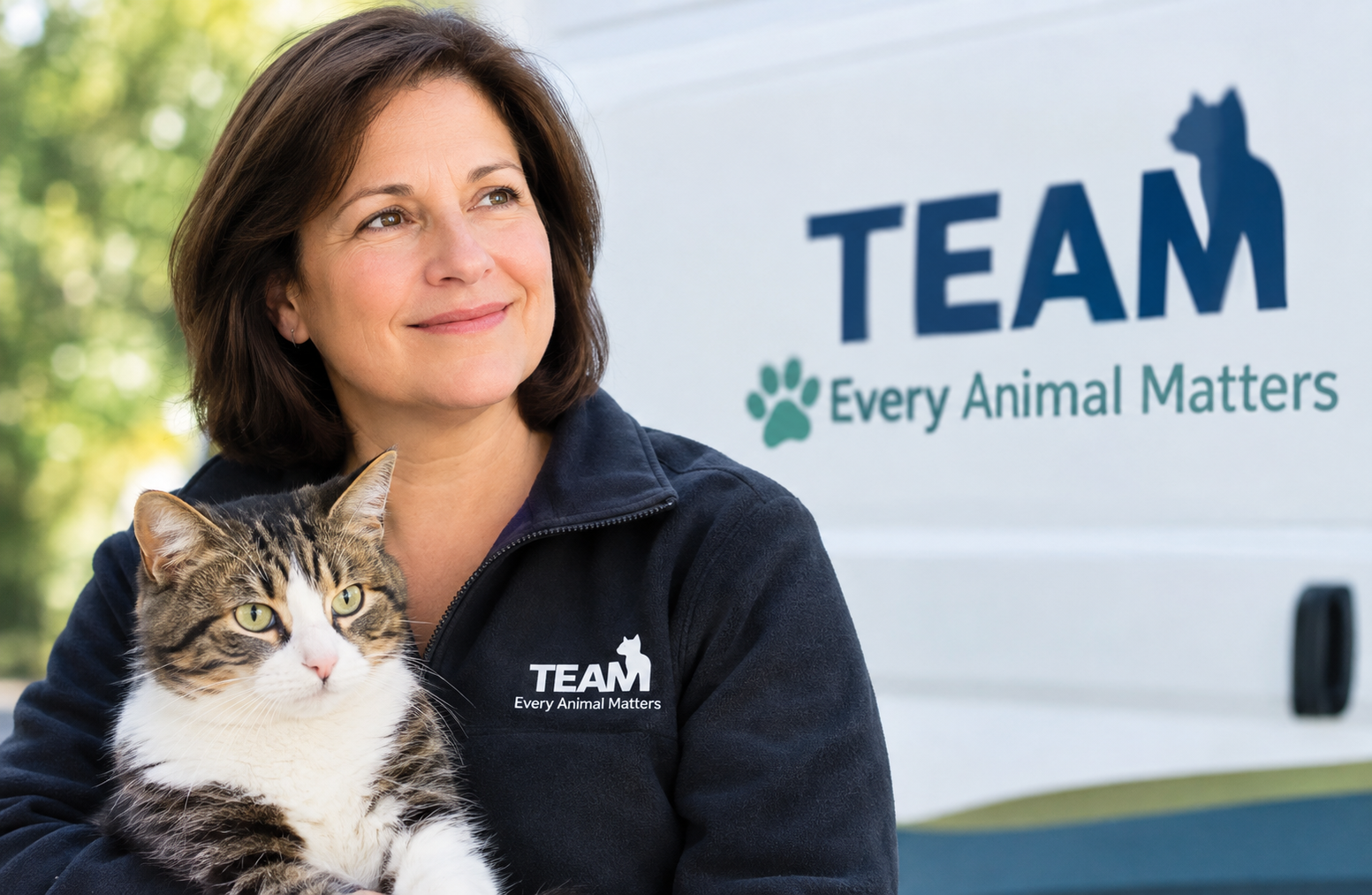
Donna Sicuranza is a Connecticut nonprofit executive whose professional life has been closely connected with animal welfare, feline population control, and accessible veterinary services. Her name is particularly associated with Tait’s Every Animal Matters, commonly known as TEAM, an organization based in Westbrook, Connecticut. TEAM’s current staff information identifies Donna Sicuranza Marconi as its Executive Director, while earlier organizational and public records use Donna Sicuranza or Donna J. Sicuranza. (Every Animal Matters)
Unlike many people who become the subject of online searches because of entertainment, politics, business, or social media fame, Sicuranza has developed her public profile primarily through long-term nonprofit work. Much of the documented story concerns the development and continuation of TEAM’s mobile feline spay and neuter program, which has provided veterinary services to cats across Connecticut for decades.
Researching her biography also requires some care because several people with similar or identical names appear in online records. In particular, a New York woman named Donna Marie Sicuranza died in 2017 after a career that included work at the Bank of New York. Those biographical details should not be combined with the Connecticut nonprofit executive’s professional history. (Pelham Funeral Home)
This article focuses on the Donna Sicuranza associated with Tait’s Every Animal Matters and separates documented information from claims that cannot be reliably verified.
Who Is Donna Sicuranza?
Donna Sicuranza is a nonprofit executive associated with Tait’s Every Animal Matters, a Connecticut animal welfare organization based in Westbrook.
TEAM focuses heavily on feline welfare, particularly services intended to reduce unwanted cat populations and improve access to basic veterinary care. Its most recognizable initiative is the TEAM Mobile Feline Spay/Neuter Clinic.
The organization’s current staff page identifies Donna Sicuranza Marconi as Executive Director. It also states that TEAM veterinarians have sterilized and vaccinated more than 225,000 cats since 1997 and regularly travel to communities throughout Connecticut. (Every Animal Matters)
That information helps explain why Sicuranza’s professional story is primarily connected with animal welfare rather than celebrity culture. Her public record is centered on organizational leadership, community service, program development, and the practical challenges involved in providing veterinary services to domestic and feral cats.
An important distinction is that Sicuranza is not presented in the available records as a veterinarian performing the medical procedures herself. TEAM has veterinary personnel responsible for clinical services. Her role is executive and organizational, which includes supporting the broader operation of the nonprofit and its programs.
This distinction matters because the organization’s reported numbers represent the work of TEAM and its veterinary staff rather than animals personally treated by Sicuranza.
Donna Sicuranza and Tait’s Every Animal Matters
The strongest part of her documented professional history is her connection with Tait’s Every Animal Matters.
TEAM was created around the idea that animal welfare could be improved by making preventive veterinary services easier to access. Instead of relying entirely on a permanent veterinary facility, the organization developed a mobile model that could travel to different communities.
The mobile approach is especially relevant for cats because spay and neuter services can play an important role in controlling unwanted births. It can also help caretakers of community cats and feral cat populations access services that may otherwise be difficult to obtain.
TEAM’s current information describes its mobile clinic as welcoming Connecticut cats, including domestic and feral cats. The organization says its veterinarians have sterilized and vaccinated more than 225,000 cats since 1997. (Every Animal Matters)
This provides a useful way to understand the scale of the work associated with Sicuranza’s career. Rather than being defined by one public appearance or one short-term project, her professional record is connected with a program that has continued for many years.
The beginning of the mobile clinic
Historical reporting provides additional context about the program.
A 2001 report described TEAM’s mobile feline unit as Connecticut’s first mobile cat clinic and identified Donna Sicuranza as a spokesperson for the organization. The report stated that the clinic provided affordable spaying, neutering, and vaccination services and had already sterilized more than 40,000 cats since beginning operations in March 1997. (CT Insider)
That historical record is significant because it shows that the program was already established and operating at scale more than two decades ago.
The Connecticut Department of Agriculture also published material following the death of veterinarian Dr. John A. Caltabiano in 2009. That document identified Donna Sicuranza as his longtime partner and said she would continue his work at TEAM and with FeralStat. (CT.gov)
The available records therefore connect Sicuranza with the organization during an important period in its development and continuation.
The Mobile Veterinary Model
One of the most useful ways to understand Sicuranza’s professional work is to look at why a mobile clinic can matter.
Traditional veterinary care generally requires the animal owner or caretaker to travel to a fixed location. That can create barriers for people who lack convenient transportation, live far from veterinary practices, care for multiple cats, or manage community and feral cat populations.
A mobile clinic changes that logistical equation.
Instead of asking every caretaker to travel to one location, the clinic can move into different communities and provide selected services where they are needed.
This model does not replace full-service veterinary hospitals. Complex illnesses, emergencies, advanced diagnostics, and many surgical procedures still require appropriate veterinary facilities and equipment.
However, mobile programs can be useful for preventive services that are suitable for the mobile setting.
For TEAM, these services include:
- Spay procedures
- Neuter procedures
- Vaccinations
- Basic veterinary services connected with the clinic’s program
- Services for domestic cats
- Services for eligible feral or community cats
The value of such a system is therefore partly logistical. It addresses access as well as animal health.
Why Spaying and Neutering Matter
Spaying and neutering are central to many animal population control programs.
When cats reproduce without adequate homes available for the resulting kittens, shelters, rescue organizations, community groups, and individual caretakers can face significant pressure.
Preventing unwanted litters can reduce the number of animals entering an already crowded rescue system.
For community and feral cats, population control can be particularly challenging. These cats may not belong to a single household, and some live in colonies supported by several people.
A program that provides accessible sterilization can therefore become part of a wider population management strategy.
The long-running nature of TEAM’s program is particularly relevant here. Its current reported figure of more than 225,000 cats sterilized and vaccinated since 1997 illustrates the cumulative scale of the organization’s work. (Every Animal Matters)
It is important, however, to describe this number accurately. It is an organizational figure reported by TEAM. It should not be interpreted as a number of cats personally treated by Sicuranza.
Donna Sicuranza’s Career Before Nonprofit Leadership
Another interesting part of the professional record is that Sicuranza’s background was not originally centered on veterinary medicine.
Public professional information associates her earlier career with writing, editing, and public relations work. Her LinkedIn profile also identifies her with Tait’s Every Animal Matters and lists Trinity College-Hartford among her educational associations. (LinkedIn)
This background provides an interesting perspective on nonprofit leadership.
Animal welfare organizations do not operate only through medical knowledge. They also require communication, administration, fundraising, community outreach, volunteer coordination, public education, and organizational planning.
Someone with experience in writing and public relations can bring useful skills to those areas.
Communication is particularly important when an organization is trying to explain why a program exists and how members of the public can use it. A veterinary service may be technically sound, but it still needs clear communication if people are expected to understand eligibility, scheduling, costs, preparation requirements, and follow-up care.
This combination of communication and nonprofit administration helps explain why Sicuranza’s professional path is notable even though she did not begin as a veterinarian.
A Long-Term Leadership Record
One of the clearest themes in the available information is longevity.
Historical reporting from 2001 already identified Sicuranza as a TEAM spokesperson. A Connecticut Department of Agriculture record later identified her in connection with TEAM’s animal population control work. TEAM’s current staff page continues to identify Donna Sicuranza Marconi as Executive Director. (CT Insider)
Taken together, these records show a professional connection with the organization extending across many years.
Long-term nonprofit leadership can involve challenges that are less visible than the public-facing work of a mobile clinic.
An organization must maintain funding, staffing, scheduling, equipment, relationships with communities, administrative systems, and public awareness. It must also adapt as animal welfare needs change.
That means the continued operation of a specialized program can itself be an important part of the story.
Donna Sicuranza and John A. Caltabiano
Dr. John A. Caltabiano is another important name in the history of TEAM.
Caltabiano was a veterinarian whose work included mobile veterinary services. A Connecticut Department of Agriculture publication described him as the founder of a mobile veterinary practice and noted his involvement with the TEAM Mobile Feline Unit. The same document identified Donna Sicuranza as his longtime partner and stated that she would continue his work at TEAM following his death in 2009. (CT.gov)
The relationship is professionally important because TEAM’s mobile feline program developed through collaboration between nonprofit leadership and veterinary expertise.
The available evidence supports describing Sicuranza as an organizational leader connected with the program and Caltabiano as a veterinarian involved in its development.
It would be inappropriate, however, to attribute every aspect of the program’s creation or operation to one person without evidence. Long-running nonprofit programs generally involve many individuals, including veterinary staff, administrative personnel, volunteers, donors, community partners, and animal caretakers.
Donna Sicuranza and Connecticut Animal Population Control
Her work has also appeared in the context of Connecticut’s broader animal population control discussions.
A Connecticut Department of Agriculture working-group document from 2019 lists Donna Sicuranza as representing Tait’s Every Animal Matters. The meeting brought together participants connected with animal control, veterinary services, rescue organizations, and other areas of animal population management.
This is useful evidence of her professional involvement in the broader animal welfare field.
It does not mean that she was a government official or that she personally established state policy. The record supports a narrower and more accurate description: she represented TEAM in a discussion involving Connecticut’s animal population control program.
That distinction is important when writing a factual biography.
Donna Sicuranza Education
Public professional information associates Sicuranza with Trinity College-Hartford. Her LinkedIn profile lists Trinity College-Hartford and shows an education period from 1989 to 1992. (LinkedIn)
Some online biography pages also associate her with Fairfield University.
However, educational information found on secondary biography websites is not always presented with the same level of documentation as an official professional profile. For that reason, it is better to avoid adding an unsupported degree, major, graduation year, or academic achievement unless the information can be independently verified.
The safest conclusion is that her public professional profile connects her with Trinity College-Hartford and that her broader career included communications-related work before her long association with TEAM.
Donna Sicuranza Age and Date of Birth
One of the most common questions people ask when researching a biography is age.
In this case, an exact birth date for the Connecticut nonprofit executive has not been reliably established through the authoritative sources reviewed.
Some websites publish an age or birth date, but those claims should not automatically be accepted as factual. Search results for the name include information about another Donna Sicuranza, and that creates a real risk of mixing separate identities.
A responsible biography should therefore state that her exact date of birth and age are not reliably confirmed in the public sources reviewed.
This approach is more useful than publishing a precise number simply because it appears on an online biography page.
Donna Sicuranza Personal Life
Public information about Sicuranza’s professional activities is considerably stronger than information about her private life.
The Connecticut Department of Agriculture record confirms that she was the longtime partner of Dr. John A. Caltabiano. Beyond that documented relationship, detailed claims about parents, siblings, children, grandchildren, or other private family matters should not be presented without reliable evidence. (CT.gov)
This is especially important because another woman named Donna Marie Sicuranza appears in obituary records.
The New York Donna Marie Sicuranza was born on March 24, 1942, and died on March 10, 2017, at age 74. Her obituary describes a career that included more than two decades at the Bank of New York in Bronxville. It also identifies her husband as Angelo. (Pelham Funeral Home)
Those details belong to that individual.
They should not be transferred to the Connecticut nonprofit executive simply because the names are similar.
Donna Sicuranza and Donna Marie Sicuranza
The distinction between the two women is one of the most important points for anyone researching this name.
| Detail | Connecticut nonprofit executive | New York banking professional |
| Publicly associated field | Animal welfare and nonprofit leadership | Banking |
| Main location in available records | Westbrook, Connecticut | New York area |
| Organization or employer | Tait’s Every Animal Matters | Bank of New York |
| Public status | Associated with TEAM leadership | Died in 2017 |
| Relevant records | TEAM and Connecticut animal welfare records | Funeral and obituary records |
The New York obituary is not evidence about the Connecticut executive.
This kind of identity separation is essential for accurate online biography writing. Search engines often bring together pages based on matching names rather than verified identity, so readers should examine occupation, location, organizations, dates, and other distinguishing information before assuming two records describe the same person.
Donna Sicuranza Net Worth
There is no reliable public documentation establishing Sicuranza’s personal net worth.
This is another area where online biography pages can become speculative.
A nonprofit’s financial information does not automatically reveal an executive’s personal wealth. Organizational revenue, expenses, assets, salaries, and grants are separate from personal net worth.
Without verified financial records covering personal assets and liabilities, assigning a dollar figure would be speculation.
Therefore, the most accurate statement is that Donna Sicuranza’s personal net worth has not been reliably established in the public sources reviewed.
What Makes Her Professional Story Notable?
The most meaningful part of Sicuranza’s public record is not a celebrity connection or a sensational personal detail. It is the long-term development of a specialized animal welfare program.
Three aspects stand out.
1. Long-term continuity
TEAM’s mobile feline program began operating in 1997, and the organization continues to report large cumulative numbers of cats receiving sterilization and vaccination services. (Every Animal Matters)
2. Focus on access
A mobile clinic can bring selected veterinary services closer to communities, reducing some transportation and access barriers.
3. Combination of professional skills
Sicuranza’s background in communications and her long-term nonprofit leadership demonstrate that animal welfare organizations require more than clinical veterinary skills. Administrative and communication expertise can be important in keeping programs operating.
These points provide a more useful understanding of her career than unsupported claims about wealth, private relationships, or personal characteristics.
Lessons From the TEAM Model
The story of TEAM also offers broader lessons about community-based animal welfare.
First, prevention can be more sustainable than repeatedly responding to unwanted litters after they occur. Sterilization programs address reproduction before it creates additional demand for shelters and rescue organizations.
Second, accessibility matters. A service can exist without being equally reachable for everyone. Mobile programs attempt to address that gap by bringing services into communities.
Third, continuity matters. A program that operates for decades can develop relationships, experience, scheduling systems, and community recognition that are difficult to create quickly.
Finally, measurable outcomes help readers understand scale. TEAM’s reported figure of more than 225,000 cats sterilized and vaccinated since 1997 provides a concrete measure of the program’s cumulative activity. (Every Animal Matters)
What Can Be Verified About Donna Sicuranza?
A careful summary of the strongest available evidence looks like this:
- Donna Sicuranza is associated with Tait’s Every Animal Matters in Connecticut.
- TEAM currently identifies Donna Sicuranza Marconi as its Executive Director. (Every Animal Matters)
- Earlier public records identify her as Donna Sicuranza or Donna J. Sicuranza.
- Her professional history is connected with animal welfare and nonprofit leadership.
- Her earlier career included communications-related work such as writing, editing, and public relations.
- She has been publicly associated with TEAM for many years.
- Historical reporting identified her as a TEAM spokesperson in 2001. (CT Insider)
- Connecticut public records connect her with Dr. John A. Caltabiano and TEAM.
- TEAM’s mobile feline clinic began operating in 1997.
- TEAM reports more than 225,000 cats sterilized and vaccinated since the clinic began. (Every Animal Matters)
- Her exact birth date and age have not been reliably established in the sources reviewed.
- Her personal net worth has not been reliably established.
- The New York woman Donna Marie Sicuranza is a separate individual. (Pelham Funeral Home)
Frequently Asked Questions
Who is Donna Sicuranza?
Donna Sicuranza is a Connecticut nonprofit executive associated with Tait’s Every Animal Matters, an animal welfare organization focused heavily on feline care and population control. TEAM currently lists her as Donna Sicuranza Marconi, Executive Director. (Every Animal Matters)
What is Donna Sicuranza known for?
She is primarily known for her long-term leadership and professional involvement with Tait’s Every Animal Matters and its mobile feline spay, neuter, and vaccination program.
What is Tait’s Every Animal Matters?
Tait’s Every Animal Matters, commonly called TEAM, is a Connecticut nonprofit organization that provides animal welfare services, including mobile feline spay, neuter, and vaccination services. TEAM says its veterinarians have sterilized and vaccinated more than 225,000 cats since 1997. (Every Animal Matters)
When did the TEAM mobile feline clinic begin?
The TEAM Mobile Feline Spay/Neuter Clinic began operating in 1997. A 2001 report stated that the program had already sterilized more than 40,000 cats since its March 1997 launch. (CT Insider)
How old is Donna Sicuranza?
Her exact age and date of birth have not been reliably confirmed in the authoritative sources reviewed. Publishing an unverified age could confuse her with another person who has the same name.
Is Donna Sicuranza the same person as Donna Marie Sicuranza?
No. Donna Marie Sicuranza was a different New York-area woman who worked for the Bank of New York and died in 2017 at age 74. Her biographical information should not be attributed to the Connecticut nonprofit executive. (Pelham Funeral Home)
Conclusion
Donna Sicuranza’s documented professional story is primarily a story of nonprofit leadership and animal welfare in Connecticut. Her long-standing association with Tait’s Every Animal Matters connects her with a mobile feline veterinary program that has operated since 1997 and, according to TEAM, has sterilized and vaccinated more than 225,000 cats.
Her background is also notable because her career was not limited to veterinary work. Public professional information connects her earlier experience with writing, editing, and public relations, skills that can have practical value in nonprofit administration, public communication, and community outreach.
The historical record also shows why accuracy is especially important when researching her name. Another woman, Donna Marie Sicuranza, had a separate life and career in New York. Combining those two biographies can produce incorrect claims about age, family, employment, and personal history.
The most reliable way to understand Donna Sicuranza is therefore through the documented professional record: her connection with TEAM, her executive role, the organization’s mobile feline clinic, and the broader animal welfare mission that has defined her public career.