How to Light a Backyard Without Making It Look Like a Parking Lot
Many backyard lighting projects begin with a simple frustration. Someone misses the edge of a step, the grill area is too dark to use after dinner, or the path to the shed disappears once the sun goes down. The first reaction is usually to buy several bright fixtures and spread them around the yard.
That approach solves the darkness, but it often creates a different problem. The patio feels overexposed, every window reflects a bright bulb, and the garden loses the depth that made it pleasant during the day. Good exterior lighting is not about making the entire property equally bright. It is about putting enough light in the places where people actually need it.
Walk Through the Yard After Dark
Planning outdoor lights from a daytime sketch can be misleading. Instead, wait until dark and walk the routes you normally use. Start at the back door, continue to the patio, follow the path to the gate, and check any steps along the way. Carry a flashlight and aim it toward the ground rather than straight ahead.
Notice where you naturally slow down. A change in paving material, a narrow turn, or a step hidden by shadow deserves more attention than an open section of lawn. Mark these locations with small garden stakes or pieces of painter’s tape. This creates a practical lighting plan based on movement, not guesswork.
It also helps to view the yard from inside the house. A light that seems gentle outdoors may produce an annoying reflection in a kitchen window or shine directly into a bedroom. Catching that problem before wiring begins is much easier than relocating a fixture later.
Separate Safety Lighting From Decorative Lighting
Safety lighting has a clear job. It reveals steps, path edges, gates, and changes in ground level. Decorative lighting does something different: it draws attention to a tree, stone wall, planter, or architectural detail. Trying to make one fixture perform both jobs often leads to excessive brightness.
Begin with the areas where a missed step could cause a fall. After those points are comfortably visible, add a smaller amount of accent light. A broad selection of Outdoor Lighting can be useful at this stage because wall lights, path lights, spotlights, and step lights each handle a different part of the yard.
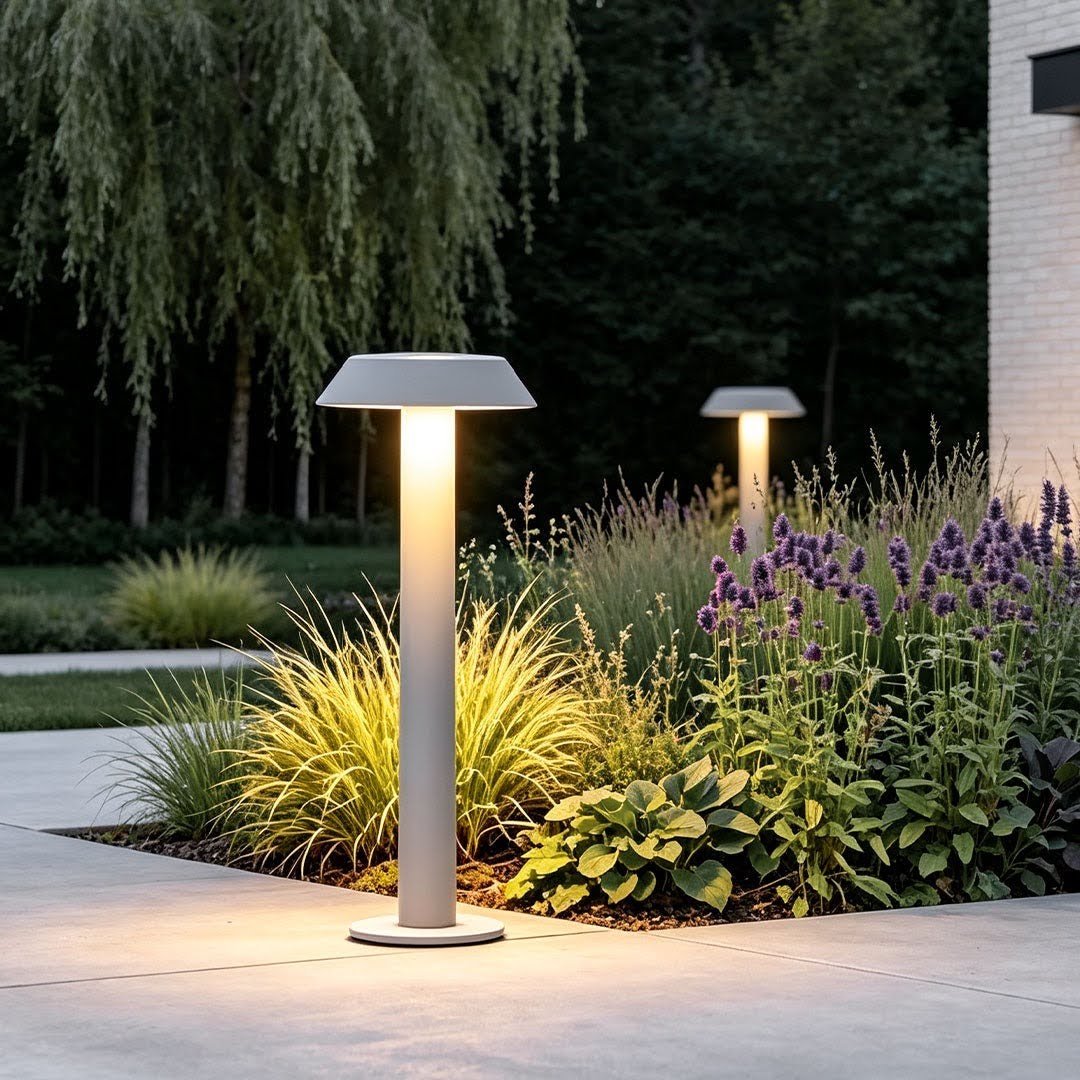
Path lights should reveal the route without competing with the surrounding garden.
Avoid the Airport Runway Effect
Placing identical lights directly opposite one another can make a residential walkway resemble a runway. The effect is especially noticeable on a straight path. It also creates more light than most people need.
Try staggering the fixtures instead. Place one near a curve, another beside a planting bed, and the next where the path changes level. The goal is not to outline every inch of pavement. Each pool of light only needs to overlap enough for someone to understand where the walkway continues.
Before permanently installing anything, use temporary solar lights or flashlights to test the positions. Move them around for a few evenings. Plants, parked cars, and seasonal furniture can change how the light travels, so the first arrangement is rarely the best one.
Keep the Light Source Out of Direct View
Glare is one of the quickest ways to make a backyard uncomfortable. A fixture can have a modest output and still feel painfully bright if the LED or bulb is visible at eye level. This commonly happens with path lights placed beside seating areas or spotlights aimed too close to a patio.
Look for fixtures that direct light downward or use a shade to conceal the source. Then check the view from several heights. A light hidden from a standing adult may shine directly into the eyes of someone sitting at an outdoor table.
Downward-facing fixtures also place more useful light on the ground. That means a lower output can often provide better visibility than a brighter, unshielded fixture.

A shielded design helps keep the light on planting beds and walkways instead of in people’s eyes.
Use Warm Light Where People Gather
Very cool white light may appear bright, but it can make a patio feel more like a loading area than an extension of the home. Warm white light usually works better around dining tables, lounge chairs, porches, and garden beds because it is gentler on wood, brick, and foliage.
Neutral light can still be useful near a grill, workbench, or utility door where clearer visibility matters. The important point is consistency. Mixing several noticeably different color temperatures within the same small area can make even expensive fixtures look unrelated.
If possible, test one fixture before purchasing the entire set. Product photos cannot fully show how a color temperature will interact with the paint, stone, and plants already in the yard.
Plan the Low-Voltage System Before Digging
Low-voltage systems are popular for paths and landscapes because they allow several fixtures to operate from a transformer. They can also be easier to adjust as plants grow or the yard changes. However, the system still needs to be planned as a whole.
Add up the wattage of the fixtures and make sure the transformer has suitable capacity. Consider the cable length as well. On a long run, voltage drop can cause fixtures at the far end to appear dimmer than those closest to the transformer. Dividing a large yard into shorter runs can produce more consistent results.
When browsing Outdoor Low Voltage Lights, confirm the operating voltage, transformer requirements, weather rating, cable needs, and whether connectors are included. “Low voltage” describes the power system; it does not mean every fixture is suitable for every exposed location.
Give Steps Their Own Light
Steps need more than general light from a nearby wall fixture. Shadows can hide the edge of a tread, particularly when the paving and risers are similar in color. A small recessed or surface-mounted step light can make the height change clear without flooding the entire staircase.
Position the light so it falls across the tread rather than directly toward someone approaching the stairs. Check that each edge is visible, but resist turning every step into a bright stripe. The light should guide the feet quietly.
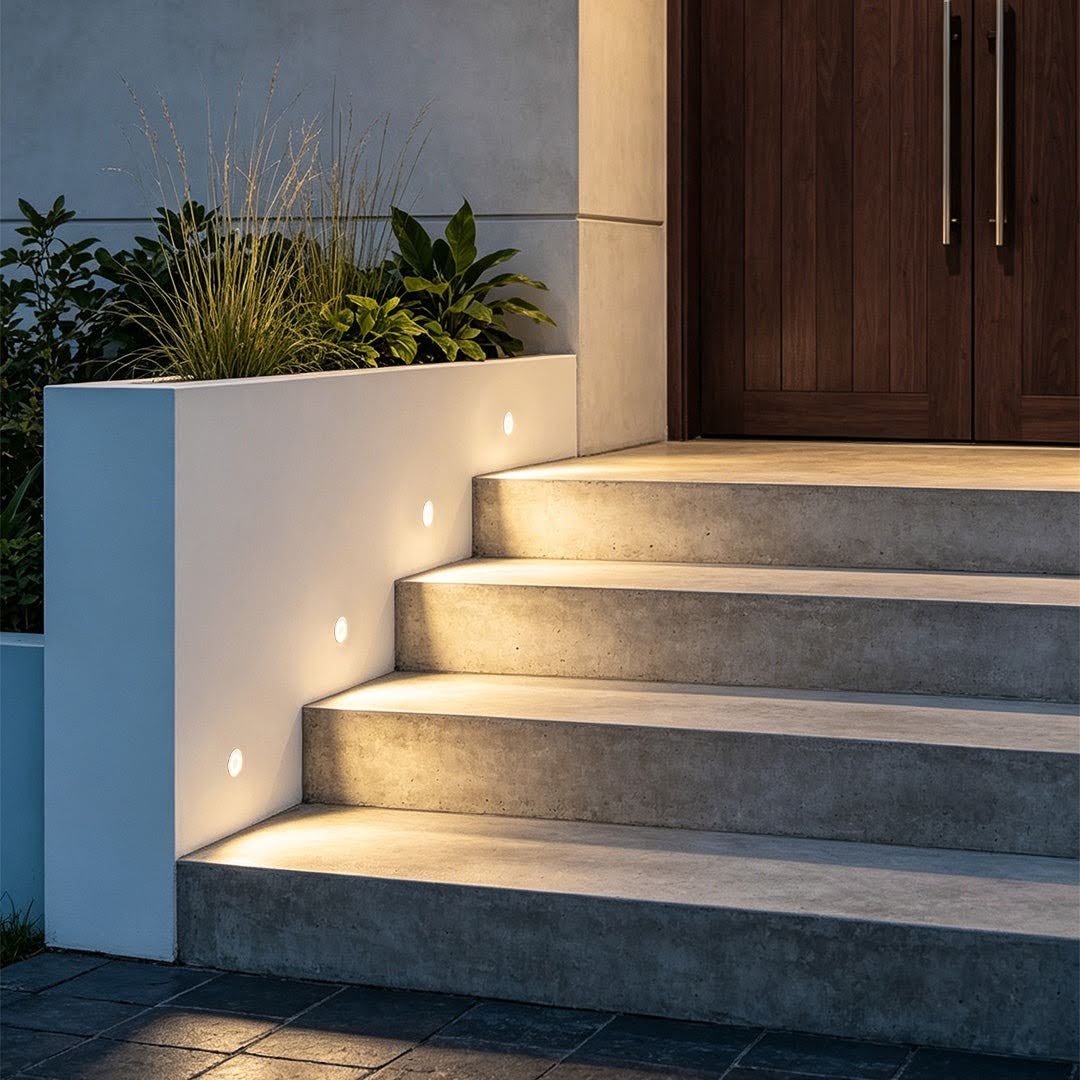
Compact step lights improve visibility while preserving the softer atmosphere of the yard.
Install Controls You Will Actually Use
A well-designed system should not require a nightly trip outside to switch it on. Timers, photocells, and smart controls can automate the routine, but the settings should match how the space is used.
Path and entry lights may stay on for several evening hours, while accent lighting can turn off earlier. Motion sensors are useful near gates, side yards, and utility areas, although poor placement may allow moving branches or passing animals to trigger them repeatedly. Test the sensor range before finalizing its position.
Finally, leave room to make adjustments. Gardens do not stay still. Shrubs grow into light beams, tree canopies become denser, and furniture moves from one season to another. A backyard lighting plan works best when fixtures can be redirected or relocated without rebuilding the entire system.
The yard does not need to look like daytime after sunset. It only needs to make the next step clear, the seating area comfortable, and a few favorite features worth noticing. Once those jobs are handled, adding more light usually adds very little.