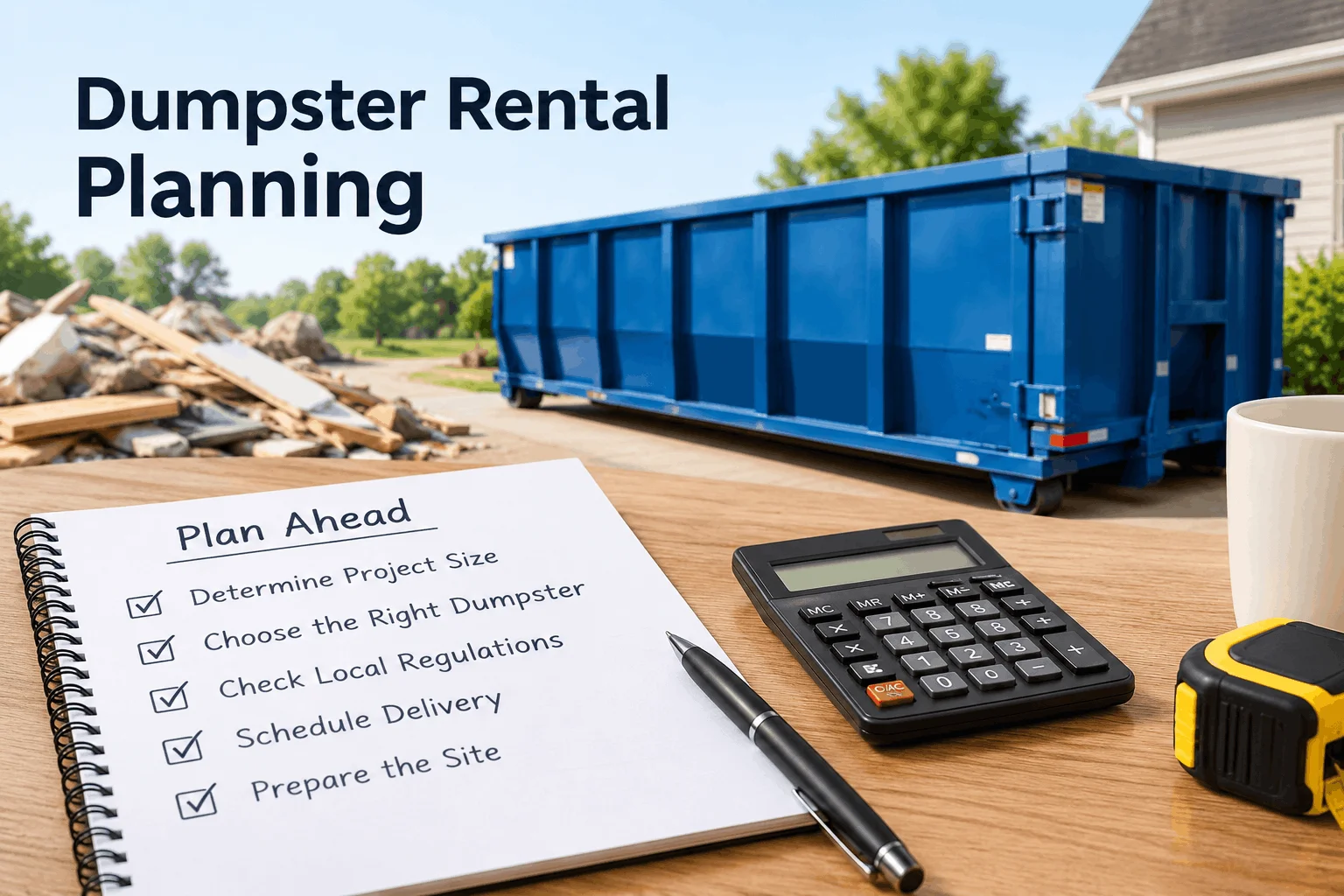
Dumpster Rental Planning for Projects With HOA, Street, or Site Restrictions
Home renovation projects can become more complicated when the property has limited space or outside rules that affect where a dumpster can be placed. Homeowners may have to work around homeowners association requirements, narrow streets, shared driveways, limited parking, city permitting rules, utility access, or site conditions that make delivery more difficult.
These restrictions do not necessarily prevent a dumpster from being used, but they make advance planning more important. A good plan considers where the container can legally and practically sit, how service vehicles will reach it, how long it can remain on-site, and whether the location will interfere with neighbors, contractors, or normal household access.
Start With the Property Layout
Before arranging delivery, homeowners should review the property from the perspective of a large service vehicle. A driveway may seem spacious enough for a dumpster but still have limited overhead clearance, sharp turns, steep grades, or narrow access.
Look at the driveway width, garage location, sidewalks, street parking, landscaping, fences, utility lines, and neighboring property boundaries. Also consider how contractor trucks and material deliveries will use the site during the renovation.
The best location is not simply an empty space. It needs to work for both delivery and the rest of the project.
Review HOA Rules Early
Homeowners associations may have rules covering temporary containers, construction equipment, parking, exterior appearance, and how long renovation materials can remain visible.
Some communities may require advance approval, specific placement, or limits on the number of days a dumpster can stay on the property. Others may restrict placement in streets, shared drives, or common areas.
Homeowners should review association documents or contact property management before scheduling delivery. Waiting until the dumpster arrives to discover a restriction can lead to delays or additional service costs.
Check Local Street Requirements
If driveway placement is not practical, homeowners may consider placing a dumpster along the street. This can introduce municipal requirements that differ from rules for private property.
Some cities or towns may require permits for containers placed in public rights-of-way. There may also be requirements involving traffic visibility, parking restrictions, signage, reflectors, or placement distances from intersections and hydrants.
Local rules vary, so homeowners should verify requirements with the appropriate municipal department before assuming street placement is allowed.
Plan Around Narrow Streets
Older neighborhoods, urban areas, and densely developed subdivisions may have streets that leave little room for service vehicles. Parked cars, mature trees, traffic, and narrow travel lanes can make delivery more difficult.
Homeowners should look at the entire approach to the property rather than only the final placement location. A container may fit in the driveway while the delivery truck cannot easily maneuver into position.
Scheduling delivery when street parking is lighter may help in some locations, but access needs should be coordinated in advance rather than handled at the last minute.
Consider Shared Driveways
Shared driveways create another layer of planning because one household’s renovation can affect someone else’s access.
A dumpster should not prevent neighboring residents from reaching garages, parking spaces, or the street. Homeowners may need to discuss the project with neighbors before delivery and establish how long the container will remain.
Working with Temporary Dumpster can help homeowners think through placement and service logistics for renovation projects where driveway access or available space is limited.
Protect Garage and Household Access
A driveway may be the most practical location, but homeowners should consider what they will lose while the dumpster is there. If the container blocks the garage, vehicles may need to remain outside for the duration of the rental.
The dumpster should also avoid blocking the primary entrance, mailbox access, walkways, or areas needed for daily deliveries.
Planning these details before placement prevents the household from discovering afterward that the container has made ordinary routines unnecessarily difficult.
Watch for Overhead Obstacles
Delivery trucks need overhead clearance as well as ground space. Tree branches, utility lines, roof overhangs, signs, and other obstructions can affect whether a dumpster can be placed safely.
Homeowners should inspect the proposed location from above, not just at ground level. Branches that seem high enough for a passenger vehicle may interfere with larger equipment.
If clearance is questionable, another placement location may be necessary.
Account for Driveway Slope
Steep or uneven driveways may complicate dumpster placement. The surface needs to provide a stable location for the container while also allowing the service truck to deliver and retrieve it.
Homeowners should not assume every driveway is suitable simply because there is enough width. Sharp slopes, uneven transitions, loose gravel, or damaged pavement can all affect placement.
Site conditions should be discussed before delivery so the container is not sent to a location where it cannot be safely positioned.
Protect the Driveway Surface
Home renovation projects often involve containers filled with dense materials such as flooring, tile, plaster, drywall, wood, or cabinetry.
Homeowners concerned about driveway protection should ask about appropriate placement practices and avoid loading prohibited or unexpectedly heavy materials. The condition of the existing driveway matters as well. Older or cracked surfaces may be more vulnerable than newer concrete or asphalt.
Planning where the dumpster will sit is especially important when the driveway is part of the finished property and will remain after the renovation.
Keep Utility Areas Accessible
Gas meters, electrical equipment, water shutoffs, utility boxes, sewer access, and other service points should remain reachable during the project.
A dumpster should not be placed in front of equipment that utility workers or contractors may need to access. This is especially important during renovations that include plumbing, electrical, HVAC, or utility upgrades.
The proposed placement should be checked against the full construction scope, not simply the current condition of the property.
Leave Room for Contractor Vehicles
A dumpster can occupy a substantial portion of a driveway or parking area. Contractors may still need space for trucks, trailers, tools, ladders, and material unloading.
Before delivery, homeowners should ask the main contractor how much access will be required throughout the renovation. If the driveway is narrow, it may be better to place the dumpster on one side or schedule it only during debris-heavy phases.
Good placement should reduce cleanup work without making construction access more difficult.
Coordinate With Material Deliveries
Large renovation projects often involve deliveries of cabinets, lumber, drywall, flooring, appliances, windows, or fixtures.
If the dumpster occupies the best unloading location, new materials may have to be carried farther than necessary. This can increase labor and create additional traffic through the property.
Homeowners and contractors should review the delivery schedule before choosing a permanent placement location. In some cases, timing dumpster delivery after a major material shipment may make more sense.
Avoid Blocking Sight Lines
Street or driveway placement can sometimes reduce visibility for drivers, pedestrians, or neighbors exiting nearby properties.
Containers should not create blind spots around intersections, driveways, sidewalks, or pedestrian crossings. This concern can be particularly important on corner lots or streets with heavy parking.
Even when a placement location appears convenient, homeowners should think about how it affects everyone using the surrounding area.
Plan for Restricted Rental Periods
HOA or municipal rules may limit how long a temporary dumpster can remain visible or occupy a particular location.
If the rental window is short, homeowners should coordinate demolition and cleanup so the container is used during the project’s highest-waste period. Having it arrive too early can waste valuable time, while bringing it in too late may allow debris to accumulate around the property.
The renovation schedule and dumpster schedule should support each other.
Keep the Pickup Route Clear
Delivery is only half of the access problem. The service vehicle must also be able to return and remove the dumpster.
Cars, contractor trailers, pallets, building materials, temporary fencing, or landscaping supplies should not block the pickup route. Homeowners should confirm the access area before scheduled service.
A container that cannot be retrieved because the site has changed can disrupt both the cleanup plan and the construction schedule.
Plan Around Multiple Project Phases
Some renovations generate large debris loads only during demolition, while others produce waste throughout several stages.
If site restrictions make long-term dumpster placement difficult, homeowners may benefit from using the container during specific high-volume phases rather than leaving it throughout the entire project.
For example, demolition may justify one rental period, while a later exterior or landscaping phase may require another. This approach can reduce the time the dumpster occupies restricted space.
Keep Neighbors Informed When Appropriate
A renovation does not need neighborhood approval simply because it creates debris, but communication can prevent avoidable conflicts when access is tight.
If the dumpster affects shared parking, street visibility, or a shared driveway, letting nearby residents know the expected schedule can be helpful.
Clear communication is especially useful in dense neighborhoods where service vehicles may temporarily affect traffic or parking during delivery and pickup.
Avoid Last-Minute Placement Decisions
One of the most common mistakes is ordering a dumpster without confirming exactly where it can go. Homeowners may discover HOA restrictions, permit requirements, insufficient clearance, or contractor conflicts only after the delivery is already scheduled.
A better approach is to confirm placement first, review restrictions second, and then coordinate delivery around the renovation schedule.
That sequence reduces the chance of having to relocate the container or delay work.
Dumpster rental planning becomes more important when a home renovation involves HOA rules, street restrictions, shared access, or limited site space. Placement has to work for delivery, pickup, contractors, neighbors, household access, and any rules governing the property.
By reviewing the site early, checking association and local requirements, protecting service access, coordinating with contractors, and timing the rental around the busiest debris phases, homeowners can avoid many common problems. Careful planning allows the dumpster to support the renovation without creating a new set of access or compliance issues.