Autumn Arrangements That Aren’t All Orange: Fall Flower Arrangements Bowmanville
Orange mums, yellow sunflowers, a few red leaves, and a tiny pumpkin tucked in somewhere. It sounds familiar, and there’s nothing wrong with classic autumn flowers, but fall has so much more to offer than just orange and yellow. If you’re searching for fall flower arrangements in Bowmanville, chances are you don’t want to only see orange and gold flowers. Whether you’re browsing Oshawa florist delivery, exploring whitby florist delivery, or plan to send flowers in Bowmanville, there are many ways to make autumn bouquets more interesting.
Think about dusty pink roses next to deep burgundy dahlias. Or cream flowers mixed with subdued greens, or rich plum flowers with just a trace of copper.
Fall flowers don’t have to look like a Thanksgiving centrepiece. Sometimes, veering away from the expected fall colors is exactly what makes an arrangement feel seasonal and beautiful.
Fall Flowers Don’t Need to Look Like the Leaves Outside
Somewhere along the way, autumn flowers have become almost exclusively associated with orange flowers and this isn’t surprising considering the beautiful display of the changing leaves in Ontario.
Durham Region takes particular pride in the beautiful display of the region’s trees as they turn shades of brilliant red, yellow, and gold during fall.
But there’s more to nature than the brilliant colors that define the leaves at this time of year.
If you look closely at an autumn garden, you’ll notice the faded lavender, the brown seed heads, and the deep purple asters, as well as the subtle shades of grey-green.
These are some of the flowers that inspire the most interesting autumn floral trends.
Instead of trying to imitate a pile of colorful leaves in a vase, florists are experimenting with unexpected color combinations, interesting textures, and arrangements that break away from the expected.
5 Fall Color Palettes That Go Beyond Orange
You don’t have to give up autumn colors all together. Instead, you can pair them in unexpected ways.
Here are 5 combinations to consider:
1. Burgundy, Blush, and Cream
This combination has an air of substance without being overdone.
Deep burgundy dahlias or chrysanthemums provide the unmistakable depth of autumn, and blush roses and cream flowers keep things soft.
This is a particularly lovely combination of for:
– Anniversary bouquets
– Autumn weddings
– Dining table centrepieces
– Thoughtful birthday flowers
A touch of eucalyptus or other muted greens helps to balance the dark flowers.
The resulting arrangement feels romantic and seasonal, with not one bright orange blossom in sight.
2. Plum, Mauve, and Dusty Pink
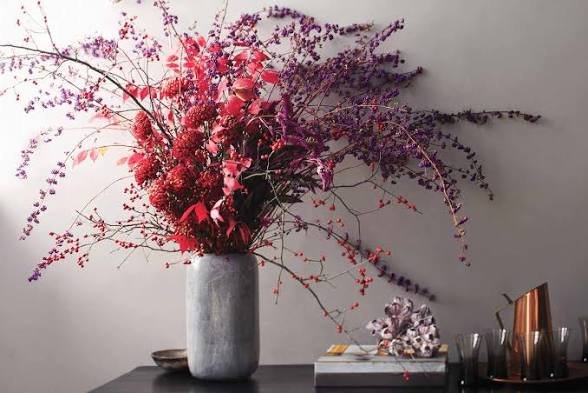
If you love purple, autumn is a great time to be leaning more towards purple flowers.
Think of purple asters, mauve chrysanthemums, plum-toned dahlias, and dust pink roses.
This palette is a wonderful choice because the various flowers involved share similar undertones.
They also offer a refreshing departure from the typical red and yellow fall bouquet.
To create a more relaxed arrangement, ask your florist to leave the bouquet slightly more loose than tightly packed.
A few stems sticking out in a natural fashion can make it feel like a collection of botanicals picked in a late-season garden.
3. Ivory, Sage Green, and Soft Brown
Not all autumn arrangements call for bright colors. Sometimes a quieter combination holds more appeal.
Ivory roses, creamy chrysanthemums, muted greenery, and a few dried botanical accents can help create a beautiful combination.
This non-traditional fall color palette for arrangements is particularly appealing in homes that have neutral interior decor.
It also works very well on wooden dining tables, where the combination of textures help to bring the arrangement together.
The key to creating a compelling palette in this style is to include different shapes and textures so the arrangement doesn’t feel dull.
4. Deep Red, Peach, and Copper
This combination is for people who want a bit of warmth, without going all the way towards pumpkin orange flowers.
Start with deep red flowers, and add in some softer peach blooms, and end with copper-toned foliage or botanical accents.
You get the warmth of autumn, without the overall look being overly themed.
It’s a wonderful choice for a seasonal gift since it has plenty of color, without being overly fall-themed.
5. Lavender, Pale Yellow, and Muted Green
Lavender might not be the first color people think of when it comes to fall, which is exactly why it’s a good choice.
Combine soft purple asters or chrysanthemums with pale yellow flowers and grey-green foliage, and you’ll have a collection that feels fresh and cheerful and a bit unexpected.
This is particularly nice for someone who prefers lighter flowers, but still wants an arrangement that reflects the time of year.
The Flowers That Make These Arrangements Work
While color plays an important role in any arrangement, not just autumn ones, the actual flowers used can make just as big a difference.
Some flowers naturally pair well with autumn arrangements, due to their shape, texture, or seasonal availability.
Dahlias
Dahlias are a hard to beat option for fall flowers.
They come in an amazing array of colors, like burgundy, pink, purple, peach, and creamy white.
Some have nice rounded petals, while others have a looser, more wild look.
In Ontario, dahlias are often locally available through late summer and early fall, until the growing season is over and frost moves in.
Chrysanthemums
Mums are practically autumn royalty, but they deserve a bit more credit than they get.
They come in many more colors than the familiar yellow and orange varieties.
Think about wine red, soft pink, lavender, and creamy white.
Their full texture also makes them a useful option for providing volume to arrangements.
Asters
Asters are a nice addition to any autumn bouquet, as they bring a nice “wild” look to the arrangement.
The daisy-like flowers of the aster come in purple, lavender, pink, and white.
They’re a particularly lovely option in arrangements that call for a more natural look, rather than a more structured one.
Roses
Roses might not be a natural fit for autumn, but that’s what makes them interesting.
They can be included in almost any type of arrangement throughout the year, and the wide range of colors they offer means they can easily be incorporated into any fall palette.
Blush, cream, dusty pink, and deep red roses all pair beautifully with seasonal foliage.
Seasonal Greenery, Dried Botanicals
Sometimes the most interesting parts of a bouquet are not flowers at all.
Seed pods, grasses, eucalyptus, berries, and dried botanical materials can add a nice depth and interest to an arrangement, without making it seem too busy.
But you don’t want to overdo it.
A few accents can add a seasonal feel to an arrangement. Too many can lead the arrangement to resemble an autumn craft collection.
Autumn Floral Trends: Making Less Symmetrical Arrangements
Flowers don’t always need to be in a perfect dome shape.
Actually, some of the most appealing contemporary arrangements have a slight “wild” look to them.
A stem sticks out to one side, a few smaller flowers are placed higher than the main ones, and some greenery extends well beyond the main arrangement.
This creates a less structured look that resembles a collection of botanicals that have been picked in a garden.
That doesn’t mean the florist has just thrown everything into a vase.
To create a loose arrangement that has a natural feel, but still maintains an appealing balance, takes an experienced eye.
Mixing Fresh and Dried Flowers
Another appealing trend in fall floral design is mixing fresh and dried flowers together.
A bouquet of fresh roses and dahlias might include a few dried grasses or seed heads for texture.
It’s an easy way to create an autumn arrangement without having to rely on orange flowers or artificial decorations.
A Little Texture Goes a Long Way
When trying this look at home, it’s important to keep the dried accents as a secondary feature.
The main appeal should still be the fresh flowers.
Keep in mind that some dried materials can shed or become brittle, which is not ideal in a dining room.
Final Thoughts: Fall Flowers Can Be Whatever You Want Them To Be
Orange and yellow will always have their place in autumn, as will red leaves, but there’s no reason we can’t embrace the other colors we see at this time of year as well.