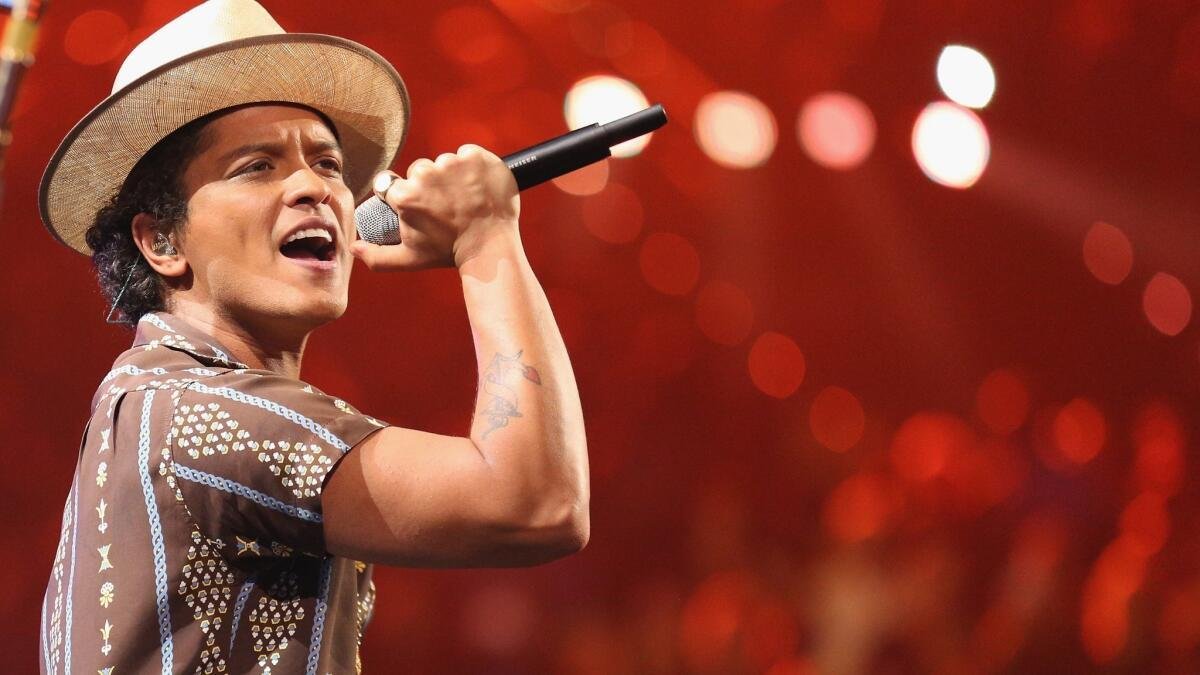
Bruno Mars Ethnic Group: Filipino, Puerto Rican and Jewish Heritage
Bruno Mars ethnic group is a popular topic among fans who want to understand the background of one of the most successful pop performers of his generation. Born Peter Gene Hernandez in Honolulu, Hawaii, Bruno Mars comes from a multicultural family with Filipino, Puerto Rican, and Jewish heritage. His family background connects him to different cultural traditions, while his American upbringing in Hawaii exposed him to a wide range of musical styles and influences.
Understanding his ancestry requires looking beyond a single ethnic label. His mother, Bernadette San Pedro Bayot, was Filipino, while his father, Peter Hernandez, has Puerto Rican and Jewish ancestry. These family roots help explain why the singer is often described as having a mixed ethnic background. However, his heritage is only one part of his story. His childhood, family life, cultural surroundings, and early exposure to live music also played important roles in shaping his identity.
This article explores his family origins, Filipino and Puerto Rican connections, Jewish ancestry, American nationality, and the relationship between his multicultural background and musical career. It also explains the difference between ethnicity, race, and nationality so readers can understand his identity without relying on assumptions based on appearance.
What Is Bruno Mars Ethnic Group?
Bruno Mars has a mixed ethnic background that includes Filipino, Puerto Rican, and Jewish heritage. His mother’s family is Filipino, while his father’s side is associated with Puerto Rican and Ashkenazi Jewish ancestry.
Here is a straightforward overview of his publicly reported background.
| Personal detail | Information |
| Professional name | Bruno Mars |
| Birth name | Peter Gene Hernandez |
| Date of birth | October 8, 1985 |
| Birthplace | Honolulu, Hawaii, United States |
| Nationality | American |
| Mother’s heritage | Filipino |
| Father’s heritage | Puerto Rican and Jewish |
| Overall background | Multicultural and mixed ancestry |
| Early musical environment | A musical family in Hawaii |
These details are consistent with established biographical reporting, including a profile published by GQ and coverage from CBS News.
GQ
+1
The most accurate short answer is that Mars is an American singer of Filipino, Puerto Rican, and Jewish descent. Some biographies also describe Spanish ancestry in connection with his mother’s family. The available public accounts do not provide a complete genetic breakdown, so it is better to describe his documented family heritage than to assign precise percentages without reliable evidence.
His background also illustrates why ethnic identity cannot always be reduced to one category. A person can have family connections to several cultures while growing up primarily within another cultural environment.
For Mars, Hawaii was that environment. His upbringing brought together family traditions, local Hawaiian culture, and musical influences from different parts of the world.
Understanding His Filipino Heritage
One of the most important parts of Bruno Mars’s family background is his Filipino heritage through his mother, Bernadette San Pedro Bayot.
The Philippines is an archipelago in Southeast Asia with a rich cultural history shaped by Indigenous traditions, regional languages, Spanish colonial rule, and later American influence. Filipino identity is diverse, and the experiences of Filipino families vary significantly by region, language, religion, and migration history.
Mars’s maternal background connects him to this wider cultural community. His mother was a singer and dancer, and her involvement in entertainment formed part of the musical environment in which he grew up.
Who Was His Mother, Bernadette San Pedro Bayot?
Bernadette San Pedro Bayot was a Filipino singer and dancer who performed in Hawaii. She met Peter Hernandez through their shared involvement in music and entertainment.
Their professional lives meant that music was not simply something played in the background of the household. It was part of the family’s everyday activities and work. This early environment gave Mars opportunities to watch performers, hear different styles, and participate in live entertainment from a young age.
His mother’s role is significant because biographies sometimes focus heavily on his father and the Puerto Rican side of his ancestry. A complete account must recognize that his Filipino roots are equally important to understanding his family background.
Filipino Culture and His Childhood
Mars grew up in Hawaii, where Filipino communities have a long-standing presence. Filipino Americans have contributed to the islands’ social life, food, music, labor history, and family traditions over many generations.
Although it would be inaccurate to attribute every aspect of Mars’s personality or musical style directly to Filipino culture, his maternal ancestry forms an important part of his family history.
In an interview published by Just Jared in 2010, Mars discussed his Filipino mother and mentioned chicken adobo as a favorite food. He also recalled the food associated with his Puerto Rican family. These details offer a more personal glimpse into his cultural upbringing than a list of ethnic labels alone.
Celebrity News, Entertainment News & Photos
Chicken adobo is a widely recognized Filipino dish generally prepared with ingredients such as vinegar, soy sauce, garlic, and seasonings. Recipes vary between households and regions. Its mention in the interview illustrates how cultural heritage can remain present through ordinary family experiences, including meals and shared memories.
Why His Filipino Background Matters
His Filipino ancestry is relevant for several reasons:
- It is a documented part of his immediate family history.
- It connects him to Filipino American representation in mainstream popular music.
- It helps explain why describing him only as Puerto Rican leaves out a major part of his background.
- It highlights the diversity of families and cultural identities found in Hawaii.
- It provides context for understanding his upbringing without assuming that ancestry determines artistic ability.
Mars’s success has also made his name recognizable to audiences in the Philippines and among Filipino communities around the world. His heritage gives many fans an additional reason to feel connected to his story, although fans can appreciate his work regardless of their own background.
The important distinction is that his Filipino ancestry is a matter of family history, while the personal meaning he attaches to that ancestry is something that should not be presumed beyond his public statements.
Exploring His Puerto Rican Heritage
Puerto Rican ancestry is another major part of Bruno Mars’s ethnic background. His father, Peter Hernandez, is Puerto Rican and grew up in Brooklyn, New York, before becoming a musician in Hawaii.
Puerto Rico is a Caribbean island and a United States territory. Its culture reflects centuries of interaction among Indigenous Taíno peoples, Spanish colonists, Africans and their descendants, and other communities. Puerto Rican identity includes a broad range of family histories, cultural practices, languages, and traditions.
Mars’s connection to Puerto Rico comes through his father’s side of the family. This heritage is important to understanding his background, particularly because his father’s surname, Hernandez, is often associated with Spanish-speaking communities.
However, a surname alone cannot establish someone’s complete ethnicity. In Mars’s case, his Puerto Rican ancestry is supported by biographical reporting and his own public comments about his family.
Who Is His Father, Peter Hernandez?
Peter Hernandez is a musician who performed as a percussionist and was involved in the entertainment business in Hawaii. He and Bernadette Bayot shared a passion for music, and their professional partnership helped create the environment in which their children grew up.
His father’s musical interests exposed Mars to energetic live performances and older popular music. The family participated in a show that included singing, dancing, and impersonations of well-known entertainers.
This upbringing was unusual compared with that of many children who first encounter professional performance during their teenage years. Mars was exposed to a working entertainment environment while he was still very young.
His father also gave him the nickname Bruno when he was a toddler. The name was inspired by professional wrestler Bruno Sammartino, whom his father thought the young child resembled. Mars later adopted the surname Mars as part of his professional identity.
The stage name became internationally recognizable, but his birth name remains Peter Gene Hernandez.
Puerto Rican Traditions in His Family
In his 2010 interview with Just Jared, Mars recalled a dish prepared by his father’s mother that he described as Spanish rice. He explained that it included yellow rice, olives, peppers, and other ingredients.
Family recipes are not definitive evidence of ethnicity, but they can offer a window into how cultural traditions are shared across generations. In this case, the interview provides a concrete example of how his father’s family background was present in his childhood.
Puerto Rican cuisine includes dishes such as arroz con gandules, mofongo, pasteles, and various preparations of rice, beans, plantains, and meat. Recipes differ by family, and foods described as Spanish rice can have different meanings depending on the household.
It would be misleading to assume that one food or family tradition represents every Puerto Rican household. The more useful point is that Mars grew up around family members with distinct cultural backgrounds, and their experiences formed part of his early life.
How His Puerto Rican Identity Fits Into His American Life
Being Puerto Rican and being American are not mutually exclusive identities. People born in Puerto Rico are generally U.S. citizens under federal law, and Puerto Rican communities have longstanding connections to the mainland United States.
Mars was born in Honolulu, not Puerto Rico. His Puerto Rican identity therefore comes through his family ancestry rather than his birthplace.
That distinction helps answer a common question about his background: he can accurately be described as an American singer of Puerto Rican descent without suggesting that he was born or raised on the island.
His story also reflects the experiences of many Americans whose family histories span different locations. Family heritage can remain important even when a person grows up thousands of miles from the place associated with one side of their ancestry.
Bruno Mars’s Jewish Ancestry
Another element of Mars’s reported family background is Jewish ancestry on his father’s side. Biographical accounts identify his father as having Puerto Rican and Ashkenazi Jewish roots.
Ashkenazi Jews are a Jewish cultural and ancestral community historically associated with Central and Eastern Europe. Over centuries, Ashkenazi communities developed distinctive traditions in religious practice, language, food, music, and family life.
Jewish identity can refer to religion, ancestry, culture, or a combination of these elements. Therefore, having Jewish ancestry does not automatically establish a person’s religious beliefs or level of religious observance.
What Does Ashkenazi Jewish Heritage Mean?
Ashkenazi Jewish heritage describes connections to Jewish communities that developed across parts of Europe, particularly in regions that today include Germany, Poland, Ukraine, and neighboring countries.
It is important to distinguish this historical community from Judaism as a religion. Jewish people may identify through religious practice, cultural traditions, family ancestry, or several of these factors at once.
In Mars’s case, public biographical sources report Jewish ancestry through his paternal family. However, this information should not be expanded into claims about his personal religious beliefs unless those claims are supported by reliable statements from him.
His Jewish ancestry is one component of a larger family history that also includes Puerto Rican and Filipino connections.
Why This Part of His Background Is Sometimes Overlooked
Popular biographies tend to emphasize the most immediately recognizable details about a celebrity. For Mars, these often include his Hawaiian birthplace, Filipino mother, and Puerto Rican father.
Jewish ancestry receives less attention in many short profiles because summaries typically focus on only a few details. Yet leaving it out can make descriptions of his family background incomplete.
At the same time, responsible reporting should avoid presenting every ancestral detail as equally documented. His general Jewish heritage is reported in established biographical accounts, but highly specific claims about distant ancestors or migration routes require separate evidence.
There is no need to invent additional genealogical details to answer the central question. The available reporting supports the conclusion that Jewish ancestry forms part of his paternal family history.
Ancestry Is Not the Same as Religious Identity
One important distinction deserves special attention. Ethnic background, ancestry, and religion are related concepts, but they are not interchangeable.
For example:
- Ancestry refers to a person’s family origins.
- Ethnicity often involves shared cultural history, heritage, and community connections.
- Religion refers to beliefs, practices, and religious affiliation.
- Nationality refers to a person’s legal or national relationship with a country.
These categories can overlap, but one does not automatically determine the others.
For that reason, it is more accurate to say that Mars has reported Jewish ancestry than to make unsupported statements about his current religious identity.
Is Bruno Mars Filipino, Puerto Rican, or Jewish?
The answer is that his family background includes all three. Each description identifies a different part of his ancestry rather than contradicting the others.
Calling him Filipino reflects his mother’s heritage. Describing him as Puerto Rican refers to his father’s ancestry. Mentioning Jewish heritage adds another element of his paternal family history.
The confusion often arises because people expect a celebrity to fit into one exclusive ethnic category. Real family histories are frequently more complex.
A person with parents from different backgrounds may maintain relationships with several cultural communities. The relative importance of those identities can also vary over time, depending on family experiences, personal choices, and the environment in which the person grows up.
Mars’s case illustrates why a complete answer should explain the different branches of his family rather than selecting one label and ignoring the rest.
Is He Mixed Race?
Mars is commonly described as having a mixed ethnic background, and the term mixed race is also used in public discussion of his identity.
However, race and ethnicity are not identical concepts. Race is a social classification often associated with perceived physical characteristics and historical systems of categorization. Ethnicity generally refers more directly to shared ancestry, cultural heritage, and community identity.
These concepts can overlap, and different societies use different categories. A person’s racial identity also cannot be reliably determined from a photograph.
The most useful factual description is that Mars has Filipino, Puerto Rican, and Jewish family heritage, with some biographies also identifying Spanish ancestry through his maternal side.
This explanation provides more information than simply calling him mixed race because it identifies the actual family backgrounds involved.
Does He Have Spanish Ancestry Too?
Some biographies describe Mars as having Spanish ancestry in addition to his Filipino, Puerto Rican, and Jewish roots.
There are historical reasons that Spanish ancestry may appear in discussions of both Filipino and Puerto Rican family backgrounds. Spain governed the Philippines for centuries and colonized Puerto Rico, leaving lasting influences on language, surnames, religion, and cultural practices.
Nevertheless, the history of Spanish colonial rule does not mean every Filipino or Puerto Rican person has the same genetic ancestry. Individual family histories differ.
For Mars, Spanish ancestry is reported in some accounts of his maternal background. It is reasonable to mention this as part of the publicly described family history, while avoiding claims about exact percentages that have not been established through published genetic evidence.
Bruno Mars’s Nationality and Place of Birth
Although his ancestry spans several cultural backgrounds, Bruno Mars is American by nationality. He was born on October 8, 1985, in Honolulu, Hawaii, in the United States.
Hawaii is a distinctive setting for understanding his upbringing. The islands have a complex history involving Native Hawaiian culture, Asian migration, Pacific Islander communities, European influence, and connections to the mainland United States.
Honolulu is particularly diverse, and its communities include people with Filipino, Japanese, Chinese, Korean, Native Hawaiian, Portuguese, Puerto Rican, and many other backgrounds.
Growing up in such an environment meant Mars encountered cultural variety from an early age. His family’s own multicultural background was part of a wider social setting where different traditions and identities existed alongside one another.
Why Hawaii Matters to His Story
Hawaii was not simply the place where Mars happened to be born. It was the setting for his early musical experiences and the development of his performance skills.
His parents worked as entertainers, and their family show introduced him to an audience while he was still a child. He performed Elvis Presley impersonations and became known locally for his stage presence.
By the time he pursued a career in the wider music industry, he already had experience performing in front of people. That experience was an important part of his development as an entertainer.
His upbringing also exposed him to music that crossed conventional genre boundaries. Rock and roll, reggae, pop, rhythm and blues, and other styles formed part of the broader musical environment around him.
It would be an oversimplification to say that his ethnicity alone produced his musical style. His family, training, personal interests, performance experience, and exposure to different genres all contributed to his development.
How His American Nationality Differs From His Ethnicity
Nationality answers a different question from ethnicity.
If someone asks where Mars is from in the national sense, the answer is the United States. If the question concerns his family ancestry, the answer includes Filipino, Puerto Rican, and Jewish heritage.
Both descriptions are correct because they refer to different aspects of his identity.
This distinction is useful when researching celebrities because birthplace, citizenship, family origin, and cultural affiliation are often mixed together in online biographies. Keeping them separate makes an answer clearer and more accurate.
How His Multicultural Background Connects to His Music
Bruno Mars is known for a musical style that draws on several generations of popular music. His work includes pop, funk, soul, rhythm and blues, reggae influences, and elements of older rock and roll.
His multicultural family background provides context for his upbringing, but it should not be treated as the sole explanation for his sound. The strongest evidence of his musical development comes from his childhood experiences, his parents’ work, the artists he admired, and his own creative decisions.
Growing Up in a Musical Household
Mars’s parents were performers, and their family entertainment show exposed him to music and stagecraft from a very early age.
According to a 60 Minutes profile published by CBS News, his parents performed together in Waikiki, and their act was known as the Love Notes. Mars joined the family performances as a young child, initially appearing as an Elvis Presley impersonator.
This experience gave him an early introduction to audience engagement, timing, stage movement, and the practical demands of live performance.
It also meant that music was a family activity as well as a profession. Instead of learning about entertainment exclusively through recordings, he could observe working performers directly.
These experiences help explain why his later performances often combine singing with choreography, expressive gestures, and a strong sense of showmanship.
The Influence of Different Musical Traditions
Mars’s music is associated with several genres that developed in different historical and cultural settings.
- Soul: A vocal tradition strongly connected to African American musical history, gospel, and rhythm and blues.
- Funk: A groove-centered style associated with musicians who emphasized rhythmic interplay, bass lines, and distinctive percussion.
- Pop: Music designed to communicate broadly through memorable melodies, accessible arrangements, and strong hooks.
- Reggae: A Jamaican musical tradition that became internationally influential through its distinctive rhythms and vocal styles.
- Rock and roll: A genre shaped by multiple musical traditions, including blues, rhythm and blues, gospel, and country music.
Mars’s ability to move between these styles is an important part of his artistic identity. Songs such as “Uptown Funk,” “Locked Out of Heaven,” and “When I Was Your Man” demonstrate how different his arrangements and vocal approaches can be from one release to another.
These examples do not prove that any single ethnic background directly caused a particular musical choice. Instead, they show that his artistic range extends beyond a narrow genre classification.
The Importance of Black Musical History
A meaningful discussion of Mars’s music must acknowledge the African American artists and traditions that helped shape modern popular music.
Soul, funk, and rhythm and blues have influenced generations of performers across the world. Mars has publicly discussed the importance of artists such as James Brown, Prince, and Michael Jackson to his musical development.
Recognizing these influences provides a clearer understanding of his artistry than trying to connect every part of his sound to his ancestry.
Musicians regularly learn from artists whose ethnic, national, and cultural backgrounds differ from their own. This exchange can be productive when artists recognize the origins of the music they perform and understand the traditions they are drawing upon.
Mars’s career is an example of how popular music can bring together influences from different eras and communities. His family background forms part of his story, while his musical influences offer another important way to understand his work.
Does His Ethnicity Explain His Musical Success?
Not by itself.
Musical success depends on many factors, including songwriting, vocal ability, production, performance, collaboration, timing, industry support, and audience response.
Mars developed his craft over many years. Before becoming widely known as a solo performer, he worked as a songwriter and producer and collaborated with other musicians. Those experiences helped him develop a practical understanding of song structure, arrangement, and commercial music production.
His family environment gave him an early start, but it did not guarantee international success. His later career also required professional development, persistence, and the ability to connect with audiences.
The broader lesson is that cultural heritage can provide personal context without becoming a simplistic explanation for talent or achievement.
How Bruno Mars Has Discussed His Mixed Background
Mars’s identity has attracted attention partly because people sometimes make assumptions about ethnicity based on appearance.
In a 2017 interview discussed by Telemundo’s entertainment coverage, Mars spoke about growing up in Hawaii and being perceived differently by people around him. The report described his experience of being mistaken for other racial backgrounds because of his appearance.
These experiences highlight a familiar issue for people with mixed ancestry: other people may try to categorize them before learning anything about their family history.
Why Appearance Is Not a Reliable Guide to Ethnicity
People from the same ethnic group can have a wide range of physical characteristics. Likewise, people with similar appearances may have very different ancestral backgrounds.
Hair texture, skin tone, facial features, and other visible traits cannot establish a person’s ethnicity with certainty.
Mars’s appearance has sometimes prompted public speculation about his racial identity. However, speculation based on photographs is less reliable than information about his family and his own public comments.
A more accurate approach is to distinguish between what is documented and what people assume.
For example, it is documented that Mars was born in Hawaii and has Filipino and Puerto Rican family roots, along with reported Jewish ancestry. A stranger’s guess about his ethnicity based on his hair or skin tone cannot replace that information.
The Challenges of Being Misidentified
People with multiple cultural backgrounds may find that others recognize only one part of their heritage or assign them an identity that does not reflect their family history.
This can happen in workplaces, schools, entertainment, and everyday social situations. The experience varies from person to person, and not everyone with mixed ancestry feels the same way about labels.
For public figures, the issue can become more visible because audiences frequently discuss their appearances and backgrounds online.
Mars’s public image demonstrates how celebrity can increase interest in personal identity while also encouraging oversimplified classifications.
The responsible response is not to assume that every mixed-background person experiences identity in the same way. It is to recognize that individuals have their own relationships with their ancestry and may describe those relationships differently.
Why Accurate Representation Matters
Accurate descriptions of a public figure’s background help readers understand the person without reinforcing stereotypes.
When a biography identifies only one part of someone’s ancestry, readers may come away with an incomplete picture. When it assigns a label based only on appearance, it risks replacing facts with assumptions.
In Mars’s case, a careful description includes his Filipino maternal heritage, his Puerto Rican paternal heritage, and his reported Jewish ancestry. It also recognizes his American nationality and Hawaiian upbringing.
This approach respects the complexity of his family history without claiming to know more about his private identity than the public record establishes.
How to Research Bruno Mars’s Ethnic Background Accurately
Celebrity ancestry articles often repeat information from other websites without checking where it originated. This can create errors, especially when family details become more specific with each repetition.
A reliable account should separate established biographical facts from interpretations and unsupported claims.
1. Start With Established Biographical Reporting
Look for reputable interviews and profiles that identify the singer’s parents, birthplace, and family background.
For example, the GQ profile of Mars published in 2013 discusses his upbringing and describes his parents’ backgrounds. CBS News has also covered his early life and musical education.
An interview can be particularly useful because it may provide the subject’s own recollections rather than relying entirely on summaries written by others.
2. Distinguish Direct Statements From Biographical Summaries
A direct interview provides evidence of what a person said in that conversation. A biography provides an author’s account of the person’s life.
Both can be useful, but they are not identical.
If a publication states that a musician has a particular ancestral background, it is worth checking whether the detail appears in an interview, an established biography, or a secondary website that does not identify its sources.
This matters most when a claim becomes unusually specific, such as naming a distant ancestor, identifying a precise ancestral region, or assigning an exact percentage to an ethnic group.
3. Avoid Unsupported Ancestry Percentages
There is no reliable basis for assigning Mars exact percentages of Filipino, Puerto Rican, Jewish, or Spanish ancestry simply from the commonly reported descriptions of his parents.
Family ancestry is not always equivalent to a simple percentage calculation. Historical identities and modern ethnic categories do not map perfectly onto genetic ancestry, and individual family histories may contain more complexity than short biographies reveal.
Unless credible, relevant genetic evidence is publicly available, an article should not invent numerical breakdowns.
4. Separate Nationality From Family Origins
Birthplace and nationality are straightforward biographical facts, but they answer different questions from ethnicity.
Mars was born in the United States, while his ancestry includes family connections to the Philippines, Puerto Rico, and Jewish communities.
Keeping those details separate makes the answer more informative and avoids implying that someone must have been born in a particular country to possess that country’s cultural or ancestral heritage.
5. Update Information When Better Evidence Appears
Celebrity biographies can contain errors that spread across websites. If new interviews or credible biographical records clarify an earlier claim, an article should be reviewed and corrected.
The goal is not to add more details simply to make a page longer. It is to provide the clearest explanation supported by the available evidence.
For this topic, the essential facts are already sufficient to answer the main question. More elaborate claims about genealogy should be included only when they can be independently supported.
Why His Background Is Important to Fans
For many fans, learning about a musician’s ancestry creates a more personal connection with the artist. It can also provide context for understanding the communities and experiences represented in popular culture.
Mars’s family history connects several different cultural traditions, and his success has introduced his name to audiences around the world.
Representation in Popular Music
Representation matters because popular music reaches audiences across national and cultural boundaries. When a performer has a multicultural background, listeners may recognize parts of their own family history in the artist’s story.
Filipino American listeners, Puerto Rican communities, Jewish audiences, and people from mixed-background families may all be interested in different parts of Mars’s ancestry.
However, representation does not mean an artist must speak for every community associated with their family history. One person cannot represent the full range of experiences within a large ethnic or cultural group.
Mars is an individual artist with a particular family history, career, and public identity. His background is meaningful in its own right, without requiring him to serve as a universal representative of every ancestry connected to him.
Understanding Cultural Identity Beyond Labels
Ethnic labels can be useful starting points, but they rarely tell a complete story about a person.
A fuller understanding also considers where someone grew up, the languages and traditions present in their household, their relationships with family members, and the experiences that shaped their life.
In Mars’s case, his Hawaiian upbringing and his parents’ work as entertainers are essential parts of the story. His family ancestry provides additional context, while his career demonstrates how individual choices and professional development shape an artist over time.
This broader view avoids reducing a person to a list of ethnic categories.
What Readers Can Learn From His Story
His background offers several useful lessons for anyone researching ethnicity and identity:
- People can have family roots in several different cultural communities.
- Ethnicity and nationality describe different aspects of a person’s background.
- Appearance is not a dependable way to determine ancestry.
- Family traditions can help explain cultural connections, but they do not define every member of a group.
- Personal identity should not be inferred entirely from a person’s parents or grandparents.
- Biographical claims should be supported by credible sources rather than repeated assumptions.
These principles are relevant well beyond celebrity reporting. They help readers approach questions about identity with greater accuracy and respect.
Frequently Asked Questions
1. What is Bruno Mars’s ethnic group?
Bruno Mars has a mixed ethnic background that includes Filipino, Puerto Rican, and Jewish ancestry. Some biographical accounts also identify Spanish ancestry through his mother’s side. He was born and raised in Hawaii and is American by nationality.
2. Is Bruno Mars Filipino?
Yes. His mother, Bernadette San Pedro Bayot, was Filipino. His Filipino ancestry is an important part of his family background and connects him to Filipino American heritage.
3. Is Bruno Mars Puerto Rican?
Yes. His father, Peter Hernandez, is of Puerto Rican descent. Mars was born in Honolulu, Hawaii, rather than Puerto Rico, so his Puerto Rican heritage comes through his father’s family.
4. Does Bruno Mars have Jewish ancestry?
Yes. Biographical accounts identify Jewish ancestry on his father’s side, including Ashkenazi Jewish heritage. This describes his reported family background and does not, by itself, establish his personal religious beliefs.
5. What is Bruno Mars’s real name and nationality?
His birth name is Peter Gene Hernandez. He was born on October 8, 1985, in Honolulu, Hawaii, United States, and is American by nationality. Bruno was a childhood nickname, while Mars became part of his professional stage name.
6. Is Bruno Mars mixed race?
He is widely described as having a mixed ethnic background. His reported ancestry includes Filipino, Puerto Rican, and Jewish roots. However, race and ethnicity are different concepts, and the most informative description identifies his family heritage rather than relying on appearance alone.
Conclusion
Bruno Mars’s ethnic background reflects a family history that brings together Filipino, Puerto Rican, and Jewish heritage, with some accounts also identifying Spanish ancestry. Born Peter Gene Hernandez in Honolulu, Hawaii, he grew up in a family of performers whose influence helped introduce him to music at an early age.
His mother’s Filipino roots and his father’s Puerto Rican and Jewish ancestry are all important parts of his background. At the same time, his American nationality and Hawaiian upbringing help explain the wider environment in which he developed as an artist.
His musical career also demonstrates why heritage should not be treated as the sole explanation for someone’s achievements. Family experiences, musical influences, professional development, and individual creativity all contribute to an artist’s identity.
Ultimately, the clearest answer to the question of Bruno Mars ethnic group is that he has a multicultural family background. Understanding that background requires distinguishing ancestry from nationality, ethnicity from religion, and documented facts from assumptions based on appearance. These distinctions provide a more accurate and respectful understanding of both the singer and the diverse communities connected to his family history.