How to Set Up a Camp Dining Area: Making the Most of Limited Space
A folding table and a few chairs might seem like all you need for a campsite dining area. But once everyone settles in, small inconveniences appear. Chairs block the walkway, bags get in the way of carrying food, and a comfortable spot becomes too sunny by the afternoon.
The solution isn’t always more equipment. A thoughtful layout, with room for cooking, dining, and relaxing, can make even a small campsite easier to use.
Choose the Right Spot Before Setting Up Furniture
Before unfolding the table and chairs, look for level, stable ground away from standing water, obstacles, and vehicle access routes.
Allow enough space for people to pull out chairs, stand up, and carry food without squeezing past one another. If chairs need to be moved every time someone walks through, the layout needs adjusting.
There’s no need for perfectly symmetrical seating. Slightly offset chairs can work better as long as the main walkways stay clear.
Give Cooking and Dining Their Own Space
Cooking and eating often happen at the same time, but placing a stove directly beside the dining table can create unnecessary crowding and increase the risk of accidents.
Keep stoves and grills away from seating and walkways, and use them only in permitted outdoor areas according to the manufacturer’s instructions and campground rules. Don’t move them inside a tent or beneath a regular canopy for shelter.
Position the cooking area near ingredients and utensils, with a clear route to the table. This gives the cook room to work while others can move around comfortably.
Plan Shade Without Blocking Walkways
A dining area that’s shaded in the morning may be exposed to direct sunlight later in the day. When choosing a canopy or shelter, consider both the sun’s changing position and the space people need to move around.
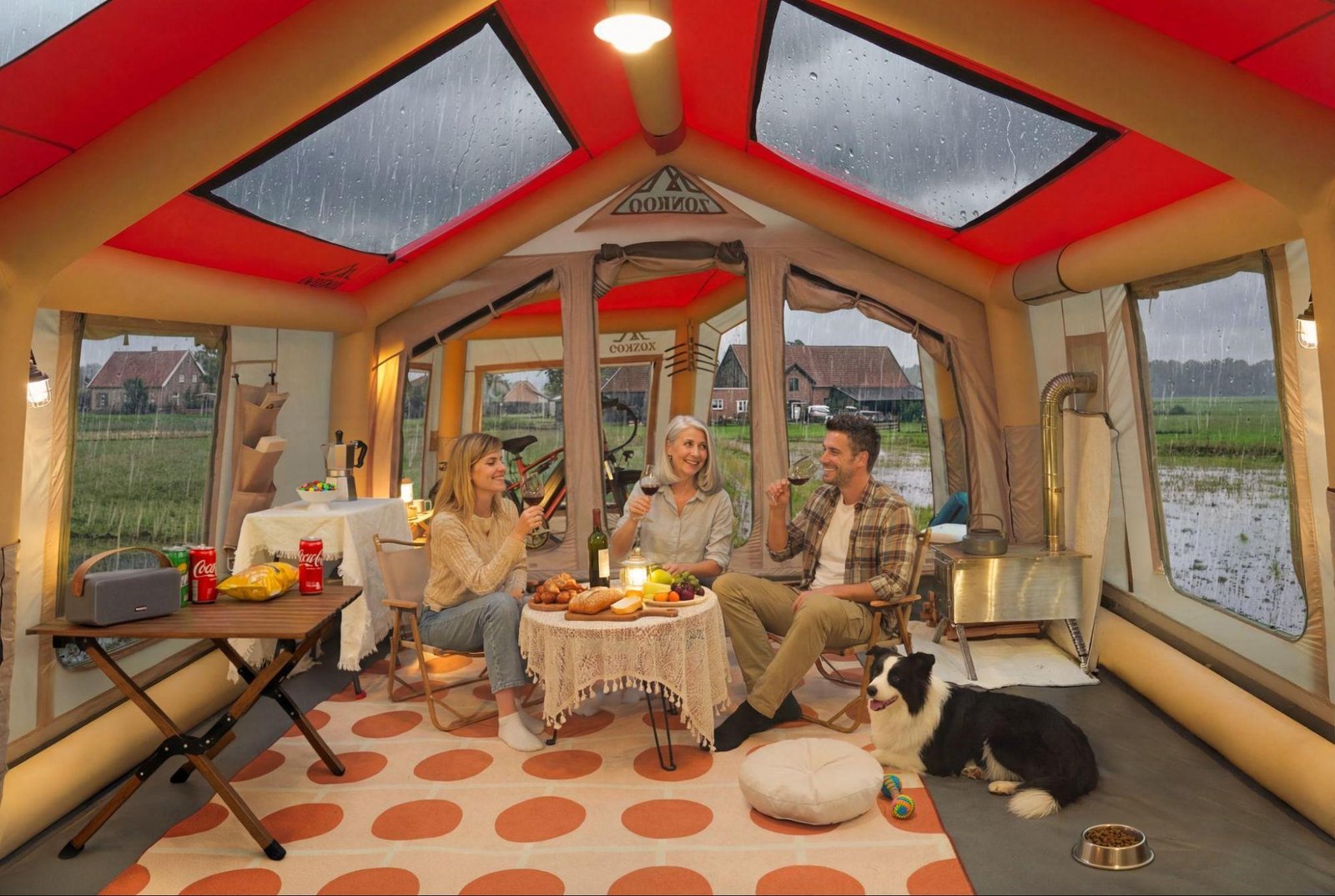
Standalone canopies, gazebos, and inflatable tents with extended shaded areas can provide coverage for outdoor seating. Check that the shaded area fits your table and chairs without blocking entrances or walkways.
Leave room for stakes and guy lines, too. More shade isn’t helpful if people have to step around anchoring points whenever they cross the campsite.
At smaller sites, it’s often enough to shade the main dining area rather than the entire campsite.
Is a Separate Seating Area Worth Having?
After a meal, the table may still be covered with dishes or supplies. If some people want to keep talking while others prefer to relax, a few chairs away from the table can make the space more flexible.
For larger groups with enough room, separate areas can serve different activities. For example, the zonkoo Draco Plus, among large inflatable tents for camping, combines a main tent with an attached gazebo and offers approximately 252 square feet of total usable space. The gazebo can be used for dining, relaxing, or organizing gear without taking up the sleeping area.
A separate seating area isn’t essential, though. For two or three campers, a table and a few movable chairs may be all that’s needed.
Light the Table and Nearby Paths
Lighting that works for dinner may not be enough for moving around the campsite after dark.
A bright lamp can be uncomfortable when it shines directly into someone’s eyes, while a well-lit table surrounded by dark walkways creates another problem.
Use moderate lighting near the table and softer lights along frequently used paths. Position them to illuminate food, utensils, and potential obstacles without shining directly at people.
Keep electrical cords out of walkways, and check the battery levels of rechargeable lights before leaving.
Keep the Dining Table Clear
Without a place for smaller items, a campsite dining table quickly becomes a storage area. Breakfast supplies, snacks, flashlights, and jackets can take over the space throughout the day.
A nearby storage box can keep utensils, tissues, and cleaning supplies organized and within reach.
Food, trash, and anything that might attract wildlife should be stored according to campground rules rather than left outside. Clearing food scraps and tidying the table before bed also makes the area easier to use the next morning.
The goal is simple: keep essentials accessible without sacrificing dining space.
Buy New Furniture to Solve Specific Problems
After a few camping trips, you may notice that your table is too large, your chairs block the walkway, or your dining area lacks shade.
Before buying replacements, identify what’s causing the problem. Sometimes rearranging existing furniture is enough.
If new equipment is necessary, black friday deals can be an opportunity to compare suitable options. Look beyond price and check the dimensions when set up, packed size, and weight to see whether a replacement will actually improve your layout.
Furniture that’s easy to move, fold, and store may be more useful than a larger or more complicated setup.
A good campsite dining area isn’t defined by how much furniture it holds. With the right arrangement of seating, shade, lighting, and storage, even a small space can comfortably accommodate meals, conversations, and time to relax.