Okfrut: A Complete Guide to Its Drinks, Flavors, Ingredients, and Nutrition
Okfrut is a name associated with fruit-flavored beverages that have attracted attention from people interested in tropical drinks, refreshing flavors, and convenient alternatives to traditional soft drinks. Whether someone discovers the brand through a grocery store, an online product listing, or a recommendation, understanding what Okfrut actually offers requires looking beyond its name. Its documented beverage history includes several fruit-inspired varieties, different drink formulations, and nutritional characteristics that deserve closer attention.
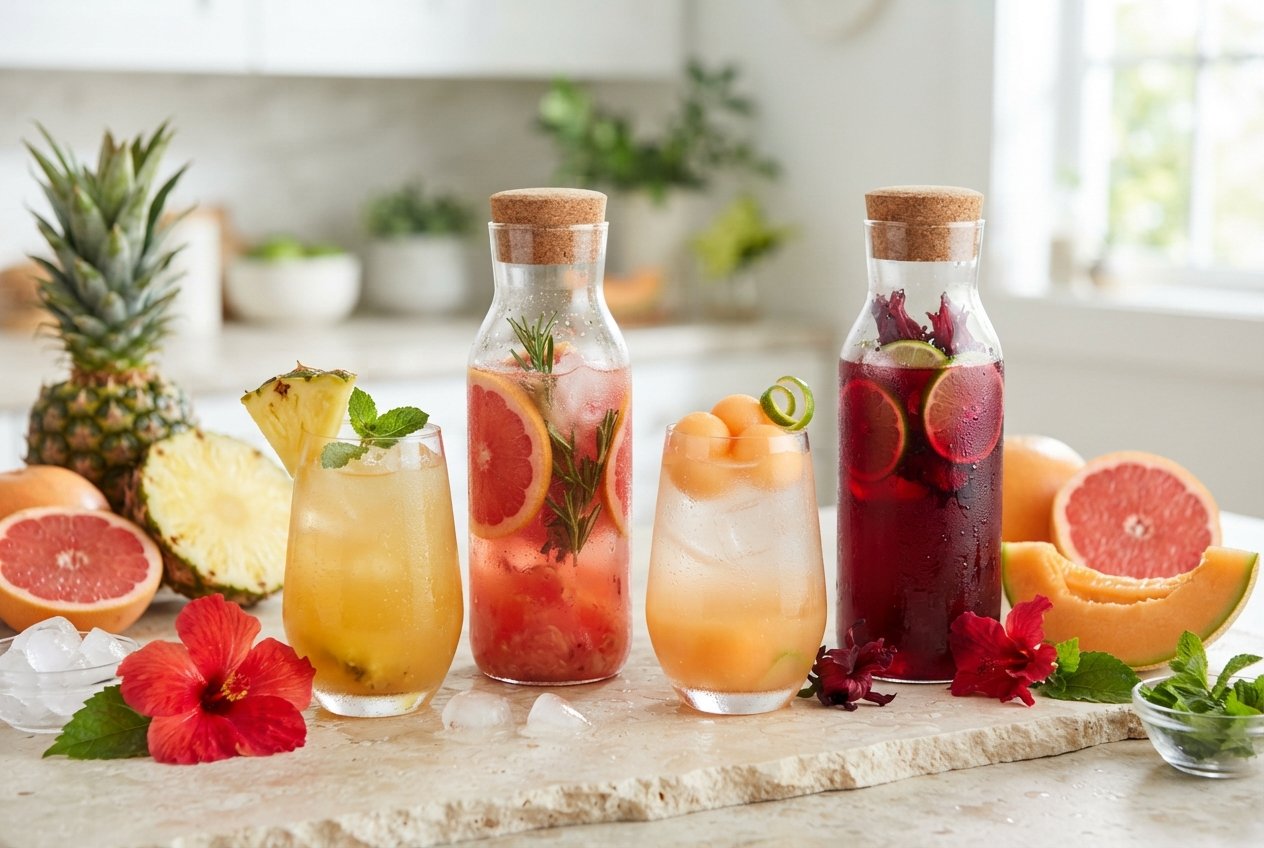
Unlike brands with extensive public product catalogues, information about Okfrut is relatively limited and comes from different types of records. Historical packaged-food listings identify beverages associated with pineapple, grapefruit, cantaloupe melon, and hibiscus. Other retail listings have featured sparkling drink products under similar branding. However, these records do not establish that every historical product remains available today.
This guide explores the brand’s background, documented beverage varieties, ingredients, nutritional considerations, potential advantages, and practical shopping considerations. It also explains how to evaluate individual products, understand their labels, and distinguish verified information from assumptions.
What Is Okfrut?
Okfrut is a beverage brand name associated with packaged fruit-flavored drinks. Its documented product history includes fruit drink water products developed around familiar tropical and refreshing fruit flavors.
The name is particularly interesting because it does not describe one specific type of beverage. Instead, products associated with it have appeared in different formats and formulations. Some historical listings describe still fruit-flavored water, while other retail catalogues have featured sparkling beverage varieties.
This distinction matters because two drinks carrying similar branding can have very different nutritional characteristics.
For example, a pineapple-flavored beverage containing fruit juice and added sugar may have a different calorie count from a sparkling drink formulated with alternative sweeteners. Consumers should therefore evaluate the actual product rather than assuming that every beverage has the same ingredients.
Understanding the Meaning Behind the Name
The name combines a short, recognizable expression with a reference to fruit. Its straightforward appearance makes it easy to remember and gives it a connection with fruit-based refreshments.
However, the name itself should not be treated as evidence of nutritional quality. A beverage containing fruit imagery or a fruit-inspired name is not automatically made entirely from fresh fruit.
The most reliable way to understand a particular drink is to examine its packaging, ingredients, manufacturer information, and nutrition declaration.
Is It a Fruit Juice or a Flavored Drink?
This is one of the most important distinctions for consumers.
A fruit juice generally contains juice extracted from fruit, while a fruit-flavored beverage may contain water, a smaller quantity of fruit-derived ingredients, sweeteners, flavorings, and other ingredients.
Fruit drinks can also be formulated with concentrates or fruit purées. These ingredients contribute different characteristics to the finished beverage.
Historical product information associated with Okfrut includes descriptions such as fruit drink water. Therefore, it would be inaccurate to describe the entire product range as 100% fruit juice.
Consumers should check whether the packaging identifies the beverage as:
- 100% fruit juice.
- Fruit juice from concentrate.
- Fruit nectar.
- Fruit-flavored water.
- Sparkling fruit-flavored water.
- A low-calorie or zero-sugar beverage.
These categories are not interchangeable, and their ingredients can differ considerably.
The Background and History of Okfrut
Understanding a beverage brand’s background helps consumers separate established information from promotional descriptions.
Public United States trademark information associates the OKFRUT name with Whole Fruit JPC. A trademark application filed on September 16, 2014, under serial number 86981327, identifies fruit-flavored beverages among the goods associated with the mark.
This provides a useful starting point for understanding the brand’s commercial identity.
The trademark connection is particularly relevant because unfamiliar beverage names can sometimes be confused with unrelated food products, online services, or similarly named companies.
However, a trademark record does not establish the complete history of a company, its production volume, or the present availability of every product.
The Connection With Whole Fruit JPC
Whole Fruit JPC is associated with fruit-based beverage development and related food ingredients.
Its business activities provide useful context for understanding the fruit beverage category in which the brand appears. These activities include work involving fruit concentrates, extracts, and other ingredients used in beverage preparation.
Nevertheless, a company’s general involvement in fruit-based products should not automatically be interpreted as confirmation that it currently manufactures every historical product associated with a particular trademark.
For accurate product information, consumers should examine the manufacturer or distributor details printed on the actual bottle or can.
What Historical Records Tell Us
Historical packaged-food records provide additional information about the beverages that have appeared under the name.
Examples include:
- Pineapple fruit drink water.
- Grapefruit or toronja fruit drink water.
- Cantaloupe melon fruit drink water.
- Hibiscus or Jamaica fruit drink water.
These products demonstrate the brand’s association with tropical and fruit-inspired refreshments.
They also show why it is important to consider individual formulations. Different fruit varieties can require different ingredients, acidity adjustments, sweeteners, and flavoring components.
A historical listing confirms that a product was documented. It does not guarantee that the same formulation is still manufactured or sold.
Documented Okfrut Flavors and Beverage Varieties
Fruit flavor is one of the most recognizable features of the brand’s historical beverage range.
Different varieties appeal to different taste preferences. Some are associated with familiar sweet fruit profiles, while others offer a more distinctive combination of sweetness and acidity.
Here is a closer look at the documented varieties.
1. Pineapple
Pineapple is a familiar tropical flavor with a naturally sweet taste and noticeable acidity.
Pineapple-based beverages are popular because their flavor can remain recognizable even when combined with water and other beverage ingredients.
Historical product information associated with this variety identifies pineapple juice among its fruit-derived ingredients.
The flavor is generally associated with:
- Sweet tropical fruit notes.
- A refreshing taste profile.
- Mild natural acidity.
- Compatibility with chilled beverages.
The actual sweetness and nutritional composition depend on the formulation. A drink containing pineapple juice can still contain added sugar or other sweeteners.
2. Grapefruit or Toronja
Grapefruit, also known as toronja in Spanish, offers a different experience from sweeter tropical fruits.
Its characteristic taste combines citrus freshness with a slightly bitter and tangy finish.
This makes grapefruit particularly interesting for consumers who prefer less conventional fruit flavors.
Grapefruit-flavored beverages may contain fruit juice, concentrates, acidity regulators, sweeteners, and flavorings, depending on their formulation.
The presence of grapefruit flavor does not automatically mean that a drink provides the same nutritional properties as eating fresh grapefruit.
Consumers should also remember that grapefruit itself can interact with certain medications. However, the significance of that interaction depends on the product’s actual grapefruit content and the medication involved. People taking medicines with grapefruit warnings should consult their healthcare professional rather than assuming that a flavored drink is automatically safe.
3. Cantaloupe Melon
Cantaloupe melon is known for its mild sweetness and recognizable aromatic character.
Compared with citrus fruits, melon offers a softer flavor profile. This makes it suitable for beverages designed to deliver a smooth and refreshing drinking experience.
Historical product records associate this variety with cantaloupe melon ingredients.
Its flavor characteristics may include:
- Mild sweetness.
- A gentle tropical aroma.
- A relatively soft fruit profile.
- A refreshing finish when served chilled.
The amount of actual melon present in a finished beverage depends on its recipe.
A melon-flavored drink should not be considered nutritionally equivalent to fresh cantaloupe, which contains water, dietary fiber, vitamins, and naturally occurring sugars in a different food structure.
4. Hibiscus or Jamaica
Hibiscus is another interesting variety in the historical product range.
In many Latin American beverage traditions, hibiscus is associated with agua de Jamaica, a refreshing drink prepared using hibiscus flowers.
It is appreciated for its distinctive color, tart taste, and floral character.
Hibiscus beverages commonly combine the ingredient with water and sweeteners. Commercial formulations may also include acidity regulators, preservatives, or color ingredients.
The flavor can be particularly appealing to consumers who enjoy drinks that are less similar to conventional fruit juices.
It is important, however, to distinguish a hibiscus-flavored packaged beverage from traditionally prepared hibiscus tea. Their ingredients, preparation methods, and nutritional properties may differ.
Are These All the Available Flavors?
Not necessarily.
The four varieties above are supported by historical product information. Additional retail listings have featured other fruit-inspired sparkling beverages, including lemon and strawberry.
However, a retail catalogue entry does not establish that the product is currently manufactured, officially distributed, or available in every market.
The most accurate approach is to consider these as documented examples rather than a definitive current catalogue.
Understanding the Ingredients in Okfrut Drinks
Ingredients determine much more about a beverage than its flavor description.
Two products can both be marketed as fruit drinks while containing different quantities of fruit-derived ingredients, sweeteners, preservatives, and other additives.
This is why reading the ingredient declaration is essential.
Water
Water is a common base ingredient in fruit-flavored beverages.
It provides the liquid foundation and allows other ingredients to be distributed throughout the drink.
In flavored water products, water may represent a substantial proportion of the finished beverage.
Fruit Juice and Fruit Concentrates
Fruit juice and concentrates can contribute flavor, color, acidity, and naturally occurring sugars.
Concentrates are produced by removing some of the water from fruit juice. They can later be incorporated into beverage formulations.
The amount of fruit-derived ingredients varies between products.
Consumers interested in actual fruit content should look for a percentage declaration where available rather than relying exclusively on fruit pictures or flavor names.
Sweeteners
Sweeteners influence the taste and overall nutritional composition of packaged beverages.
Some fruit drinks use ordinary sugar, while others may use alternative sweeteners.
The type and quantity of sweetener can affect:
- Total sugar content.
- Calories per serving.
- Sweetness intensity.
- Overall taste.
- Suitability for different dietary preferences.
A beverage described as fruit-flavored should never automatically be assumed to contain little or no sugar.
Acidity Regulators
Acidity regulators help maintain the desired balance of flavor and stability.
Fruit beverages often require a carefully controlled level of acidity to achieve a consistent taste.
Citric acid is one common example used in the wider beverage industry.
Preservatives
Some packaged drinks contain preservatives to help maintain product quality during storage.
Their use depends on the formulation, processing method, packaging, and applicable food regulations.
Consumers who prefer products with fewer additives can examine the ingredient list and compare available alternatives.
Natural and Artificial Flavors
Flavoring ingredients help establish a consistent fruit taste.
A pineapple-flavored drink, for example, may use fruit-derived ingredients together with additional flavor components.
The exact formulation should be determined from the product label rather than assumed from its name.
Nutritional Considerations
Nutrition is an important part of choosing any packaged beverage.
A product can taste refreshing and still contain substantial amounts of sugar. Likewise, a low-calorie drink may use alternative sweeteners rather than meaningful quantities of fruit juice.
For this reason, nutritional evaluation should focus on measurable information.
Calories
Calories indicate how much energy a beverage provides.
The total amount depends on the ingredients and serving size.
Historical nutrition listings associated with some products provide different calorie values for different flavors and package quantities.
Those figures should not be applied to every product carrying the same brand name.
The correct approach is to use the current nutrition panel on the exact bottle or can being purchased.
Total Sugar
Sugar is particularly important when comparing fruit drinks.
Some products contain naturally occurring sugars from fruit ingredients, while others also include added sugar.
The nutrition label can help distinguish the total sugar content from the added sugar declaration.
For consumers who regularly drink packaged beverages, checking sugar per serving is a practical way to understand how a drink fits into their overall diet.
Serving Size
Serving size is another detail that is easy to overlook.
A nutrition panel may report values for a serving smaller than the entire bottle.
If someone drinks the full container, the total calorie and sugar intake may be higher than the numbers initially noticed on the label.
For example, if a bottle contains two servings, consuming the entire bottle means consuming twice the listed amount per serving.
Carbohydrates
Carbohydrates in fruit beverages can come from naturally occurring sugars, added sugars, and other ingredients.
The total amount varies by formulation.
People monitoring carbohydrate intake should examine the complete nutrition declaration rather than judging a product based on its fruit flavor.
Vitamins and Minerals
Some fruit-derived ingredients naturally contain vitamins and minerals.
However, the presence of a fruit ingredient does not guarantee that a packaged beverage provides a meaningful quantity of a particular nutrient.
If a product makes a specific vitamin or mineral claim, consumers should look for the corresponding amount on its nutrition label.
Is Okfrut a Healthy Beverage Choice?
Whether a fruit-flavored drink is a suitable choice depends on its ingredients, serving size, nutritional composition, and the consumer’s dietary needs.
It would be inaccurate to describe every product under the name as healthy or unhealthy without examining its individual formulation.
A drink containing fruit juice, water, and moderate amounts of sugar has a different nutritional profile from a heavily sweetened beverage.
Similarly, a zero-sugar sparkling drink should be evaluated differently from a traditional fruit drink.
Potential Advantages
There are several practical reasons why consumers may consider fruit-flavored beverages.
Convenient refreshment
Packaged drinks offer a convenient option when fresh fruit or freshly prepared beverages are not readily available.
Variety of flavors
Fruit-inspired options provide alternatives for people who do not enjoy the taste of plain water.
Different beverage formats
The historical and retail records associated with the name indicate that different beverage styles have appeared under similar branding.
Easy portion identification
Individually packaged beverages can make it easier to identify the amount being consumed, provided the serving information is clear.
These are practical advantages rather than proven medical benefits.
Potential Disadvantages
There are also considerations worth keeping in mind.
Added sugar
Some fruit drinks contain added sugars, which can increase total calorie intake when consumed regularly.
Limited fiber
Most filtered fruit beverages contain much less fiber than whole fruit.
Ingredient variation
Different flavors and product formats can contain different ingredients and sweeteners.
Uncertain availability
Historical product information does not guarantee that a particular variety remains available.
Confusing product descriptions
Similar names and retailer listings can make it difficult to establish whether two beverages belong to the same manufacturer or product range.
How It Compares With Whole Fruit
Whole fruit generally provides a different nutritional experience from packaged fruit drinks.
Eating fresh pineapple, grapefruit, or cantaloupe provides the fruit’s natural structure and dietary fiber.
A beverage may retain some fruit-derived nutrients, but processing and filtration can change its composition.
For everyday nutrition, whole fruit remains an important choice. Packaged beverages are better viewed as drinks rather than direct replacements for fresh fruit.
Okfrut vs. Traditional Fruit Juice
Fruit-flavored beverages and traditional fruit juice may appear similar, but their composition can differ significantly.
Traditional fruit juice is made from fruit, either directly or through reconstitution from concentrate. A fruit-flavored drink may contain only a proportion of fruit-derived ingredients.
The differences can influence nutritional value and taste.
| Comparison | Fruit-flavored beverage | Traditional fruit juice |
| Main ingredients | Water and flavoring ingredients, potentially with fruit | Fruit juice |
| Fruit content | Varies by formulation | Generally the primary ingredient |
| Added sugar | May be present | Depends on product and applicable standards |
| Fiber | Usually limited | Usually low in filtered juice |
| Flavor | May combine fruit and added flavors | Derived primarily from fruit |
| Calories | Depends on formulation | Depends on fruit and serving size |
Neither category should be judged entirely by its name.
The nutrition declaration and ingredient list provide the information needed to make a meaningful comparison.
Okfrut vs. Sparkling Fruit-Flavored Water
Sparkling beverages introduce another point of comparison.
Unlike still fruit drinks, sparkling water contains dissolved carbon dioxide, which produces bubbles and a slightly sharp sensation.
Some retail listings have associated the name with zero-sugar sparkling products.
These beverages should not automatically be confused with older fruit drink water varieties.
Differences in Taste
Still fruit beverages generally provide a smoother drinking experience.
Sparkling varieties offer carbonation, which can make the beverage feel lighter or more refreshing to people who enjoy fizzy drinks.
The choice is largely a matter of personal taste.
Differences in Ingredients
A sparkling beverage may contain:
- Carbonated water.
- Natural or artificial flavorings.
- Acidity regulators.
- Sweeteners, depending on the product.
- Other ingredients required by its formulation.
A traditional fruit drink may contain a different combination of water, juice, concentrates, sugars, and preservatives.
Which Option Is Better?
There is no universal answer.
Consumers who prefer carbonation may enjoy sparkling varieties, while those who prefer a softer fruit taste may favor still beverages.
From a nutritional perspective, the better comparison is based on calories, total sugar, added sugar, ingredients, and serving size.
A zero-sugar claim can be useful, but it does not automatically make a beverage nutritionally superior in every respect.
Is Okfrut the Same as OKF?
The similarity between these names can create confusion when searching for beverages online.
OKFRUT and OKF should not automatically be treated as the same brand.
OKF Corporation has its own established beverage business and has marketed sparkling drinks in different fruit flavors.
Some online retailer listings have also created confusion by displaying product titles and marketplace brand fields that do not necessarily establish a verified connection between the two names.
This is particularly important when shopping online.
A retailer’s category or brand field is not always sufficient evidence of the actual manufacturer.
Before identifying a beverage as a product of a particular company, examine:
- The exact brand name printed on the package.
- The manufacturer’s legal name.
- The importer or distributor information.
- The product barcode.
- The ingredients and nutrition declaration.
- The official product information supplied by the manufacturer.
This approach helps prevent consumers from confusing unrelated products with similar names.
How to Read a Beverage Label Before Buying
A nutrition label provides more useful information than promotional packaging alone.
Even when two drinks have similar fruit flavors, their nutritional characteristics may differ.
The following steps can help consumers evaluate a product more confidently.
Step 1: Check the Product Category
Start by identifying whether the drink is fruit juice, fruit nectar, flavored water, or sparkling water.
The category helps establish what type of product you are considering.
Step 2: Examine the Ingredients
Ingredients are generally listed in descending order by weight at the time of manufacture.
Pay particular attention to water, fruit juice, concentrates, sweeteners, preservatives, and flavorings.
This provides a clearer understanding of what the drink contains.
Step 3: Review Added Sugar
Look for both total sugar and added sugar information where provided.
This is especially important for people who consume packaged beverages regularly.
The United States Food and Drug Administration provides helpful information about interpreting the Nutrition Facts label.
Step 4: Check the Serving Size
Make sure the serving size matches the quantity you intend to drink.
If the container contains multiple servings, calculate the total nutritional values accordingly.
Step 5: Look for Allergens
Check the allergen declaration and any relevant ingredient warnings.
This is important for people with food allergies or sensitivities.
Do not assume that a fruit-flavored beverage is automatically free from every common allergen.
Step 6: Review Packaging and Expiration Information
Inspect the bottle or can for signs of damage.
Also check the expiration or best-before date, storage instructions, and seal condition.
For imported beverages, manufacturer and importer details can be particularly useful.
Where Can You Find Okfrut Drinks?
Product availability is one area where consumers should be especially careful.
Historical packaged-food records and online retailer listings establish that beverages associated with the name have appeared in commercial product databases.
However, these records do not confirm that every variety is currently available or distributed nationwide.
Availability may depend on the retailer, location, importer, and current distribution arrangements.
Checking Online Retailers
Online grocery platforms can provide a convenient starting point.
When checking a listing, look beyond its product title.
Review the following details:
- Whether the product is currently in stock.
- Whether the seller identifies the actual manufacturer.
- Whether the photographs show the current packaging.
- Whether the bottle size matches the description.
- Whether the ingredient and nutrition information is available.
- Whether customer reviews refer to the same product.
A product appearing in a search result does not necessarily mean that it can currently be purchased.
Checking Local Grocery Stores
Physical stores can sometimes provide more reliable product identification because customers can inspect the packaging directly.
Specialty beverage retailers and stores carrying imported products may also be worth checking.
Before purchasing an unfamiliar drink, examine its ingredients, expiration date, and packaging condition.
Availability Outside the United States
The historical records discussed above primarily establish a connection with the United States packaged-beverage market.
They do not establish consistent international distribution.
Consumers in other countries should check whether a retailer has a legitimate supplier and whether the product meets local import and food-labeling requirements.
How to Store Fruit-Flavored Beverages Properly
Correct storage helps preserve beverage quality.
The exact requirements depend on the product, packaging, and manufacturer’s instructions.
Before Opening
Unopened packaged drinks should generally be stored according to the instructions on their labels.
Some shelf-stable beverages can be stored at room temperature, while others may require refrigeration.
Avoid exposing containers to excessive heat or direct sunlight for extended periods.
After Opening
Once opened, follow the manufacturer’s refrigeration and consumption instructions.
Refrigeration is generally important for opened fruit beverages because exposure to air and handling can affect quality.
Use a clean glass when serving rather than drinking directly from a shared container.
Recognizing Possible Spoilage
Do not consume a beverage if you notice:
- An unusual smell.
- Unexpected changes in color.
- Damaged or leaking packaging.
- An abnormal appearance.
- Unexpected gas buildup in a product that should not be carbonated.
When in doubt, discard the product rather than risking consumption.
Common Misconceptions About Okfrut
Unfamiliar beverage names often generate incomplete or misleading online descriptions.
Understanding a few common misconceptions makes it easier to evaluate information.
Misconception 1: Every Product Contains 100% Fruit Juice
This is not supported by the available historical product descriptions.
Fruit drink water and flavored beverages are not necessarily equivalent to pure fruit juice.
The exact fruit content must be checked on the individual product label.
Misconception 2: Every Flavor Has the Same Nutritional Values
Different fruits and formulations can produce different calorie and sugar levels.
A pineapple beverage and a grapefruit beverage should not automatically be assumed to have identical nutritional compositions.
Misconception 3: All Products Are Sugar-Free
Some historical formulations contain sugar or other sweeteners.
Other retail listings have featured zero-sugar sparkling products.
These different formulations demonstrate why product-specific information is essential.
Misconception 4: A Fruit-Based Name Guarantees Health Benefits
A fruit-inspired brand name does not establish medical or nutritional benefits.
Any specific health claim should be supported by reliable scientific evidence and relevant product information.
Misconception 5: Historical Listings Confirm Current Availability
A product record can remain accessible online long after a product has been discontinued or reformulated.
Consumers should verify current stock and packaging before making a purchase.
Frequently Asked Questions About Okfrut
1. What is Okfrut?
Okfrut is a beverage brand name associated with fruit-flavored drinks. Historical product records identify pineapple, grapefruit, cantaloupe melon, and hibiscus varieties.
2. Who owns the Okfrut brand?
Public United States trademark information associates the OKFRUT name with Whole Fruit JPC under serial number 86981327. Current ownership should be confirmed through official trademark records.
3. What flavors are associated with Okfrut?
Historical product information identifies pineapple, grapefruit or toronja, cantaloupe melon, and hibiscus or Jamaica. Other retail listings have featured additional sparkling varieties.
4. Does Okfrut contain real fruit juice?
Some historical formulations include fruit-derived ingredients, including pineapple juice. However, the amount of actual fruit varies by product, and not every beverage should be considered pure fruit juice.
5. Is Okfrut sugar-free?
Not every documented variety is sugar-free. Historical fruit drink formulations include sweeteners, while some retail listings describe zero-sugar sparkling products. Always check the current nutrition label.
6. Is Okfrut a healthy drink?
Its nutritional suitability depends on the individual formulation, calories, sugar content, ingredients, and serving size. It should not automatically be considered a substitute for whole fruit.
7. Is Okfrut the same as OKF?
No verified relationship should be assumed simply because the names look similar. OKF Corporation has its own beverage products, so consumers should check the manufacturer and packaging.
8. Can children drink Okfrut beverages?
Suitability depends on the specific product’s ingredients, sugar content, serving size, and the child’s dietary needs. Parents should review the nutrition label and follow appropriate dietary guidance.
9. Where can I buy Okfrut?
Historical product records and retailer catalogues provide evidence of commercial listings, but current availability varies. Check reputable beverage retailers and verify the actual product before ordering.
10. Are all Okfrut beverages made with natural ingredients?
There is insufficient evidence to make that claim for the entire range. Individual products may contain different combinations of fruit ingredients, sweeteners, preservatives, and flavorings.
Conclusion
Okfrut is a beverage name associated with fruit-flavored drinks and a documented history of products inspired by tropical fruits. Historical records identify varieties such as pineapple, grapefruit, cantaloupe melon, and hibiscus, while other retail listings have featured sparkling beverage options.
Understanding the brand requires looking beyond its name and examining the actual products. Fruit drink water, traditional juice, and sparkling flavored beverages can have significantly different ingredients and nutritional characteristics.
The most useful information for consumers comes from current product packaging, ingredient declarations, nutrition panels, and reliable manufacturer details. Historical records help explain the brand’s background, but they should not be treated as confirmation of present-day product availability or unchanged formulations.
Ultimately, choosing a suitable fruit-flavored beverage comes down to understanding what it contains, how much sugar it provides, and how it fits into an individual’s everyday dietary preferences. Making decisions based on verified product information is more reliable than relying on promotional descriptions or assumptions about fruit-based drinks.