TriDeltathon: History, Race Format, Charity, and What It Means Today
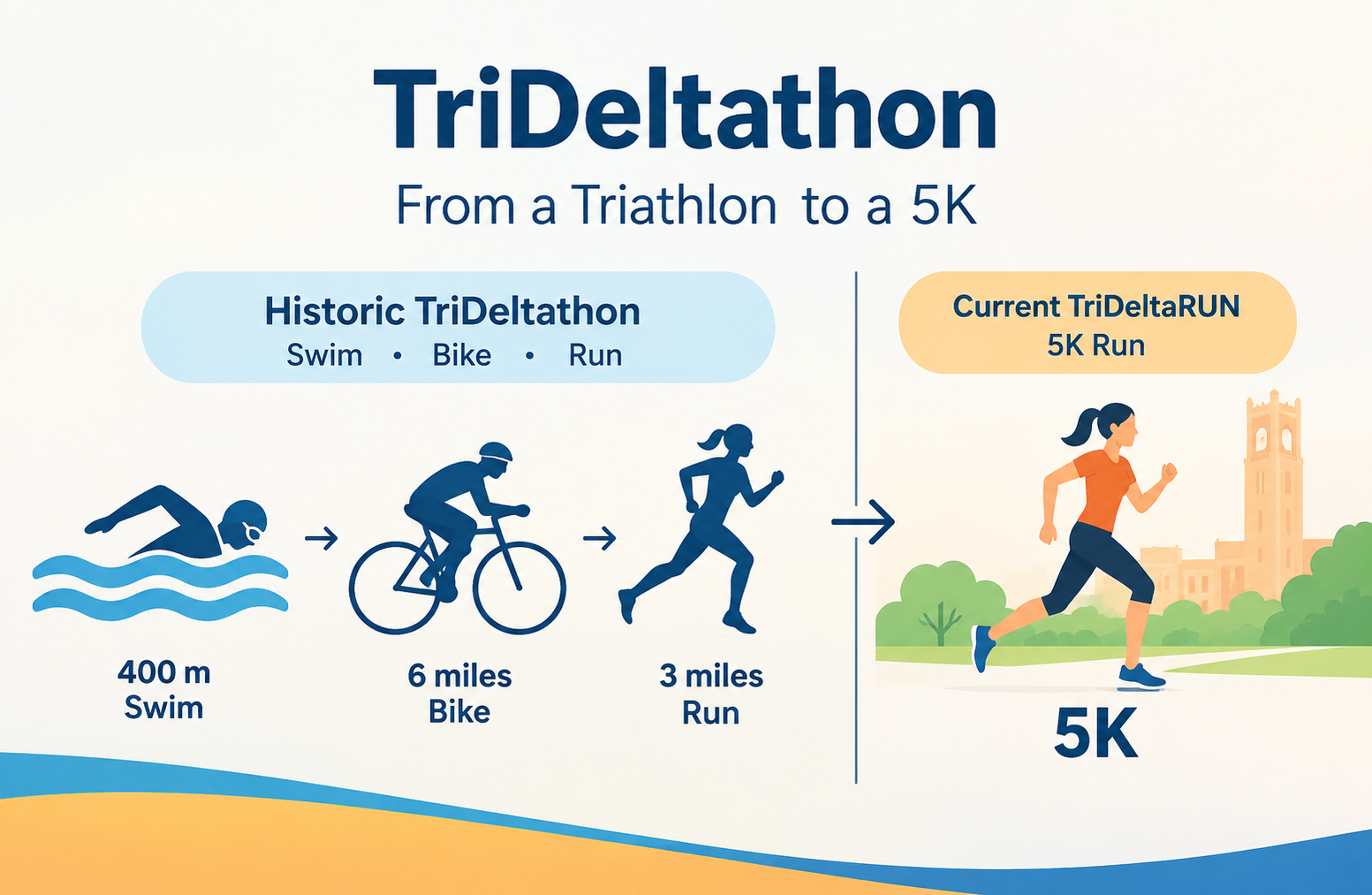
TriDeltathon is a name associated with a distinctive charity triathlon in Knoxville, Tennessee, connected to the University of Tennessee and the Delta Delta Delta sorority. Unlike a conventional road race, the historic event combined a 400-meter indoor swim, a six-mile bicycle course, and a three-mile run. Its purpose was not limited to competition. The event also supported children’s causes in East Tennessee, particularly through fundraising connected with East Tennessee Children’s Hospital and Camp Eagle’s Nest. (TriSignup)
For someone discovering the term today, however, there is an important distinction to understand. The historic triathlon and the newer TriDeltaRUN are not the same race format. Current race information identifies TriDeltaRUN as a 5K associated with Delta Delta Delta and Race Day Events, while older race information describes the original swim-bike-run event. (RunSignup)
That difference matters because many older descriptions still appear when people search for TriDeltathon. A reader could easily find the historic distances and assume they describe the current event. They do not. Understanding the history, format, charitable mission, and transition to a running event provides a much clearer picture of what this name represents.
What Is TriDeltathon?
TriDeltathon was a short-distance, pool-based triathlon held in Knoxville as part of the University of Tennessee community. The name reflects its connection with Tri Delta, the common name for Delta Delta Delta, while the event itself followed the familiar three-part structure of a triathlon: swimming, cycling, and running.
The historic race was particularly unusual because the swimming stage took place in an indoor pool rather than a lake, river, or ocean. Race information describes swimmers entering the pool individually at approximately seven-second intervals and completing a 400-meter course through the pool lanes. Participants were seeded according to their estimated 400-meter swim time. (TriSignup)
After swimming, competitors moved to the cycling portion and then completed the final run.
Published historical descriptions identify the three sections as:
- 400-meter indoor pool swim
- Six-mile bicycle course
- Three-mile running course
The combination created a compact multisport challenge rather than a long-distance endurance race.
That distinction is important. Someone could complete each distance individually without being an experienced triathlete, but combining the three disciplines introduced another challenge: managing transitions and conserving enough energy for the next stage.
The History Behind the Race
The history of TriDeltathon is closely tied to student involvement and charitable fundraising.
The event developed around the University of Tennessee’s Delta Delta Delta chapter and became a recurring opportunity for students and local athletes to participate in a multisport competition while supporting children’s healthcare causes.
Historical accounts and participant records describe the race as a long-running pool triathlon. One participant profile from a former University of Tennessee student describes participating in the 32nd annual TriDeltathon and reports that the event raised approximately $10,000 for East Tennessee Children’s Hospital’s Camp Eagle’s Nest. (LinkedIn)
That kind of firsthand historical record is useful because it shows that the race was not simply a name attached to a generic triathlon. It had a continuing relationship with the university community and charitable fundraising.
Another participant record describes the event in 2019 as the oldest running pool triathlon in the country and confirms the familiar 400-meter swim, six-mile bike course, and three-mile campus run. (LinkedIn)
The “oldest” description should be treated as an event-associated claim rather than an independently established global sporting fact. What can be stated with confidence is that the race had a long history and was repeatedly described in participant and event materials as a longstanding pool triathlon.
Why the Pool Format Made TriDeltathon Different
Most people who hear the word triathlon picture an open-water swim.
That is one of the first things that made TriDeltathon unusual.
Instead of dealing with waves, currents, changing water temperatures, limited visibility, and open-water navigation, competitors began inside a swimming facility. The controlled environment made the first stage much more predictable.
The format also created a very different race atmosphere.
Swimmers could be seeded according to expected performance and enter the water individually. That meant competitors were not necessarily fighting through a large mass of swimmers at the starting line.
For newer triathletes, this type of environment could reduce some of the uncertainty associated with an open-water race.
However, “easier” would be an oversimplification.
A pool swim still demands pacing, breathing control, efficient turns or lane changes, and the ability to maintain technique while racing. Once the swimmer exits the pool, the challenge changes immediately.
The athlete must think about the bike.
Then the run.
The unusual structure therefore shifted some of the difficulty away from open-water conditions and toward transitions and adaptability.
The 400-Meter Swim
The swimming stage was relatively short compared with many longer triathlon events, but that did not make it irrelevant.
A 400-meter swim is long enough for poor pacing or inefficient technique to become noticeable. At the same time, it is short enough that experienced swimmers can maintain a relatively strong pace.
The historical format used multiple 50-meter lanes, with swimmers moving through the course by changing lanes at the end of each length. Participants entered the water individually rather than beginning together in a traditional mass swim start. (TriSignup)
This structure required competitors to understand the course before entering the water.
A practical preparation approach would include:
- Practicing continuous 400-meter swims.
- Learning the exact pool layout before race day.
- Practicing controlled pacing rather than sprinting immediately.
- Becoming comfortable with quick movement from the pool toward the transition area.
- Preparing cycling equipment so it could be accessed without unnecessary delay.
The swim was only the first part of the event, so pacing had to be considered in relation to the entire race.
The Six-Mile Bike Course
The cycling portion followed the swim and provided a significant change in physical movement.
Historical descriptions identify the bike section as approximately six miles and associate it with the University of Tennessee campus and Neyland Drive. (LinkedIn)
Six miles is short enough to encourage a relatively strong pace, but athletes still needed to avoid turning the bike leg into an uncontrolled sprint.
That is especially important because the run was still waiting at the end.
A cyclist who spends too much energy during a short bike leg can reach the running transition with tired legs. Conversely, riding too cautiously can leave considerable time unused.
The ideal strategy for a short triathlon is therefore not simply “go as fast as possible.” It is to ride at an intensity that supports the final run.
Bike preparation would also involve more than fitness.
Participants needed to understand basic bicycle handling, braking, turning, and equipment checks. Helmet fit, tire condition, and general bicycle safety matter regardless of race distance.
The Three-Mile Run
The final section of the historic event was a three-mile campus run.
This was more than a standalone three-mile race because runners arrived after completing both swimming and cycling.
That creates one of the defining experiences of triathlon: the body has to change movement patterns quickly.
The legs may feel heavy when running begins. Cadence can initially feel unusual. An athlete who normally runs comfortably may need several minutes to settle into a natural rhythm.
Historical participant descriptions place the run around recognizable University of Tennessee landmarks, including Neyland Stadium and Thompson-Boling Arena. (LinkedIn)
For training, one of the most useful approaches would be a brick workout.
A brick workout involves completing two disciplines consecutively, such as cycling followed immediately by running. The goal is not necessarily to reproduce the full race. Instead, it allows the athlete to experience the transition from one movement pattern to another.
For a short event, even occasional bike-to-run sessions can provide useful preparation.
Why Transitions Matter So Much
Triathlon is unusual because performance depends on more than three individual sports.
It also depends on the moments between them.
A runner does not normally have to put away a bicycle and immediately begin running. A swimmer does not normally finish a timed swim and then rush toward cycling equipment.
In a short triathlon, these transitions can represent a meaningful part of the overall experience.
The solution is organization rather than frantic movement.
A sensible transition setup should make frequently used items easy to reach. Athletes should know where their equipment is and understand the order in which they will use it.
For example, the cycling transition might involve:
- Exiting the swim
- Moving to the designated transition area
- Putting on required cycling equipment
- Collecting the bicycle
- Starting the bike section
The second transition reverses the process.
The athlete finishes cycling, secures the bicycle, changes into running gear as required, and begins the final leg.
Practicing this sequence can reduce confusion.
The goal is not to move recklessly. It is to remove unnecessary decisions.
The Charity Mission Behind TriDeltathon
The charitable purpose is one of the most important parts of the event’s identity.
Historical race information identifies East Tennessee Children’s Hospital as a beneficiary, while participant accounts specifically connect fundraising with Camp Eagle’s Nest. (TriSignup)
Camp Eagle’s Nest is described in event materials as a summer camp serving children with cancer and blood disorders.
This charitable connection helps explain why TriDeltathon attracted support beyond competitive athletes.
Someone could participate because they enjoyed swimming, cycling, and running.
Another person could volunteer because of the connection to Delta Delta Delta.
Someone else could support the event because the proceeds benefited children and families.
Those different motivations can exist at the same event.
That is one reason university charity races can become lasting traditions. They provide a social purpose in addition to a sporting purpose.
The Role of Delta Delta Delta
Delta Delta Delta, commonly known as Tri Delta, was central to the identity of the event.
Volunteer support from members of the sorority helped create the community atmosphere surrounding the race. Historical race information specifically notes volunteer support from the Delta Delta Delta members. (TriSignup)
This model is worth noticing because it illustrates how student organizations can participate in community fundraising without having to operate as professional sporting organizations.
Professional race management can handle technical responsibilities such as timing, registration, and logistics, while student volunteers contribute energy, staffing, outreach, and community engagement.
The modern TriDeltaRUN continues to use this combination of Delta Delta Delta involvement and Race Day Events. (RunSignup)
Who Could Participate?
The historic event had several characteristics that could make it approachable to a broad range of athletes.
The distances were relatively short.
The swim was indoors.
The race was connected with a university environment.
And the event had a charitable purpose.
That does not mean every participant would find it easy.
Triathlon requires competency across three disciplines. A strong runner may have limited swimming experience. A capable swimmer may be uncomfortable cycling in a group or on roads. Someone comfortable with both may struggle with the final run after two previous activities.
That is precisely what makes the event interesting.
It rewards balance.
For beginners, preparation should focus on completing all three stages safely rather than trying to imitate the pace of experienced competitors.
Relay Participation and Shared Competition
Historical descriptions of the event also indicate that the format could accommodate relay-style participation.
Relay racing changes the nature of the challenge.
Instead of one person completing all three disciplines, different people can specialize in swimming, cycling, or running. That creates an opportunity for friends or teammates with different athletic strengths to participate together.
For example, a confident swimmer might take the first stage, a cyclist handle the second, and a runner complete the final section.
This format can make a multisport event accessible to people who are interested in triathlon but are not prepared to complete all three disciplines individually.
The precise participation rules can change between event editions, so historical relay information should not automatically be treated as current registration policy.
Training for the Historic Format
Someone preparing for the original event would need a balanced training approach.
The mistake would be to spend most of the preparation on the athlete’s strongest discipline.
A strong runner who avoids swimming is not preparing for a triathlon.
Likewise, a strong swimmer who never practices running after cycling is missing an important part of the race experience.
Swimming Preparation
The swimming goal should be comfort and consistency.
Training can include:
- Short technique-focused sets
- Continuous 200-meter efforts
- Continuous 400-meter efforts
- Controlled pacing
- Breathing practice
- Pool navigation practice
The athlete should be able to finish 400 meters without turning the final section into a survival effort.
Cycling Preparation
Cycling preparation should focus on control as well as fitness.
Short rides can develop familiarity with the bicycle, while longer sessions can build endurance.
Useful skills include:
- Braking smoothly
- Turning safely
- Maintaining control
- Checking equipment
- Riding at a sustainable intensity
- Practicing the transition into running
Running Preparation
Because the final run follows two other disciplines, running preparation should include both normal runs and occasional brick sessions.
An athlete might complete an easy bike ride and immediately follow it with a short run.
The purpose is not to exhaust the body.
It is to teach the legs what the transition feels like.
A Practical Beginner Training Approach
A beginner does not need an extreme training schedule to understand the demands of a short triathlon.
A simple weekly structure could include:
Session 1: Swimming
Work on technique and gradually build toward a comfortable continuous 400-meter swim.
Session 2: Cycling
Complete a steady ride and practice basic bicycle handling.
Session 3: Running
Run at a comfortable pace and gradually develop consistency.
Session 4: Brick workout
Combine a short bike ride with a short run.
Rest and recovery should be part of the plan.
The exact training load should depend on the athlete’s existing fitness, experience, age, and health. Anyone returning from an injury or managing a medical condition should obtain appropriate professional guidance before beginning a new training program.
What Happened to the Original TriDeltathon?
This is where the historical name becomes confusing.
The original swim-bike-run event is not the current race format shown in the 2026 event listing.
Current information describes TriDeltaRUN as a 5K organized by Delta Delta Delta and Race Day Events. The 2026 event was scheduled for April 19 at UT Gardens, with much of the route using the Third Creek Greenway. (RunSignup)
The 2026 listing also states that the event was being offered for its fifth year and that its proceeds continued the charitable connection associated with the earlier mini-triathlon. (RunSignup)
This means there is continuity in the community and fundraising tradition, but not in the actual race format.
That distinction should be kept clear.
TriDeltathon vs. TriDeltaRUN
The easiest way to understand the change is to compare the two formats.
| Feature | Historic TriDeltathon | Current TriDeltaRUN |
| Event type | Pool triathlon | 5K running event |
| Swimming | 400 meters | None |
| Cycling | About 6 miles | None |
| Running | About 3 miles | 5 kilometers |
| University connection | University of Tennessee campus | University of Tennessee area |
| Historic swim venue | Student Aquatic Center | Not applicable |
| Modern venue | Not applicable | UT Gardens |
| Community connection | Delta Delta Delta | Delta Delta Delta |
| Charity connection | East Tennessee Children’s Hospital | East Tennessee Children’s Hospital and Camp Eagle’s Nest |
The table highlights an important point.
The current 5K should not be described as simply the old triathlon with a shorter course.
It is a different sporting experience.
A participant entering the 5K does not need a bicycle or swimming equipment. The preparation is primarily running-based. The logistics are also considerably different.
The 2026 TriDeltaRUN
The most recent verified event information available for 2026 identifies TriDeltaRUN as a 5K.
The race was scheduled for Sunday, April 19, 2026, at 10 a.m. at UT Gardens on the University of Tennessee Agriculture Campus. Day-of registration was listed as beginning at 9 a.m. (Find The Run)
The event description included race shirts, overall and age-group awards, post-race refreshments, and student discounts. (Find The Run)
The course was described as being largely contained on the Third Creek Greenway.
Because September 2026 is now after that event date, the April 2026 race should be treated as a completed historical edition rather than an upcoming event.
This is an important distinction for anyone researching participation.
Old registration pages can remain online after an event has finished. A search result showing a registration page does not necessarily mean registration is currently open.
Why the Change to a 5K Matters
Moving from a triathlon to a 5K changes the accessibility of the event.
A triathlon requires:
- Swimming ability
- A bicycle
- Cycling equipment
- Running ability
- Transition preparation
- Familiarity with three sports
A 5K requires far less specialized equipment.
That makes the running format potentially more accessible to students, casual runners, walkers, families, and people who want to participate in a charity event without taking on three different sports.
The change also simplifies event operations.
A triathlon requires coordination among aquatic facilities, cyclists, runners, transition areas, and multiple course segments. A 5K has a simpler structure.
However, the available sources do not establish a single definitive reason why the event moved from the historic triathlon format to the current 5K. It would therefore be inappropriate to claim that the change happened for a specific financial, safety, participation, or organizational reason without stronger evidence.
Why Searchers Still Find Old TriDeltathon Information
Search engines can continue displaying historical pages for years.
That is especially common with long-running events.
A historical registration page may contain:
- Old race distances
- Previous dates
- Former course information
- Historical participation estimates
- Past beneficiary information
- Instructions that no longer apply
The existence of an old page does not make its information current.
For TriDeltathon, this creates an unusual search experience because the historic event remains relevant to understanding the name, while the current event has a different format.
The safest approach is to separate information into two categories:
Historical information: the pool swim, six-mile bike course, three-mile run, and older race structure.
Current information: the TriDeltaRUN 5K and its latest published schedule.
That simple distinction prevents many common misunderstandings.
What Makes the Event Historically Interesting?
TriDeltathon is interesting because it sits at the intersection of several different traditions.
It was an athletic event.
It was a university-community event.
It was a student-organized fundraising activity.
And it used an unusual pool-based triathlon format.
None of those elements alone is particularly unusual.
Together, however, they created a distinctive identity.
The event demonstrates how a small athletic competition can become part of a university’s broader community culture. Its value was not measured only through race times.
Volunteers mattered.
Participants mattered.
The beneficiary mattered.
And the university setting mattered.
That combination can help explain why former participants continue to reference the race years after their participation.
The Importance of Accurate Historical Information
When writing about an older event, accuracy requires more than repeating the first description found in a search result.
For TriDeltathon, several details need to be separated carefully.
The 400-meter swim, six-mile bike course, and three-mile run describe the historic triathlon. They should not be presented as the current TriDeltaRUN course. (TriSignup)
The 2026 event was a 5K held at UT Gardens, rather than the traditional swim-bike-run competition. (RunSignup)
The 2026 date was April 19, meaning it is now a past event. (Find The Run)
And while historical descriptions connect the event with East Tennessee Children’s Hospital and Camp Eagle’s Nest, current future arrangements should be verified separately rather than assumed from old pages. (RunSignup)
These distinctions may seem small, but they make an article much more useful to someone genuinely researching the subject.
What Readers Should Check Before Participating in a Future Edition
If another edition is announced, participants should check the newest event information rather than relying on historical TriDeltathon pages.
Look for:
- The official event name.
- The race format.
- The current date and starting time.
- The venue.
- The current course map.
- Registration deadlines.
- Current pricing.
- Student or group discounts.
- Current charity beneficiaries.
- Rules concerning walkers, runners, or other participant categories.
- Parking and arrival instructions.
- Weather and cancellation policies.
This is particularly important because the name may continue to appear alongside historical triathlon information even when the active event is a 5K.
How to Research TriDeltathon Without Confusing Old and New Information
A useful research method is to establish the date of every source before using its information.
For example, if a page describes a 400-meter swim, ask:
What year does this information describe?
If another page says the event is a 5K, ask:
Is this a current event listing or an old announcement?
If a page provides a registration price, ask:
Does that price apply to the current edition?
This approach is useful for almost any long-running sporting event.
Race names can remain constant while courses, distances, organizers, beneficiaries, and schedules change.
For readers, dates are therefore almost as important as the information itself.
The Broader Value of Charity Races
TriDeltathon also illustrates why charity races remain popular in university communities.
A charity race gives participants a reason to gather around something larger than competition.
For athletes, the event provides a goal.
For volunteers, it creates an opportunity to contribute time.
For student organizations, it can provide a structured community project.
For beneficiaries, successful fundraising can provide support for programs serving families and children.
This does not mean every participant has the same motivation.
Some people care most about their performance.
Others may care about the social experience.
Others may participate primarily because they support the beneficiary.
A well-designed charity race can accommodate all of these motivations without requiring participants to approach the event in exactly the same way.
Lessons for Other Student Organizations
The history of TriDeltathon provides several practical lessons for university groups considering their own charity events.
Connect the event to a clear purpose
A charitable event becomes easier to understand when participants know what their involvement supports.
Keep the experience memorable
A distinctive venue or unusual format can give an event an identity that survives beyond a single year.
Use volunteers strategically
Student organizations can contribute significantly through volunteer support while specialized race-management responsibilities are handled by experienced organizers.
Adapt when circumstances change
The movement from a multisport event to a 5K demonstrates that an event can change format while retaining an association with its original community purpose.
Keep public information current
This is especially important for recurring events. Historical information should be clearly labeled so participants do not mistake it for current instructions.
The Legacy of TriDeltathon
The most interesting part of TriDeltathon is not simply the race distance.
It is the combination of athletics, university life, student involvement, and charitable fundraising.
The historic event offered an unusual pool-based triathlon experience. Athletes swam indoors, transitioned to bicycles, and finished with a campus run. Historical participant records confirm that this format remained part of the event’s identity into the late 2010s. (LinkedIn)
The later TriDeltaRUN format represents a different kind of event.
Instead of three sports, it focuses on a 5K.
Instead of a pool-based triathlon, the current format uses UT Gardens and the Third Creek Greenway area.
Yet the connection with Delta Delta Delta and charitable fundraising remains visible in the current event description. (RunSignup)
That is why both names can appear during research.
The historical TriDeltathon explains the origin and sporting identity.
TriDeltaRUN explains the more recent format.
Frequently Asked Questions
What is TriDeltathon?
TriDeltathon was a charity triathlon associated with Delta Delta Delta and the University of Tennessee in Knoxville. The historic race combined a 400-meter indoor swim, approximately six miles of cycling, and a three-mile run.
Where was TriDeltathon held?
The historic swimming portion was held at the University of Tennessee Student Aquatic Center, while the cycling and running portions used university-area routes.
How long was the historic TriDeltathon?
The published historic format consisted of a 400-meter swim, a six-mile bike course, and a three-mile run.
Is TriDeltathon still a triathlon?
The latest verified 2026 event information describes TriDeltaRUN as a 5K rather than the original swim-bike-run triathlon. The historic triathlon and current running event should therefore be treated as separate formats. (RunSignup)
What charity did TriDeltathon support?
Historical race information identifies East Tennessee Children’s Hospital as a beneficiary, with participant records also connecting fundraising to Camp Eagle’s Nest. (TriSignup)
What is TriDeltaRUN?
TriDeltaRUN is the newer 5K associated with Delta Delta Delta and Race Day Events. The 2026 edition was held at UT Gardens in Knoxville, with much of the course using the Third Creek Greenway. (RunSignup)
Conclusion
TriDeltathon represents an important piece of Knoxville’s local endurance-racing and university-community history. Its historic format was unusual: a 400-meter indoor swim followed by a six-mile bike course and three-mile run. The event combined athletic competition with a charitable purpose and strong involvement from Delta Delta Delta volunteers.
The most important point for modern readers is the distinction between history and current event information. The historic TriDeltathon was a triathlon, while the verified 2026 TriDeltaRUN listing describes a 5K. The newer event continues the connection with Delta Delta Delta and charitable fundraising, but it should not be presented as the same three-sport race.
Understanding that difference makes the subject much easier to research. It also prevents outdated race distances, locations, and instructions from being mistaken for current information.
For athletes, former participants, university-community researchers, and people interested in charity racing, the story of this event shows how a local competition can develop an identity that extends beyond the finish line. Its lasting significance comes from the combination of sport, student involvement, community participation, and a charitable mission.