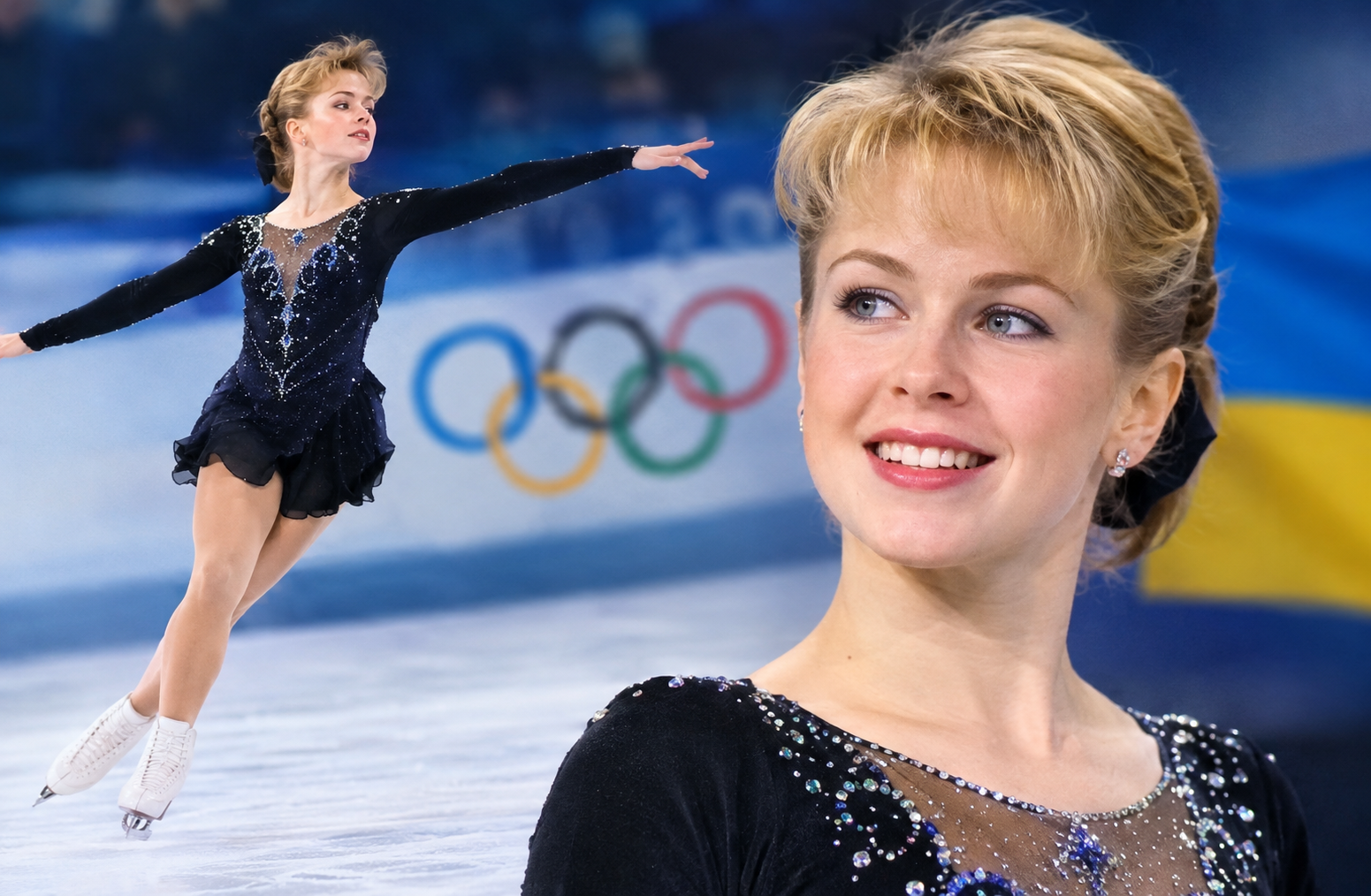
Oksana Baiul: Olympic Triumph, Career and Legacy
Oksana Bajuł is the name associated with one of the most memorable achievements in Ukrainian figure skating history. Born Oksana Serhiyivna Baiul on November 16, 1977, in Dnipropetrovsk, present-day Dnipro, Ukraine, she became an international sporting sensation after winning the women’s singles gold medal at the 1994 Winter Olympics in Lillehammer, Norway. Only 16 years old at the time, she captured the attention of audiences through her expressive performances, technical ability, and determination. Her Olympic victory followed another major milestone, the 1993 World Figure Skating Championships, where she won the world title.
However, the story of Oksana Baiul reaches beyond medals and competition results. Her childhood included profound personal losses, her development as an elite athlete took place during a period of political and economic change, and her professional life after the Olympics required her to adapt to a new world of entertainment, public attention, and personal responsibility. These experiences help explain why her name continues to attract interest among sports fans and readers exploring the lives of celebrated athletes.
Baiul’s journey also offers a valuable perspective on the relationship between artistic expression and athletic performance. Her skating combined controlled movements, musical interpretation, and ballet-inspired presentation. Rather than relying on technical difficulty alone, she created performances that communicated emotion while meeting the demands of elite competition.
This article explores Oksana Bajuł’s early life, family background, rise in international figure skating, historic Olympic triumph, professional career, personal challenges, and lasting influence. It also examines the lessons her journey offers about resilience, athlete welfare, and the importance of preparing for life after competitive sport.
Who Is Oksana Bajuł?
Oksana Bajuł, widely known internationally as Oksana Baiul, is a Ukrainian former competitive figure skater who became the 1994 Olympic champion in women’s singles. She also won the 1993 World Figure Skating Championships, establishing herself as one of the leading female skaters of her generation.
Her achievements arrived at a significant moment in Ukrainian history. Ukraine declared independence in 1991 following the dissolution of the Soviet Union. By winning Olympic gold while representing Ukraine, Baiul became the country’s first Olympic champion in an individual sport and an important figure in its emerging international sporting identity.
Her career can be understood through four central achievements:
- Olympic success: She won the women’s singles gold medal at the 1994 Winter Olympics.
- World championship recognition: She became world champion in 1993.
- Artistic distinction: Her performances combined technical elements with expressive, ballet-inspired movement.
- Professional reinvention: After the Olympics, she moved into professional skating shows, television appearances, entertainment, and creative projects.
Baiul’s competitive career at the senior international level was remarkably short. Yet she achieved the two most important titles in her sport within a period of approximately one year. That combination of youth, rapid progress, and major championship success made her story especially compelling.
Her name may appear in different forms, including Oksana Baiul, Oksana Bajuł, and Oksana Baiul-Farina. These variations refer to the same figure skater, although the spelling used depends on the language, transliteration, and context.
Early Life and Family Background
Childhood in Dnipropetrovsk
Oksana Baiul was born in Dnipropetrovsk, a city in the Ukrainian Soviet Socialist Republic that is now known as Dnipro, Ukraine. She grew up in a family that experienced significant changes during her early childhood.
Her parents separated when she was very young, and her father was largely absent from her upbringing. Her mother, Marina, and her maternal grandparents played important roles in her life. The loss of these family members would later become one of the most difficult parts of her personal history.
Despite the difficulties around her, Baiul discovered an activity that would shape her future. She began skating as a young child, receiving her first pair of skates from her grandfather at approximately three years old, according to accounts of her life.
The early connection between skating and dance became an important part of her development. Her family recognized her interest in movement, and the sport offered an opportunity to develop discipline, balance, and artistic expression.
Discovering Figure Skating
Figure skating demands a combination of physical strength, coordination, flexibility, balance, timing, and musical awareness. Young skaters must learn basic skating skills before progressing to demanding jumps, spins, footwork, and complete routines.
Baiul began training early and showed promise as a developing competitor. Her natural sense of presentation distinguished her from skaters whose performances focused more heavily on athletic elements alone.
Her early training also required commitment from the adults supporting her. Competitive figure skating involves expenses for coaching, ice time, equipment, costumes, travel, and competition preparation. These demands can be especially challenging in environments where funding and facilities are limited.
Baiul’s progress demonstrates how early talent becomes meaningful when it is supported by structured training. Natural ability may attract attention, but consistent practice and expert guidance help turn that ability into repeatable performance.
The Loss of Her Mother and Grandparents
One of the most difficult periods in Baiul’s childhood followed the deaths of her maternal grandparents and her mother. Her mother died from ovarian cancer when Baiul was 13, leaving the young athlete without the family support system that had helped raise her.
Losing close relatives at such a young age can create emotional and practical challenges that extend far beyond the immediate grief. A young athlete must continue attending school, training, traveling, and competing while also dealing with uncertainty about home life and the future.
Baiul’s experience is an important reminder that public accounts of athletic success can hide the difficulties taking place away from the rink. Her achievements should not be understood as evidence that personal hardship automatically produces strength. Rather, her story illustrates the importance of support, stability, and opportunities for young people facing difficult circumstances.
Following her mother’s death, Baiul depended heavily on people connected to her skating development. Coaches and others within the sport helped her continue training and pursue the career that eventually brought her international recognition.
This part of her biography provides important context for her later achievements. Her Olympic success was the result of athletic ability and preparation, but her path toward it also depended on the relationships and support available to her during a period of profound loss.
The Coaches Who Helped Shape Her Career
Stanislav Koritek and Her Early Development
Baiul’s early skating education was associated with coach Stanislav Koritek, who helped develop her foundational skills. Early coaching is particularly important in figure skating because technical habits learned during childhood influence performance for years.
A strong foundation includes edge control, posture, balance, skating speed, turns, and the ability to move smoothly between elements. Coaches must also help young athletes understand how to train consistently without losing confidence or developing unnecessary fear of difficult skills.
Baiul’s development during these years laid the groundwork for her later success. As her abilities grew, she moved toward a more demanding competitive environment.
Galina Zmievskaya and Elite Competition
Galina Zmievskaya became a major influence on Baiul’s rise to the top of international figure skating. After changes in her earlier training arrangements, Baiul moved to Odesa in 1992 and continued developing under Zmievskaya’s guidance.
The coaching environment helped her strengthen both her technical execution and her artistic presentation. This combination was essential because women’s singles figure skating at the time rewarded athletes who could deliver difficult elements while maintaining control, musical timing, and a coherent performance.
Zmievskaya’s support was significant beyond the technical side of the sport. Baiul was still a teenager navigating life after losing her mother, and her training arrangements were closely connected to her everyday living circumstances.
The relationship between coach and athlete can be especially influential when a young competitor depends on the sporting environment for routine, guidance, and emotional stability. At the same time, such arrangements make safeguarding and appropriate adult support essential.
Baiul’s rise highlights the importance of coaches who can recognize talent, build competitive skills, and help athletes navigate the demands of elite sport.
Oksana Bajuł’s Rise in International Figure Skating
Baiul’s international breakthrough came quickly. After developing her skills in Ukraine, she emerged as a serious senior competitor during the 1992 to 1993 season.
Her performances demonstrated that she could compete against established skaters from countries with long traditions in figure skating. This was an important achievement in a sport where technical standards, coaching systems, and access to facilities can influence competitive outcomes.
The 1993 World Figure Skating Championships
The 1993 World Figure Skating Championships in Prague marked a turning point in Baiul’s career. She won the women’s singles title, defeating a field of accomplished international competitors and establishing herself as a world champion at just 15 years old.
Winning a world championship requires more than delivering one memorable routine. Athletes must prepare for pressure, manage their energy across the competition, execute required elements, and recover mentally between performances.
For Baiul, the victory confirmed that her combination of technique and artistry could succeed at the highest level. It also increased expectations for her future performances.
The world title was particularly significant because it arrived during the early years of Ukraine’s independence. Representing her country at a major international championship gave the achievement a meaning beyond individual recognition.
European Championship Silver Medals
Baiul also earned silver medals at the European Figure Skating Championships in 1993 and 1994. These results placed her among Europe’s leading women’s singles competitors during two consecutive seasons.
The European Championships provided a demanding test before the 1994 Olympics. They allowed athletes to measure their preparation against strong opposition and gave coaches opportunities to assess performance under major-event conditions.
Although Baiul did not win either European title, her silver medals showed consistency at the top level. They also demonstrated that her world championship success was not an isolated performance.
Skate America and Ukrainian National Titles
Baiul won Skate America in 1993, adding another major international result to her growing record. She also won the Ukrainian national championship in 1993 and 1994, according to published career records.
Taken together, these achievements established a strong foundation before the Lillehammer Games. Baiul had already experienced the pressure of international competition, the demands of championship preparation, and the expectations that came with being one of the sport’s leading young athletes.
Her competitive record also reveals how quickly her career developed. In a short period, she progressed from a promising young skater to a world champion and then an Olympic champion.
That rapid rise remains one of the most remarkable features of her sporting history.
The 1994 Winter Olympics: A Historic Victory
The Road to Lillehammer
The 1994 Winter Olympics in Lillehammer, Norway, became the defining event of Baiul’s career. The women’s singles competition attracted substantial public attention, including interest in American skater Nancy Kerrigan and the controversy surrounding the attack on Kerrigan before the Games.
Baiul entered the competition as the reigning world champion. Nevertheless, winning Olympic gold was far from guaranteed. The Olympic stage places enormous pressure on athletes because years of preparation are compressed into a few performances, often watched by millions of people.
At the time, figure skating combined technical requirements with artistic judgments. Competitors needed to execute difficult elements while presenting a polished program that judges could evaluate across several performance criteria.
Baiul’s challenge was to translate her previous success into an Olympic performance against experienced competitors under intense scrutiny.
The Short Program
During the Olympic short program, Baiul finished behind Kerrigan. This placed her in a difficult position heading into the free skate, where she needed a strong performance to move into first place overall.
Trailing after the short program can create a difficult mental situation. A skater must recognize the need to compete strongly without allowing the standings to produce rushed movements or unnecessary risks.
For Baiul, the result meant that the free skate would be decisive. Her artistic strengths and technical preparation would both need to hold up under pressure.
The Free Skate That Changed Her Life
Baiul delivered a compelling free skate and finished first overall, securing the Olympic gold medal in women’s singles on February 25, 1994. At 16, she became the Olympic champion representing independent Ukraine.
The final result was extremely close. Baiul edged Kerrigan by a narrow margin, making the victory a memorable example of how small differences can determine the outcome of elite competition.
Her performance was notable for its expressive presentation as well as its technical execution. She demonstrated that artistic interpretation could strengthen a competitive program when combined with the control and precision required by the sport.
The Olympic victory also transformed her public identity. Before the Games, she was a young world champion with considerable potential. Afterward, she became an internationally recognized sporting figure whose name was associated with one of the defining moments in Ukrainian winter sports.
Why the Gold Medal Mattered to Ukraine
Baiul’s victory had historical importance because Ukraine was a newly independent nation still establishing its presence across international institutions, including sport.
An Olympic champion can become a symbol of national identity, particularly when a country’s independent sporting history is still developing. Baiul’s medal gave Ukrainian fans a major international achievement to celebrate and placed the country’s name prominently in Olympic figure skating.
Her success also demonstrated that Ukrainian athletes could compete successfully against the strongest established skating nations.
It is important, however, to distinguish national symbolism from the individual athlete’s experience. Baiul was still a teenager who had recently experienced severe personal loss. The sudden attention and expectations associated with her victory created new opportunities, but they also introduced pressures that a young person might struggle to manage without sustained guidance.
Her gold medal was a historic accomplishment. Understanding its full significance requires considering both the public celebration and the private adjustments that followed.
Understanding Her Unique Figure Skating Style
The Influence of Ballet and Musical Interpretation
One of the defining features of Baiul’s skating was her ability to combine athletic movement with theatrical expression. Her performances often included graceful arm movements, extended lines, careful body positioning, and transitions designed to complement the music.
These qualities gave her programs a distinctive identity. Rather than treating artistic expression as something added after the technical elements, she integrated movement and musical interpretation into the overall performance.
Ballet-inspired skating requires more than elegant gestures. A skater must maintain balance on narrow blades, control the direction of movement, and coordinate the upper body with the legs and torso. Even a small loss of control can affect the execution of a turn, spin, or jump.
The strongest artistic programs make these demands appear natural. The audience sees a continuous performance, while the athlete manages a complex sequence of physical and technical tasks.
Baiul’s skating demonstrated how this combination could become a competitive advantage. Her expressive presentation helped create a memorable experience without removing the need for technical discipline.
Swan Lake and Her Olympic Short Program
Baiul’s Olympic short program drew on music from Pyotr Ilyich Tchaikovsky’s Swan Lake. The music offered a natural connection to her graceful style and her ability to communicate mood through movement.
The swan theme also suited the visual language of figure skating, where posture, arm placement, turns, and changes of speed can help suggest a character or emotional story.
Performing to familiar classical music creates both an opportunity and a challenge. Audiences often arrive with expectations about how the music should feel. A successful skater must interpret those expectations while maintaining an individual artistic identity.
Baiul’s approach helped make her short program memorable because her movements and musical choices supported one another.
The Broadway-Inspired Free Skate
Her Olympic free skate used a medley associated with Broadway and musical theatre, including music from productions such as My Fair Lady, The Sound of Music, West Side Story, A Chorus Line, and Cabaret.
This approach contrasted with the classical mood of Swan Lake. The theatrical selection allowed Baiul to present a different side of her skating, using changes in rhythm and character to sustain audience interest.
The choice also illustrates an important principle in performance design: music should suit the athlete’s strengths and create opportunities for expressive movement. A program becomes more effective when its musical structure, choreography, and technical elements work together.
Baiul’s two Olympic programs therefore offered contrasting interpretations of her abilities. The short program emphasized a classical atmosphere, while the free skate drew on the energy and variety of musical theatre.
Why Artistry Still Matters in Figure Skating
Figure skating has evolved considerably since 1994, including changes to its scoring system and technical expectations. Modern competitions often feature highly demanding jumps and complex combinations.
Yet artistry remains important. Skaters must still communicate musical interpretation, develop coherent choreography, and maintain control between major technical elements.
Baiul’s legacy provides a useful example of how a performance can remain memorable beyond its individual jumps. Spectators may remember the medal result, but they also remember the movement, music, expression, and sense of occasion.
Her career shows that technical skill and artistic presentation do not have to compete with each other. When properly developed, they can strengthen the same performance.
Oksana Baiul’s Major Awards and Achievements
Baiul’s record is especially notable because many of her most important achievements occurred within a short competitive period.
The following table summarizes her best-known senior international accomplishments.
| Competition | Year | Achievement |
| World Figure Skating Championships | 1993 | Gold medal |
| European Figure Skating Championships | 1993 | Silver medal |
| Skate America | 1993 | Gold medal |
| European Figure Skating Championships | 1994 | Silver medal |
| Winter Olympic Games | 1994 | Gold medal |
| Ukrainian National Championships | 1993 and 1994 | Champion, according to published career records |
These results reveal several aspects of her competitive development.
First, her world championship title established her as an elite competitor before the Olympics. Second, the European silver medals demonstrated her ability to remain competitive against strong international opposition. Finally, the Olympic gold medal confirmed her place in the history of the sport.
The complete record is more informative than the Olympic result alone. It shows that Baiul’s victory followed sustained success rather than appearing without warning.
For readers researching her career, the Olympedia athlete record provides a useful reference for her Olympic participation, biographical details, and medal achievement.
What Happened After the 1994 Olympics?
Moving From Amateur Competition to Professional Skating
After winning Olympic gold, Baiul moved into professional figure skating. This was a significant transition because professional performances operate under different conditions from amateur championships.
Competitive skating focuses on standardized rules, required elements, judging criteria, and the pursuit of titles. Professional skating shows often provide greater freedom in choreography, music, costume design, and storytelling.
For an Olympic champion, this transition can create opportunities to reach wider audiences. Professional tours, exhibitions, and television productions allow a skater to perform for spectators who may not regularly watch competitive events.
Baiul became involved in professional ice shows and touring productions after her Olympic victory. She also appeared in entertainment projects that drew on her recognition as a world and Olympic champion.
The change allowed her to continue using the skills that had made her successful while exploring a career beyond international competition.
Professional Tours and Live Performances
Professional skating tours are demanding in their own way. Performers must maintain physical conditioning, learn choreography, travel frequently, and deliver consistent performances in different venues.
Unlike a major championship that takes place over a limited period, a touring production may require an athlete to perform repeatedly over an extended schedule. This creates different challenges for injury prevention, recovery, and maintaining motivation.
Baiul’s post-Olympic career included appearances in professional skating productions and exhibitions. These performances helped extend her public profile beyond the competitive arena.
Her experience also illustrates how elite athletes can transfer their abilities into related professions. Balance, musical timing, stage presence, and familiarity with live audiences are valuable skills in professional entertainment.
However, the transition also requires new knowledge. Athletes moving into professional performance must understand contracts, scheduling, compensation, travel arrangements, and the long-term demands of maintaining a public career.
Television, Film, and Entertainment
Baiul’s recognition extended into television and other entertainment projects. Her career included appearances connected to skating, along with opportunities to explore acting and performance outside traditional competition.
One example was the 2007 musical Cold as Ice, which brought figure skating into a theatrical setting. Such projects demonstrate how athletes can use their existing public identities as a foundation for new creative work.
Entertainment careers can be unpredictable. Opportunities may depend on audience interest, production schedules, commercial partnerships, and the changing tastes of the public.
An Olympic title creates recognition, but it does not guarantee permanent employment. Sustained professional success depends on adapting to different audiences, developing new skills, and making practical career decisions.
Baiul’s movement into entertainment therefore represents both the opportunity and the uncertainty involved in life after elite sport.
Fashion, Design, and Writing
Exploring Skating Apparel and Design
Baiul also explored business opportunities connected to fashion and skating apparel. In 2002, she launched the Oksana Baiul Collection, according to published biographical accounts.
For a skater, apparel can be a natural area of interest. Costumes and performance clothing must balance appearance with practical considerations such as movement, comfort, fit, durability, and stage visibility.
A successful skating outfit is not simply decorative. It needs to support the athlete’s movements while complementing the music and choreography.
Moving into apparel design allows a former athlete to apply practical knowledge gained through years of training and performance. However, running a fashion-related business requires more than familiarity with the product.
Designers and entrepreneurs must also consider manufacturing, pricing, customer demand, distribution, marketing, and financial management.
Baiul’s interest in design illustrates one possible route for athletes who want to build a career connected to their original sport without remaining in competition.
Books and Personal Storytelling
Baiul published two books in 1997: Oksana: My Own Story and Secrets of Skating. These works offered opportunities to discuss her personal experiences and the world of figure skating from the perspective of someone who had competed at its highest level.
Autobiographical writing can help athletes explain experiences that are difficult to communicate through competition results alone. A medal table shows what an athlete achieved, but it cannot fully describe the emotions, relationships, decisions, and uncertainties involved in reaching that point.
A book about skating can also provide readers with a better understanding of training, performance preparation, and the realities behind major competitions.
For young athletes, such accounts can make elite sport seem more understandable. They can also show that champions face ordinary human challenges alongside the exceptional demands of their profession.
The value of an athlete’s personal account is strongest when readers distinguish between personal recollection, documented historical facts, and interpretations of past events. That distinction helps preserve both the human meaning of a story and the accuracy of the historical record.
Personal Challenges and Life Beyond the Spotlight
The Difficult Adjustment After Olympic Success
Winning an Olympic medal can transform an athlete’s life almost overnight. Recognition, professional opportunities, media interest, and financial possibilities may increase rapidly.
However, the same transition can create significant pressure. An athlete who has spent childhood and adolescence following a demanding training schedule may suddenly need to make decisions about employment, money, housing, relationships, and long-term goals.
For a teenager, these responsibilities can be especially difficult. Athletic success does not automatically provide the experience needed to manage adult life or navigate complex business arrangements.
Baiul’s transition after 1994 demonstrates why the period immediately following a major sporting achievement deserves careful attention. The end of competitive training does not mean the end of an athlete’s need for support.
A well-planned transition can include financial education, career counselling, access to medical care, psychological support, and help evaluating professional contracts.
These resources are not signs of weakness. They are practical tools that help athletes protect their health, make informed decisions, and build a stable future.
Publicly Discussed Alcohol-Related Problems
Baiul’s early professional years included publicly documented alcohol-related difficulties. Her struggles became widely known following a 1997 car crash and the legal proceedings connected to the incident. Published accounts report that she subsequently entered a rehabilitation program and completed an alcohol education program.
This period is an important part of her biography, but it should be discussed carefully and without reducing her identity to a personal difficulty.
Substance-related problems can affect people from many backgrounds, including those who have achieved extraordinary professional success. Public recognition, demanding work schedules, major life changes, and personal stress can complicate an individual’s circumstances, although no single factor should be assumed to explain another person’s experience.
Baiul’s story also highlights the importance of discussing such challenges with accuracy and respect. Reporting should distinguish documented events from speculation about an individual’s private thoughts, motivations, or health.
Her Olympic achievement remains a significant accomplishment, and her later difficulties do not erase it. Equally, the medal does not make those difficulties unimportant.
A balanced biography recognizes that athletes are people whose lives continue to develop after the most celebrated moment of their careers.
Injury, Recovery, and Physical Demands
Figure skating places considerable demands on the body. Repeated jumping and landing create stress on the knees, ankles, hips, and back. Spins, deep edges, and complex transitions also require flexibility, balance, and muscular control.
Baiul’s career accounts describe injuries and knee surgery following her Olympic season. These experiences illustrate a broader challenge for athletes whose bodies have been trained for years to meet demanding performance requirements.
Recovery requires appropriate medical assessment, rehabilitation, and a gradual return to activity. In professional skating, performers may also need to manage the pressure to meet tour schedules while protecting long-term physical health.
For athletes leaving competition, medical support remains relevant even when the nature of their work changes. Professional shows may reduce some competitive demands but introduce repeated performances and travel-related fatigue.
The larger lesson is that an athlete’s health should not be measured only by whether they can compete on a particular day. Long-term mobility, pain management, recovery, and quality of life are also important outcomes.
Privacy and Responsible Biographical Reporting
Public figures attract attention to their careers and personal lives, but not every private detail contributes meaningfully to understanding their achievements.
Baiul’s most relevant biographical themes include her childhood, competitive development, Olympic success, professional transition, and publicly documented challenges. These subjects provide substantial insight without requiring unsupported claims about her private life.
Responsible reporting should also avoid presenting outdated personal information as current. Marriages, residences, business arrangements, and professional plans can change, so claims about present circumstances require recent, reliable confirmation.
This is particularly important for online biographies, which may be copied and republished long after their original publication dates. Readers benefit when authors distinguish established historical information from claims that require fresh verification.
A trustworthy account should be informative without becoming intrusive, sensational, or speculative.
Oksana Bajuł’s Personal Life and Public Identity
Baiul’s identity is closely connected to Ukraine, where she was born and where she began her skating career. Her Olympic victory gave her international recognition at a time when her country was building its identity as an independent nation.
Her public image has also evolved. She first became widely known as a talented teenage athlete, then as an Olympic champion, and later as a professional performer and entertainer.
These different stages matter because a person’s public identity can become fixed around one achievement. For Baiul, the 1994 Olympics remain the defining event, but her broader story includes creative interests, professional decisions, and personal experiences beyond competitive sport.
Her career demonstrates how difficult it can be to balance a lasting public reputation with the desire to develop new interests and move into different areas of life.
It is also important to recognize the difference between the athlete seen during an Olympic broadcast and the person managing the years that follow. The audience sees a performance lasting only a few minutes. The athlete experiences years of preparation and then must build a life that continues after the event.
Baiul’s story is therefore relevant to readers interested not only in figure skating but also in celebrity biographies, career transitions, and the human experiences behind sporting success.
The Lasting Legacy of Oksana Baiul
A Landmark for Ukrainian Sport
Baiul’s Olympic victory holds an important place in Ukraine’s sporting history. Her gold medal represented a major international success for a country that had recently gained independence.
Her achievement also helped establish a memorable connection between Ukrainian identity and figure skating. Olympic champions can become enduring symbols because their victories combine individual effort with a moment of shared national pride.
Baiul’s legacy is especially notable because her career at the highest competitive level was so brief. She won the world championship in 1993 and the Olympic title in 1994, creating a record that remains central to her reputation.
The importance of her achievement does not depend on the length of her competitive career. In sport, a relatively short period can be historically significant when an athlete performs successfully at the highest level.
An Example of Artistic Excellence
Baiul also remains associated with an expressive approach to skating. Her ballet-inspired presentation, musical sensitivity, and theatrical style helped her create performances that audiences could remember beyond the final scores.
Her example demonstrates why artistry remains valuable in sports that combine measurable physical skills with judged presentation. Technical execution is essential, but the ability to connect movements into a coherent performance can make a competitor distinctive.
Young skaters studying earlier champions can learn from this balance. They can develop difficult elements while also paying attention to posture, timing, transitions, musical phrasing, and emotional expression.
The goal is not to copy a former champion’s style exactly. It is to understand how technical ability and individual interpretation can work together.
Lessons About Athlete Welfare
Baiul’s biography also provides an opportunity to reflect on the responsibilities that come with developing young athletes.
A teenager who wins a world championship or Olympic medal may suddenly face public attention, professional contracts, travel, and major financial decisions. These demands can arrive before the athlete has gained much adult experience.
Coaches, families, sporting organizations, managers, and other professionals all have roles to play in creating a safe and sustainable environment.
Useful support may include:
- Independent advice before signing professional agreements.
- Financial education and long-term money management.
- Access to qualified medical professionals and rehabilitation.
- Psychological support during major career changes.
- Education and training for life beyond competition.
- Clear boundaries and safeguarding for young athletes.
These measures help athletes make informed choices while reducing the risk that early sporting success becomes difficult to manage.
Baiul’s story reinforces the idea that winning a medal is only one part of a sporting career. A complete approach to athlete development must also consider health, independence, education, and long-term well-being.
Why Her Story Still Attracts Interest
Interest in Oksana Baiul continues because her biography brings together several compelling themes. She achieved an extraordinary sporting result at a young age, overcame serious difficulties during childhood, represented a newly independent nation, and moved into professional life after leaving elite competition.
Each theme appeals to a different audience. Sports fans may want to understand the Olympic result and her championship record. Readers interested in Ukrainian history may focus on the national significance of her victory. Others may be drawn to her artistic style, entertainment career, or experiences outside the rink.
The most useful way to understand her legacy is to consider all these elements together.
Her Olympic gold medal explains why she became famous. Her artistic ability explains why her performance was memorable. Her background provides context for her determination, while her later career shows that life after a major achievement can involve opportunities and challenges that are very different from competition.
Baiul’s story remains an example of what can happen when exceptional talent meets preparation and opportunity. It is also a reminder that the person behind a celebrated achievement deserves to be understood in full.
Frequently Asked Questions About Oksana Bajuł
1. Who is Oksana Bajuł?
Oksana Bajuł, internationally known as Oksana Baiul, is a Ukrainian former competitive figure skater. She won the women’s singles gold medal at the 1994 Winter Olympics and the World Figure Skating Championships in 1993. She later pursued professional skating, entertainment, and creative projects.
2. How old was Oksana Baiul when she won the Olympics?
Oksana Baiul was 16 years old when she won the women’s singles figure skating gold medal at the 1994 Winter Olympics in Lillehammer, Norway. Her victory came on February 25, 1994.
3. What medals did Oksana Baiul win?
Her major achievements include Olympic gold in 1994, world championship gold in 1993, European championship silver medals in 1993 and 1994, and Skate America gold in 1993. She also won Ukrainian national titles in 1993 and 1994, according to published career records.
4. Why was Oksana Baiul famous?
Baiul became famous for winning Olympic gold at age 16 and becoming world champion the previous year. Her expressive, ballet-inspired skating style and her significance as an Olympic champion representing independent Ukraine further strengthened her reputation.
5. Is Oksana Baiul still involved with figure skating?
Baiul moved into professional skating and entertainment after the 1994 Olympics. Her career has included ice shows and other performance-related projects. Her competitive career ended in 1994, and specific claims about her current skating schedule should be checked against recent announcements from reliable sources.
6. What made Oksana Baiul’s skating style distinctive?
Her style combined technical figure skating with ballet-inspired movement, expressive arm positions, elegant lines, and musical interpretation. Her Olympic programs contrasted classical music from Swan Lake with a Broadway-inspired free skate, demonstrating her range as a performer.
Conclusion
Oksana Bajuł, better known internationally as Oksana Baiul, remains an important figure in the history of women’s figure skating. Her world championship victory in 1993 and Olympic gold medal in 1994 established her as one of the most memorable young champions of her generation.
Her story includes much more than competitive success. The loss of her mother during childhood, the support she received through skating, her distinctive artistic style, and her transition into professional entertainment all help explain the different stages of her life.
Her Olympic victory also holds historical significance for Ukraine, which had only recently become independent. Baiul’s achievement gave the country an important international sporting milestone and established her place in its Olympic history.
At the same time, her experiences after competition highlight the challenges that can accompany sudden fame. Physical health, emotional well-being, financial decisions, and career planning all matter when an athlete moves beyond elite sport.
Ultimately, Baiul’s legacy rests on both her extraordinary achievement on the ice and the broader lessons her journey offers. Her career demonstrates the value of artistic expression, the importance of support for young athletes, and the need to recognize that a champion’s life continues long after the medal ceremony.