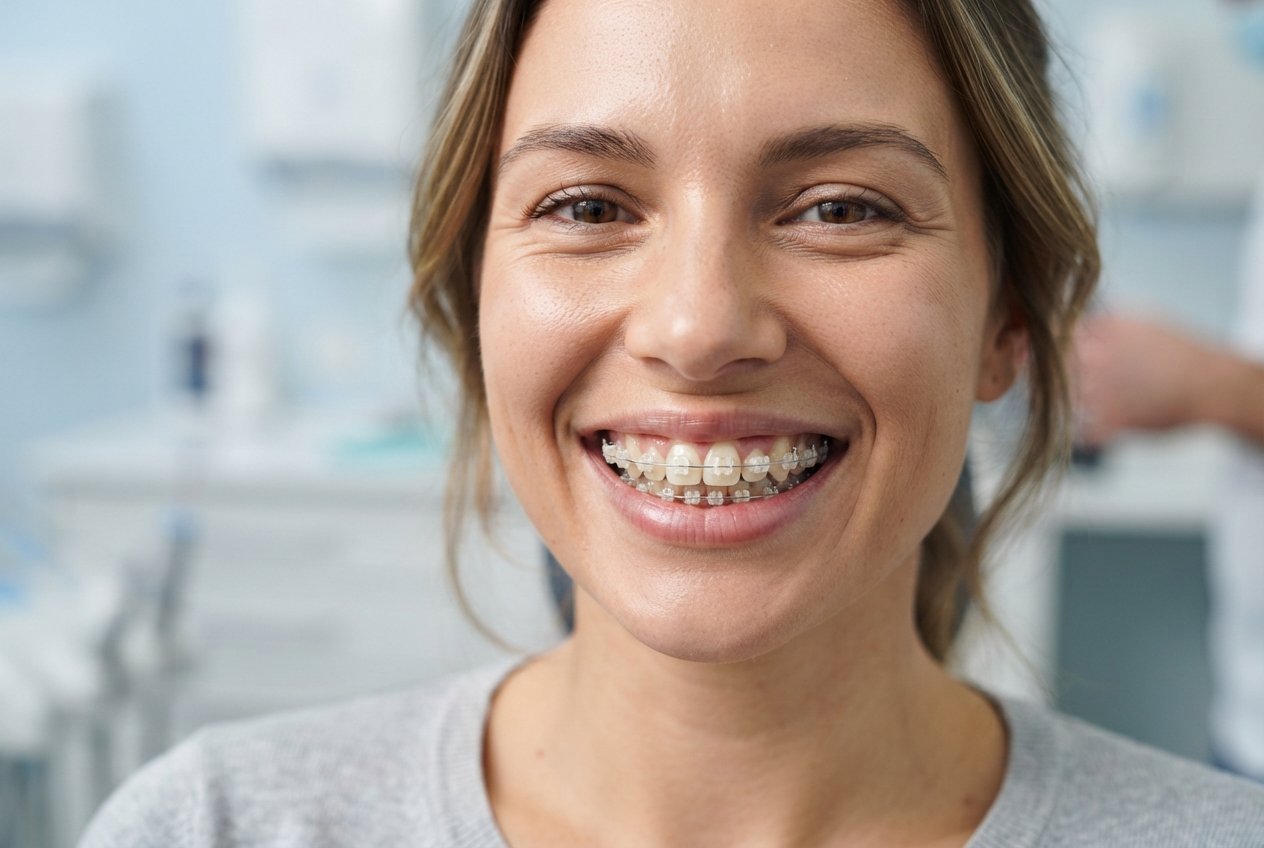
Clear Braces: Benefits, Costs, Types, and Complete Treatment Guide
Clear Braces have become a popular choice for people who want straighter teeth without the noticeable appearance of traditional metal orthodontic appliances. They offer a more discreet way to improve tooth alignment, correct certain bite problems, and develop a healthier-looking smile. Whether you are an adult considering orthodontic treatment, a teenager exploring alternatives to metal brackets, or someone researching cosmetic dental options, understanding how this treatment works can help you make a more informed decision. However, choosing the right orthodontic appliance involves more than appearance. Treatment suitability, oral hygiene, comfort, maintenance, cost, and long-term results are equally important.
What Are Clear Braces?
Clear braces are orthodontic appliances designed to straighten teeth using transparent or tooth-colored brackets and connecting wires. Unlike traditional metal braces, which use noticeable stainless steel components, this option uses ceramic or similarly colored materials that blend more naturally with the appearance of teeth.
The primary purpose is the same as conventional orthodontic treatment: to apply controlled pressure that gradually moves teeth into healthier and more functional positions.
The brackets are attached to the front surfaces of the teeth using a dental bonding material. An orthodontic wire connects the brackets and guides tooth movement throughout treatment. Small elastic bands or other fastening systems may hold the wire in place, depending on the appliance design.
Although the brackets are designed to be less noticeable, they are not completely invisible. Their appearance depends on the material, wire color, lighting, natural tooth shade, and individual dental characteristics.
One important distinction is that clear braces are not the same as clear aligners. Ceramic braces remain attached to the teeth throughout treatment, while clear aligners are removable plastic trays that fit over the teeth. Both approaches can improve alignment, but they have different requirements and limitations.
How Do Clear Braces Work?
The treatment works through a biological process called orthodontic tooth movement.
When an orthodontist applies carefully controlled pressure to a tooth, the surrounding periodontal ligament responds to that force. The supporting bone gradually changes through natural remodeling processes, allowing the tooth to move into its planned position.
This process does not happen overnight. Teeth move gradually, and the supporting tissues need time to adapt.
The treatment generally involves several components:
- Brackets: Small ceramic or tooth-colored attachments bonded to individual teeth.
- Archwire: A thin wire connecting the brackets and directing tooth movement.
- Elastic ligatures: Small bands that may hold the wire against the brackets.
- Bonding material: Dental adhesive used to secure the brackets to the tooth surfaces.
- Additional orthodontic components: Depending on the treatment plan, elastics, springs, or other appliances may help correct specific alignment and bite concerns.
The orthodontist monitors progress and makes adjustments when necessary. These adjustments help maintain the planned direction of movement and address changes that occur during treatment.
Are Clear Braces Completely Invisible?
No. They are less noticeable than conventional metal braces, but they are not invisible.
Ceramic brackets are designed to resemble the natural shade of teeth. Some systems also use tooth-colored wires or translucent elastic components to create a more subtle appearance.
However, the brackets may still be visible at close range, particularly when someone smiles widely or speaks.
Patients should also understand that clear or ceramic materials can become stained, depending on the type of elastic components used and their eating, drinking, and cleaning habits.
People who want the least noticeable orthodontic option may also consider removable clear aligners or lingual braces. The appropriate choice depends on their dental condition and treatment requirements.
Types of Clear Braces Available
Not every less-visible orthodontic appliance uses the same materials or technology. Understanding the available options makes it easier to compare their appearance, durability, and suitability.
1. Ceramic Braces
Ceramic braces are among the most common alternatives to traditional metal brackets.
They use brackets made from tooth-colored ceramic materials. Because these components closely resemble natural teeth, they are less noticeable during everyday conversations and social interactions.
Their main characteristics include:
- Tooth-colored or translucent brackets.
- Fixed placement throughout treatment.
- A wire connecting the brackets.
- Ability to address many alignment and bite problems.
- Greater attention to cleaning and food choices.
Ceramic brackets can be a suitable option for people who want conventional fixed orthodontic treatment without the appearance of prominent metal brackets.
However, ceramic materials can be more brittle than stainless steel. They may also require careful handling during treatment and removal.
2. Sapphire Braces
Sapphire braces are a type of ceramic orthodontic appliance made using a transparent crystalline material.
Their brackets are designed to appear clear rather than matching a particular tooth shade. This can create a subtle appearance, particularly for people whose teeth have a naturally lighter color.
Some patients prefer sapphire brackets because of their transparency.
However, transparent brackets are not automatically invisible. Their visibility also depends on the wire, elastic components, natural tooth color, and surrounding lighting.
Sapphire appliances may cost more than some conventional ceramic options. Availability and pricing depend on the orthodontic practice and materials offered.
3. Self-Ligating Ceramic Braces
Self-ligating ceramic braces use a specialized bracket mechanism to hold the orthodontic wire.
Instead of relying on conventional elastic ties, these brackets contain a small built-in clip or door that secures the wire.
Potential characteristics include:
- Reduced dependence on elastic ligatures.
- A different bracket design.
- Fewer elastic components that may discolor.
- An alternative method of securing the orthodontic wire.
However, self-ligating technology does not automatically guarantee faster treatment, less discomfort, or better final results.
The outcome depends on the patient’s individual orthodontic condition, the treatment plan, and how the appliance is managed.
4. Clear Brackets With Tooth-Colored Wires
Some orthodontic systems combine ceramic brackets with wires designed to blend with the natural tooth shade.
This combination can reduce the contrast between the appliance and the teeth.
The brackets remain fixed, and the wire continues to guide tooth movement.
It is important to understand that tooth-colored coatings can experience wear during treatment. The appearance may also change depending on the material and length of use.
An orthodontist can explain whether this combination is available and appropriate for a particular case.
Benefits of Clear Braces
The biggest attraction of this treatment is its less noticeable appearance. However, several other benefits may make it an appealing option for people who need fixed orthodontic treatment.
1. A More Discreet Appearance
Many people feel uncomfortable wearing highly visible metal brackets, especially when their work or social activities involve frequent communication.
Tooth-colored brackets offer a more subtle alternative.
They blend with the natural appearance of teeth, making the orthodontic appliance less prominent during conversations, photographs, and everyday activities.
This can be particularly appealing to:
- Working professionals.
- University students.
- Adults returning to orthodontic treatment.
- Teenagers concerned about appearance.
- People who frequently interact with customers or colleagues.
The benefit is not that other people will never notice the appliance. Instead, it offers a less visually prominent treatment experience.
2. Fixed Treatment Without Daily Removal
Unlike removable aligners, ceramic braces stay attached to the teeth.
This means patients do not have to remember to insert their appliance after meals or maintain a specific daily wearing schedule for removable trays.
The orthodontic system remains active throughout the day and night, except during professional adjustments or necessary repairs.
For people who struggle with remembering daily routines, fixed appliances may provide a practical advantage.
3. Suitable for Many Orthodontic Problems
Ceramic braces use the same general bracket-and-wire principle as traditional fixed appliances.
Depending on the patient’s condition and the orthodontist’s treatment plan, they may help address:
- Crowded teeth.
- Gaps between teeth.
- Crooked teeth.
- Certain overbites.
- Certain underbites.
- Crossbites.
- Misaligned dental arches.
- Rotated teeth.
The exact suitability depends on the complexity of the case.
Some patients may benefit more from metal brackets or a different orthodontic system because of the forces, movements, and durability requirements involved.
4. Potential Improvements in Oral Hygiene
Straightening crowded or overlapping teeth may make certain areas easier to access during brushing and flossing.
When teeth are better aligned, cleaning between them can become more manageable.
However, wearing fixed orthodontic appliances temporarily makes cleaning more complicated because plaque and food particles can collect around brackets and wires.
Therefore, improved long-term cleanability depends on maintaining good oral hygiene throughout treatment and after the appliance is removed.
5. A Natural-Looking Smile During Treatment
Some patients postpone orthodontic treatment because they do not want noticeable metal components affecting their appearance.
Ceramic brackets provide another option.
They can help people work toward better alignment while maintaining a more natural-looking smile during the treatment period.
This benefit may be especially valuable for adults who want orthodontic correction without feeling that their appearance changes dramatically.
6. No Dependence on Remembering to Wear Aligners
Removable appliances require consistent patient cooperation.
If someone frequently forgets to wear their trays, treatment may not progress according to schedule.
Fixed ceramic appliances avoid this particular problem because they remain attached to the teeth.
Patients still need to attend appointments, maintain oral hygiene, follow dietary instructions, and protect the brackets from damage.
7. Long-Term Functional Benefits
Correcting certain alignment and bite problems may improve how the upper and lower teeth meet.
Depending on the original condition, orthodontic treatment may also reduce uneven tooth contact and make some areas easier to clean.
The objective should not be appearance alone. A well-planned orthodontic result should consider tooth alignment, bite function, periodontal health, and long-term stability.
Who Is a Good Candidate for Clear Braces?
Not everyone needs the same orthodontic appliance.
A good candidate is someone whose dental condition can be treated safely and effectively using ceramic fixed brackets.
The orthodontist must consider the patient’s oral health, tooth position, bite relationship, treatment complexity, and personal preferences.
Adults Considering Orthodontic Treatment
Adults frequently explore less noticeable orthodontic options because of professional and social responsibilities.
They may want to correct crowding, spacing, or bite problems that were never treated during childhood.
Age alone does not prevent someone from receiving orthodontic treatment. However, adults may have additional considerations, including gum recession, previous dental work, missing teeth, bone support, or existing restorations.
A complete dental assessment is essential before starting treatment.
Teenagers
Teenagers may also be suitable candidates, especially when they are concerned about the appearance of traditional metal braces.
However, ceramic brackets require responsible care.
Teenagers must understand dietary restrictions, cleaning requirements, and the importance of attending scheduled appointments.
An orthodontist may recommend metal braces for certain cases if durability and treatment mechanics are more important than appearance.
People With Crowded Teeth
Crowding occurs when there is insufficient space in the dental arch for teeth to align properly.
This can cause overlapping, twisting, or irregular tooth positions.
Fixed ceramic appliances may help correct many crowding problems, depending on their severity and the available space.
Some cases require additional treatment planning, such as creating space through carefully selected orthodontic procedures.
People With Gaps Between Teeth
Spacing problems occur when there are noticeable spaces between individual teeth.
Possible causes include differences between tooth size and jaw size, missing teeth, dental development, or habits that affect tooth position.
Orthodontic treatment can move teeth closer together when clinically appropriate.
However, the orthodontist must identify the reason for the spacing before deciding how to correct it.
People With Certain Bite Problems
A bite problem occurs when the upper and lower teeth do not meet in the intended relationship.
Examples include overbites, underbites, and crossbites.
Ceramic fixed appliances may be used for many bite corrections. More complicated cases may require additional orthodontic mechanics or alternative treatment approaches.
Who May Not Be Suitable for Clear Braces?
Although ceramic brackets can treat many conditions, they are not the ideal choice for every patient.
The following situations may require additional assessment or a different appliance.
Severe Orthodontic Problems
Some complex tooth movements place greater demands on bracket strength and treatment mechanics.
An orthodontist may recommend conventional metal brackets or another appliance if ceramic components are not suitable for the required movement.
Poor Gum Health
Active gum disease should be evaluated and controlled before orthodontic treatment begins.
Moving teeth when the supporting periodontal tissues are unhealthy can increase the risk of complications.
A dental professional may recommend periodontal treatment and improved oral hygiene before considering braces.
Extensive Tooth Damage
Patients with significant cavities, damaged enamel, or untreated dental infections may need restorative treatment first.
Orthodontic appliances should not be used as a substitute for treating existing dental disease.
Patients Who Cannot Maintain Proper Hygiene
Fixed appliances create additional areas where plaque and food particles can collect.
Patients who cannot maintain adequate brushing and flossing may experience white spot lesions, cavities, and gum inflammation.
An orthodontist should discuss these risks before treatment begins.
People With Certain Dental Restorations
Crowns, bridges, veneers, implants, and other restorations can affect orthodontic planning.
The attachment and movement options may be different depending on the type and location of the restoration.
A detailed assessment helps determine whether ceramic brackets can be used safely.
Clear Braces vs. Metal Braces: What Is the Difference?
Both ceramic and metal braces use brackets and wires to move teeth gradually.
The primary differences involve appearance, material strength, maintenance, and sometimes cost.
| Feature | Ceramic Braces | Metal Braces |
| Appearance | Tooth-colored or transparent brackets | Noticeable metal brackets |
| Material | Ceramic or similar materials | Stainless steel or metal alloys |
| Visibility | Less noticeable | More noticeable |
| Durability | Can be more brittle | Generally more durable |
| Maintenance | Requires careful cleaning | Requires careful cleaning |
| Food restrictions | Necessary | Necessary |
| Treatment suitability | Depends on case complexity | Suitable for a broad range of cases |
| Cost | Often higher | Often more affordable |
Which Option Looks Better?
This depends on personal preference.
Ceramic brackets generally blend better with natural teeth, while metal brackets create a stronger visual contrast.
People who prioritize a discreet appearance may prefer ceramic appliances.
Patients who are less concerned about visibility may find metal braces more practical.
Which Option Is Stronger?
Metal brackets are generally more resistant to breakage than ceramic brackets.
Ceramic materials can fracture or chip under excessive force.
This does not mean ceramic appliances are unsuitable for everyday treatment. It means patients need to follow their orthodontist’s dietary and maintenance instructions.
Which Option Is More Affordable?
Metal braces are generally less expensive than ceramic alternatives.
However, the final price depends on several factors, including:
- The orthodontic practice.
- Treatment complexity.
- Geographic location.
- Appliance materials.
- Treatment duration.
- Additional procedures.
- Follow-up requirements.
It is better to compare complete treatment estimates rather than choosing an appliance based on the initial quoted price alone.
Clear Braces vs. Clear Aligners
These two options are often confused because both are designed to provide a less noticeable orthodontic experience.
However, their structure and daily requirements are different.
Ceramic braces use fixed brackets and wires. Clear aligners use removable plastic trays.
Appearance
Clear aligners are usually less noticeable because they cover the teeth with transparent plastic.
Ceramic brackets are also discreet, but the brackets and wires remain visible to some extent.
Removability
Ceramic appliances cannot be removed by the patient.
Clear aligners can be removed for meals, brushing, and flossing.
This gives aligners greater flexibility but also creates a responsibility to wear them consistently.
Eating and Drinking
People wearing ceramic braces need to avoid certain hard, sticky, and chewy foods.
Aligner users generally remove their trays before eating and drinking anything other than water, following their provider’s instructions.
Oral Hygiene
Brushing and flossing require extra attention with fixed brackets.
Removable aligners allow patients to clean their teeth more normally, although the trays themselves also need regular cleaning.
Treatment Suitability
Both systems can correct many orthodontic problems.
However, neither is automatically appropriate for every case.
Some complex movements may be easier to manage with fixed appliances. Other patients may be excellent candidates for removable aligners.
The orthodontist should evaluate the bite and individual tooth movements before recommending a treatment.
Which One Should You Choose?
Consider ceramic brackets if you:
- Prefer fixed orthodontic treatment.
- Do not want to manage removable trays.
- Need movements better suited to fixed appliances.
- Want a less noticeable alternative to metal braces.
Consider clear aligners if you:
- Prefer a removable appliance.
- Can follow the prescribed daily wearing schedule.
- Want easier access to your teeth while brushing and flossing.
- Have an orthodontic condition suitable for aligner treatment.
The most appropriate option is the one that can achieve a healthy, stable result while fitting your dental needs and daily routine.
How Much Do Clear Braces Cost?
The cost of orthodontic treatment varies considerably.
There is no single worldwide price because fees depend on the country, dental clinic, orthodontist’s experience, appliance system, and complexity of the case.
Ceramic braces often cost more than conventional metal braces because of their materials and appliance components.
However, the difference is not identical across all practices.
Factors That Affect Treatment Cost
- Complexity of the dental condition
Minor alignment problems may require less treatment than severe crowding or complicated bite correction.
More complex cases may involve additional procedures, appointments, and treatment time.
- Orthodontist’s experience
The professional’s qualifications, experience, and treatment approach may influence the overall fee.
- Location
Prices can differ between cities, countries, and individual dental markets.
- Type of ceramic appliance
Standard ceramic brackets, sapphire brackets, and self-ligating systems may have different prices.
- Additional dental procedures
Some patients need fillings, extractions, gum treatment, or other procedures before orthodontic treatment.
These expenses may be separate from the braces package.
- Retainers and follow-up care
The total treatment cost should account for retention after the braces are removed.
What Should Be Included in a Treatment Quote?
Before agreeing to treatment, ask the clinic for a written estimate.
Ideally, it should explain:
- Initial consultation charges.
- Diagnostic records.
- X-rays and digital scans.
- Appliance placement.
- Routine adjustment visits.
- Repair fees.
- Emergency appointments.
- Removal of the appliance.
- Retainers.
- Post-treatment monitoring.
A low initial price may not represent the complete financial commitment.
Are Payment Plans Available?
Many orthodontic practices offer installment arrangements.
Some clinics require an initial payment followed by monthly installments.
Others may provide different payment structures depending on the length of treatment.
Patients should ask whether interest, administrative charges, or repair costs apply.
The important point is to understand the full financial agreement before treatment begins.
How Long Does Clear Braces Treatment Take?
Treatment duration depends on the amount of movement required and how the teeth respond to orthodontic forces.
Some patients need relatively simple alignment, while others require extensive bite correction.
A general treatment period may range from approximately 12 to 24 months, although some cases take less or considerably longer.
This is an estimate rather than a guarantee.
Factors That Influence Treatment Duration
Severity of misalignment: Significant crowding, rotations, and bite problems may require more time.
Age and biological response: Tooth movement varies between individuals. Age alone does not determine treatment speed.
Consistency with appointments: Regular orthodontic reviews help ensure the treatment remains on track.
Bracket damage: Broken brackets or damaged wires may interrupt planned tooth movement.
Oral health: Gum inflammation, cavities, and other dental problems may require treatment during orthodontic care.
Treatment goals: More extensive alignment and bite correction generally involve more complicated planning.
Can Treatment Be Completed Faster?
Orthodontic treatment should follow a biologically safe schedule.
Teeth move through changes in the surrounding bone and supporting tissues. Applying excessive force or attempting to accelerate movement without proper clinical justification can create complications.
Patients should not attempt to shorten treatment by skipping appointments, using unauthorized devices, or changing orthodontic components themselves.
A realistic treatment plan is more important than an unrealistic promise of rapid results.
What Happens During the Clear Braces Treatment Process?
Understanding each stage can make the experience easier to manage.
Although treatment plans differ, most patients go through several common stages.
Step 1: Initial Orthodontic Consultation
The first appointment involves an examination of the teeth, bite, gums, and jaw relationship.
The orthodontist discusses the patient’s concerns and identifies possible treatment goals.
This is also the opportunity to ask questions about ceramic brackets, alternative appliances, expected costs, and possible limitations.
Step 2: Diagnostic Records
The orthodontist may collect several types of diagnostic information, including:
- Dental photographs.
- X-rays.
- Digital scans.
- Dental impressions.
- Bite assessments.
These records help evaluate the position of the teeth and supporting structures.
They also provide information for planning the movement of individual teeth.
Step 3: Personalized Treatment Planning
After reviewing the records, the orthodontist creates an individualized treatment plan.
This may include deciding which teeth need movement, whether additional space is required, and how the bite should be corrected.
The plan should also explain expected treatment duration and possible risks.
Step 4: Bracket Placement
During the fitting appointment, the teeth are cleaned and prepared.
The orthodontist applies bonding material and attaches the ceramic brackets to the appropriate tooth surfaces.
The archwire is then connected to the brackets.
The procedure generally does not require drilling into healthy teeth.
Patients may experience pressure or mild discomfort after the appliance is placed.
Step 5: Adjustment Appointments
Follow-up appointments allow the orthodontist to assess tooth movement and make necessary adjustments.
The frequency varies according to the appliance and treatment plan.
Patients should not miss these visits because regular monitoring is essential for controlled movement.
Step 6: Final Alignment and Bite Correction
As treatment progresses, the orthodontist evaluates the alignment of individual teeth and the relationship between the upper and lower arches.
The final stages may involve smaller adjustments to improve tooth positioning and bite contact.
Step 7: Braces Removal
Once the orthodontist determines that the treatment goals have been achieved, the brackets and wires are removed.
The bonding material is carefully cleaned from the tooth surfaces.
The teeth are then examined to assess their alignment and condition.
Step 8: Retention
The treatment does not end when the brackets are removed.
Teeth naturally have a tendency to shift after orthodontic movement.
Retainers help maintain the new positions while the surrounding tissues adapt.
The orthodontist will recommend an appropriate retention schedule, which may involve removable retainers, fixed retainers, or a combination.
How to Care for Clear Braces
Good oral hygiene is one of the most important parts of successful fixed orthodontic treatment.
Brackets and wires create additional surfaces where food particles and plaque can collect.
Without proper cleaning, patients may develop cavities, gum inflammation, or white marks on their teeth.
1. Brush After Meals
Brush carefully after meals whenever practical.
Use a soft-bristled toothbrush and fluoride toothpaste.
Pay attention to the following areas:
- Above the brackets.
- Below the brackets.
- Around the gumline.
- Between the brackets and wires.
- The chewing surfaces.
- The inner surfaces of the teeth.
A gentle brushing technique helps remove plaque without placing unnecessary pressure on the brackets.
2. Use Interdental Brushes
Small interdental brushes can help clean spaces around brackets and underneath orthodontic wires.
They are useful for removing food particles from areas that may be difficult to reach with a regular toothbrush.
Use the appropriate size recommended by a dental professional.
Avoid forcing the brush into tight spaces.
3. Floss Every Day
Flossing is still necessary when wearing fixed orthodontic appliances.
A floss threader or orthodontic flossing product can make it easier to pass floss beneath the wire.
Careful cleaning between teeth helps reduce plaque accumulation and gum inflammation.
4. Consider a Water Flosser
A water flosser may help remove loose food particles around brackets and along the gumline.
It can be a useful addition to brushing and conventional flossing.
However, it should not automatically replace regular interdental cleaning unless a dental professional recommends a suitable alternative.
5. Use Fluoride Products as Recommended
Fluoride helps protect enamel against tooth decay.
Patients wearing fixed appliances may benefit from professional advice about fluoride toothpaste, mouth rinses, or additional preventive treatments.
The correct product depends on individual oral health needs.
6. Attend Professional Dental Cleanings
Orthodontic appointments do not replace routine dental examinations.
Patients should continue receiving appropriate dental checkups and professional cleaning.
This helps identify cavities, gum problems, and early signs of enamel damage during treatment.
Foods to Eat and Avoid With Clear Braces
Food choices can influence the condition of ceramic brackets and wires.
Hard or sticky foods may damage the appliance, while frequent sugary snacks increase the risk of tooth decay.
Foods to Avoid
Try to avoid or limit:
- Hard candies.
- Chewing gum.
- Sticky toffees.
- Caramel.
- Popcorn.
- Ice cubes.
- Hard nuts.
- Very crunchy snacks.
- Chewy sweets.
These foods may place excessive force on the brackets or become trapped around the appliance.
Foods to Eat
Softer foods are often easier to manage, particularly during the first few days after placement or adjustment.
Examples include:
- Eggs.
- Yogurt.
- Soft rice.
- Mashed potatoes.
- Cooked vegetables.
- Pasta.
- Soft fish.
- Bananas.
- Oatmeal.
- Soups.
Patients do not need to follow a permanently restricted diet.
Many foods can still be enjoyed by cutting them into smaller pieces and avoiding direct biting with the front teeth.
For example, apples and carrots can be prepared in smaller pieces or cooked until softer.
What About Tea, Coffee, and Other Drinks?
Ceramic brackets themselves are generally resistant to staining, but elastic ligatures can discolor.
Coffee, tea, colored drinks, and certain foods may affect the appearance of these components.
Sugary and acidic drinks can also contribute to dental problems if consumed frequently.
Water is generally the best everyday beverage for maintaining oral health.
Patients should ask their orthodontist which components of their appliance may be affected by staining.
Possible Disadvantages and Risks
Although ceramic appliances provide an attractive alternative to metal brackets, they also have limitations.
Understanding these disadvantages helps patients make realistic decisions.
1. Higher Cost
Ceramic systems may cost more than traditional metal braces.
The difference depends on the clinic, materials, and treatment requirements.
2. Bracket Breakage
Ceramic brackets can be more brittle than metal alternatives.
Hard foods, accidental impacts, or excessive pressure may cause damage.
A broken bracket should be assessed by the orthodontic practice.
3. Staining of Elastic Components
The ceramic material is generally designed to maintain its appearance, but elastic ties may become discolored.
Patients who regularly consume strongly colored foods and drinks may notice changes between appointments.
4. Additional Cleaning Requirements
Brackets and wires create more areas where plaque can collect.
This increases the importance of brushing, flossing, and professional dental monitoring.
5. Initial Discomfort
Patients may experience soreness after placement and adjustments.
The teeth may feel tender when biting, particularly during the first few days.
The cheeks and lips may also need time to adapt to the brackets.
6. Possible Longer Treatment in Certain Cases
Some ceramic systems have different mechanical properties from metal appliances.
Depending on the clinical situation, bracket design and material characteristics may influence treatment mechanics.
However, it is inaccurate to assume that every ceramic treatment takes longer.
The orthodontist should provide an estimate based on the individual treatment plan.
7. Enamel Considerations During Removal
Removing bonded brackets requires careful technique.
Ceramic brackets can be more challenging to remove than some metal brackets.
An experienced orthodontic professional uses appropriate instruments and procedures to minimize the risk of enamel damage.
Common Problems During Treatment and How to Handle Them
Minor problems can occur during orthodontic treatment.
Knowing how to respond can prevent unnecessary discomfort and delays.
A Loose or Broken Bracket
A loose bracket may move along the wire or detach from the tooth.
Contact the orthodontist for instructions.
Do not attempt to glue it back into place.
If the bracket causes irritation, orthodontic wax may help protect the surrounding soft tissue until professional advice is available.
Irritation on the Cheeks or Lips
New brackets may rub against the inside of the cheeks and lips.
This irritation often improves as the mouth adapts.
Orthodontic wax can provide a temporary protective barrier.
If sores persist or become increasingly painful, contact the dental professional.
Tooth Sensitivity
Temporary tenderness is common after adjustments.
Patients may find softer foods more comfortable during this period.
Severe, persistent, or worsening pain should not be ignored.
Bleeding Gums
Bleeding during brushing may indicate gum inflammation caused by plaque accumulation.
Improve cleaning around the brackets and gumline.
If bleeding continues, arrange a dental assessment to identify the underlying cause.
A Wire Poking the Mouth
A displaced wire may irritate the cheek or gum.
Avoid cutting or pulling it unless the orthodontist specifically instructs you to do so.
Contact the practice for guidance, especially if the wire causes significant pain or injury.
How to Keep Ceramic Braces Looking Clean
Appearance is one of the main reasons patients choose tooth-colored brackets.
Maintaining their appearance requires consistent oral hygiene and sensible food choices.
Consider the following habits:
- Brush thoroughly after meals.
- Clean carefully around every bracket.
- Avoid frequent consumption of strongly colored drinks.
- Limit sugary foods and beverages.
- Use interdental cleaning tools.
- Attend scheduled adjustment appointments.
- Ask about replacing stained elastic ties when appropriate.
- Avoid using whitening products without professional guidance.
One important point concerns teeth whitening.
Whitening the visible tooth surfaces while brackets are attached may produce uneven results because the areas beneath the brackets are covered.
It is generally better to discuss whitening timing with the orthodontist rather than starting treatment independently.
What Happens After Clear Braces Are Removed?
The removal appointment is an important milestone, but maintaining the results requires continued attention.
After the brackets are removed, the orthodontist examines the teeth and checks whether the planned alignment has been achieved.
The teeth are cleaned, and a retainer is usually prescribed.
Why Are Retainers Necessary?
During orthodontic treatment, teeth move through changes in the surrounding bone and supporting tissues.
After the appliance is removed, these structures need time to adapt.
Without retention, teeth may gradually shift toward their previous positions.
This movement is known as orthodontic relapse.
Retainers help maintain the corrected alignment.
Types of Retainers
Removable retainers: These appliances can be taken out for cleaning and eating, depending on the design and instructions.
Fixed retainers: A thin wire is bonded to the back surfaces of selected teeth to help maintain their positions.
Combination retention: Some patients may benefit from both fixed and removable retainers.
The appropriate choice depends on the original orthodontic problem, treatment outcome, and individual risk of relapse.
How Long Should Retainers Be Worn?
Retention requirements vary.
Some patients need full-time retainer use initially, followed by nighttime use.
Others may receive a different schedule based on their orthodontist’s assessment.
Patients should follow the prescribed instructions rather than assuming retainers are only necessary for a few months.
Long-term retention is often important because natural tooth movement can continue throughout life.
Important Questions to Ask Before Choosing Clear Braces
A consultation is more useful when patients understand what information they need.
Instead of focusing only on appearance, ask questions that reveal the clinical and financial details of treatment.
Consider asking:
- Can my specific bite problem be treated with ceramic brackets?
- Would metal braces or clear aligners offer a better result?
- How long is my estimated treatment period?
- What happens if a ceramic bracket breaks?
- Are all adjustment appointments included in the quoted price?
- Are retainers included after treatment?
- What additional dental procedures might I need?
- How should I clean around the brackets?
- Will my existing fillings, crowns, or other dental work affect treatment?
- What are the possible risks in my particular case?
These questions help establish realistic expectations before making a financial and clinical commitment.
The Importance of Choosing a Qualified Orthodontist
The appliance is only one part of successful orthodontic treatment.
Diagnosis, treatment planning, professional monitoring, and retention are equally important.
A qualified orthodontist evaluates the entire bite rather than focusing only on the visible front teeth.
This matters because a smile can look straighter while still having an underlying bite problem.
Professional assessment also helps identify issues such as:
- Insufficient bone support.
- Gum disease.
- Untreated cavities.
- Jaw relationship problems.
- Missing teeth.
- Existing dental restorations.
- Unusual tooth positioning.
Patients should ask about professional qualifications, treatment experience, diagnostic procedures, and follow-up arrangements.
They should also be cautious about providers who promise guaranteed results without a proper examination.
Why Professional Supervision Matters
Orthodontic treatment involves controlled movement of teeth and changes in supporting tissues.
Poorly planned movement may cause problems with the bite, gums, roots, or tooth stability.
A professional treatment plan allows the orthodontist to monitor these changes and modify treatment when necessary.
For further patient education about orthodontic options, the American Association of Orthodontists provides information about how braces work and the different appliance choices available.
Common Myths About Clear Braces
Misunderstandings about orthodontic treatment can lead to unrealistic expectations.
Here are some common myths and the facts behind them.
Myth 1: Ceramic Braces Are Completely Invisible
Fact: They are less noticeable than conventional metal braces, but the brackets and wires may still be visible.
Myth 2: They Always Work Faster Than Metal Braces
Fact: Treatment speed depends on the individual condition, tooth movement, and appliance mechanics. Ceramic brackets do not guarantee faster results.
Myth 3: They Never Become Discolored
Fact: Ceramic brackets are generally resistant to staining, but elastic components may discolor over time.
Myth 4: Only Adults Can Use Them
Fact: Teenagers may also be candidates when the orthodontist determines that the appliance is appropriate.
Myth 5: They Are Always More Comfortable
Fact: Comfort varies between individuals. Both ceramic and metal appliances can cause temporary soreness and irritation.
Myth 6: Braces Are No Longer Necessary Because Aligners Exist
Fact: Clear aligners are useful for many patients, but fixed appliances remain important for a wide range of orthodontic problems.
Myth 7: The Results Last Forever Without Maintenance
Fact: Teeth can shift after orthodontic treatment. Retainers and follow-up care help protect the results.
Frequently Asked Questions About Clear Braces
1. How long do clear braces take to straighten teeth?
Treatment commonly takes around 12 to 24 months, although some cases require less or more time. The duration depends on crowding, bite problems, tooth movement, and individual biological response.
2. Are clear braces better than metal braces?
Neither option is universally better. Ceramic brackets offer a less noticeable appearance, while metal brackets are generally more durable and often more affordable. The best choice depends on the patient’s orthodontic needs.
3. Can you eat normally with clear braces?
You can eat many everyday foods, but hard, sticky, and chewy items should be avoided. Softer foods are often more comfortable after adjustments, and hard foods should be cut into smaller pieces when appropriate.
4. Do clear braces turn yellow?
Ceramic brackets are generally resistant to discoloration, but the elastic ties surrounding them may stain. Good oral hygiene and sensible food choices help maintain a cleaner appearance.
5. Are clear braces painful?
They may cause temporary soreness after placement and adjustment appointments. Mild tenderness is common, but severe or persistent pain should be evaluated by an orthodontist.
6. Can adults get clear braces?
Yes. Adults can receive ceramic orthodontic treatment if their teeth, gums, and supporting bone are suitable. A professional examination is necessary to determine the safest treatment approach.
Conclusion
Clear Braces provide a less noticeable alternative to conventional metal orthodontic appliances while using the same general bracket-and-wire approach to straighten teeth. Their tooth-colored or transparent components make them appealing to adults and teenagers who want to improve their smiles without prominent metal brackets.
However, appearance should not be the only consideration when selecting an orthodontic treatment. Durability, cost, oral hygiene, treatment complexity, comfort, and long-term retention all influence the overall experience.
Ceramic appliances can address many alignment and bite problems, but their suitability depends on individual dental conditions. They may require more careful handling than metal braces, and patients must maintain consistent cleaning habits throughout treatment.
The distinction between fixed ceramic appliances and removable clear aligners is also important. Both offer less noticeable approaches to orthodontic care, but their daily requirements and treatment capabilities differ.
A professional orthodontic assessment is the most reliable way to determine which option can achieve the desired functional and aesthetic outcome. With appropriate diagnosis, careful treatment planning, regular monitoring, and proper retention, patients can work toward a healthier, more balanced, and lasting smile.