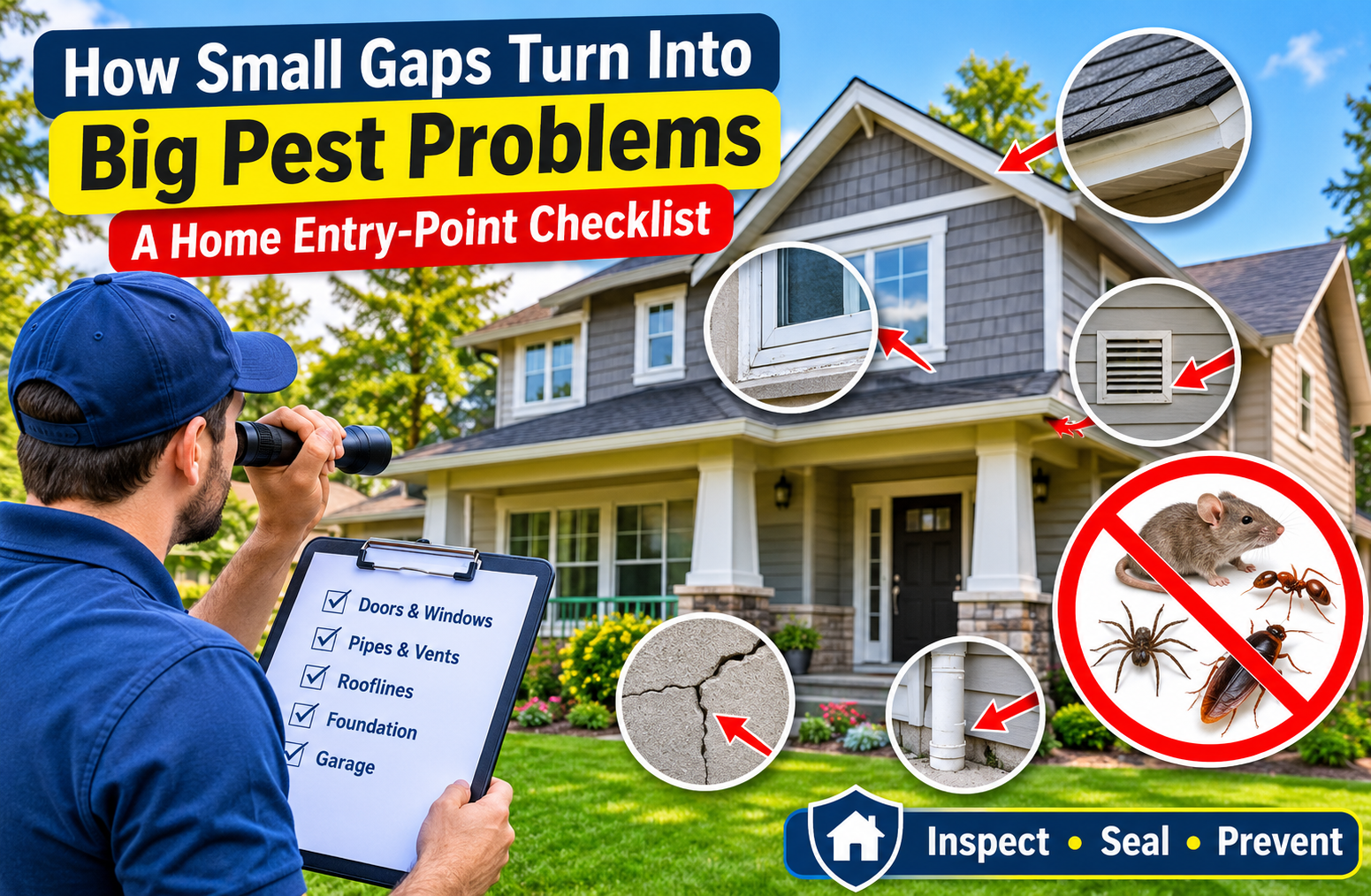
How Small Gaps Turn Into Big Pest Problems: A Home Entry-Point Checklist
Key Takeaways
- Many pest issues begin at small gaps around doors, windows, pipes, vents, foundations, and rooflines.
- Finding the entry point is only part of prevention. Food, water, clutter, and outdoor shelter can keep pests returning.
- Some openings are necessary for drainage, ventilation, or appliance safety, so they should not be sealed without checking their purpose.
- Repeated signs of pests often indicate a hidden access point, nesting area, or moisture issue that requires a more thorough inspection.
Small openings around a home can become reliable routes for ants, spiders, crickets, rodents, and other unwanted visitors. Pests are usually looking for shelter, water, or food, and a clean home can still be vulnerable when exterior gaps lead into wall voids, cabinets, attics, or crawl spaces.
When activity keeps returning, or the source is difficult to find, a qualified pest control company can provide a more complete inspection. Pointe Pest Control offers residential and commercial pest services for issues involving rodents, ants, spiders, wasps, bed bugs, termites, and more across Washington, Oregon, Idaho, and Montana, making its local technicians a useful resource for identifying pest pressure and hidden entry routes.
Why Small Openings Matter
Pests do not need a dramatic hole in the wall to get indoors. Ants can travel through narrow cracks around window frames or plumbing lines, while rodents can use gaps that appear insignificant to a homeowner. In fact, the CDC notes that mice can fit through openings about the width of a pencil. An ant trail near a kitchen sink, for example, may point to both a moisture source and a small gap around a pipe.
Start With a Walk Around the Home
A basic exterior inspection usually takes 15 to 20 minutes. Bring a flashlight, phone camera, gloves, and a notepad. Walk clockwise around the home so no side is missed, and take photos before repairs change the area.
- Check places where different building materials meet, such as siding and brick, trim and roofing, or concrete and framing.
- Look for daylight around doors, torn screens, cracked caulk, loose seals, stains, droppings, gnaw marks, and insect trails.
- Note each concern by location, then separate immediate repairs from items that need more investigation.
- Check the ground near the foundation for standing water, thick mulch, vegetation, or clutter that can conceal pest activity.
Entry Points Around Doors and Windows
Exterior doors, garage doors, and windows are subject to daily use and seasonal weather, so their seals often wear out first. Inspect door sweeps, weatherstripping, garage-door corner seals, window tracks, screens, and caulk around frames. A loose sweep or cracked sealant can invite crawling insects and create an easy route for mice.
- Can you see daylight beneath a closed exterior door?
- Is weatherstripping flattened, brittle, loose, or missing?
- Are window and door screens tight and free of holes?
- Do frames show water damage, peeling caulk, or gaps at the trim?
Utility Lines, Pipes, and Vents
Openings around plumbing, electrical cables, air-conditioning lines, and gas connections are easy to overlook because they often sit behind shrubs, appliances, or utility equipment. Yet these penetrations may connect directly to wall cavities. Use exterior-grade caulk for appropriate small gaps and durable metal mesh or properly fitted covers for larger openings where suitable.
Photorealistic wide establishing shot of a suburban home viewed from the front yard, showing the full house, foundation, doors, windows, roofline, utility lines, shrubs, mulch, and nearby trees in natural daylight, with subtle visual emphasis on the exterior areas where pests may enter.
Do not block dryer vents, combustion vents, weep holes, or drainage openings. These features serve important safety, moisture-control, or ventilation functions. If the purpose of an opening is unclear, pause before sealing it and ask a qualified contractor or pest professional for guidance.
Rooflines, Attics, and Upper-Level Access
Upper areas deserve attention because pests can enter through damaged soffits, fascia, roof vents, chimney flashing, or gaps where siding meets roof trim. Check for stains, nesting material, torn screens, scratching sounds, or disturbed insulation. Also look for tree limbs that touch or hang close to the roof and siding, since they can provide a convenient path for insects and rodents. Leave steep roofs and unsafe ladder work to a professional.
Basements, Crawl Spaces, and Garages
Inspect foundation cracks, crawl-space vents, floor drains, garage seals, and gaps around pipes. Stored cardboard, firewood, unused equipment, and crowded shelves can create shelter while making droppings, shed skins, or gnaw marks harder to notice. Moisture matters here too. Leaking pipes, condensation, poor grading, and standing water can make low-level areas more attractive to many pests.
Match the Sign to the Likely Source
Visible activity can help narrow down where to inspect next.
| Sign | Possible Clue | Areas to Check |
| Ant trails | Food, moisture, or a narrow gap | Sinks, windows, doors, pipe openings |
| Mouse droppings | Travel route or nesting area | Garages, cabinets, attics, utility rooms |
| Spider webs | Nearby insects or easy access | Porches, window corners, garages, roof edges |
| Chewed wiring | Possible rodent activity | Attics, basements, garages, mechanical spaces |
Repairs That Help, and Repairs That Can Backfire
Helpful Repairs
- Replace worn door sweeps and weatherstripping.
- Repair damaged window, attic, and vent screens.
- Seal exterior cracks with materials designed for the surface and location.
- Trim branches away from the roof and siding.
- Correct leaks and improve drainage near the foundation.
Common Mistakes
- Relying on expanding foam alone where rodents can chew through it.
- Sealing a hole before confirming an animal is not inside.
- Blocking ventilation, drainage, or appliance exhaust openings.
- Ignoring repeat activity after a quick repair.
If pesticides are used, follow the product label exactly and keep products away from children and pets. The EPA recommends prevention steps such as sealing openings, repairing screens, and reducing clutter before relying on chemical products.
Food, Water, and Yard Habits That Reduce Pest Pressure
- Store pantry goods and pet food in tightly sealed containers.
- Clean crumbs, spills, and grease promptly.
- Keep indoor and outdoor trash lids closed.
- Fix dripping faucets, leaking pipes, and outdoor spigots.
- Remove fallen fruit, standing water, and outdoor pet food.
- Keep mulch, dense vegetation, and firewood away from exterior walls when possible.
When a Professional Inspection Makes Sense
Professional help is especially useful when activity continues after reasonable repairs, when rodents are inside walls or insulation, when electrical damage is present, or when the pest species is uncertain. It is also wise to seek help for suspected termites, aggressive stinging insects, inaccessible roofline gaps, or contamination in storage and mechanical areas.
A Simple Seasonal Inspection Plan
- Spring: Check screens, roof edges, drainage, and cracks that may have developed during winter weather.
- Summer: Watch doors, patios, gardens, and eaves for ants, spiders, wasps, and moisture-related activity.
- Fall: Inspect garages, attics, foundations, and utility openings before cooler conditions drive pests toward shelter.
- Winter: Monitor kitchens, basements, storage rooms, and heating areas for droppings, gnawing, or new insect activity.
Common Questions About Pest Entry Points
Should every crack around a home be sealed?
No. Assess each opening first, because some are designed for drainage, ventilation, or equipment safety. Seal only gaps that do not serve an essential building function.
Why do pests return after treatment?
Treatment may reduce current activity without eliminating access to food, water, shelter, or hidden entry points. A recurring issue often warrants a more thorough inspection.
When should a homeowner stop DIY repairs?
Stop when the work involves electrical damage, steep roofs, contaminated insulation, suspected termites, animals inside walls, or persistent activity that has not responded to practical exclusion and sanitation steps.
Conclusion
Small gaps rarely look urgent, but they can give pests a dependable route indoors. A careful seasonal walkaround, sensible repairs, moisture control, and good storage habits can reduce many common pest problems. When the source remains hidden, a detailed inspection is usually more effective than another quick fix.