Justin Bieber Net Value: Earnings, Music Career, and Wealth Explained
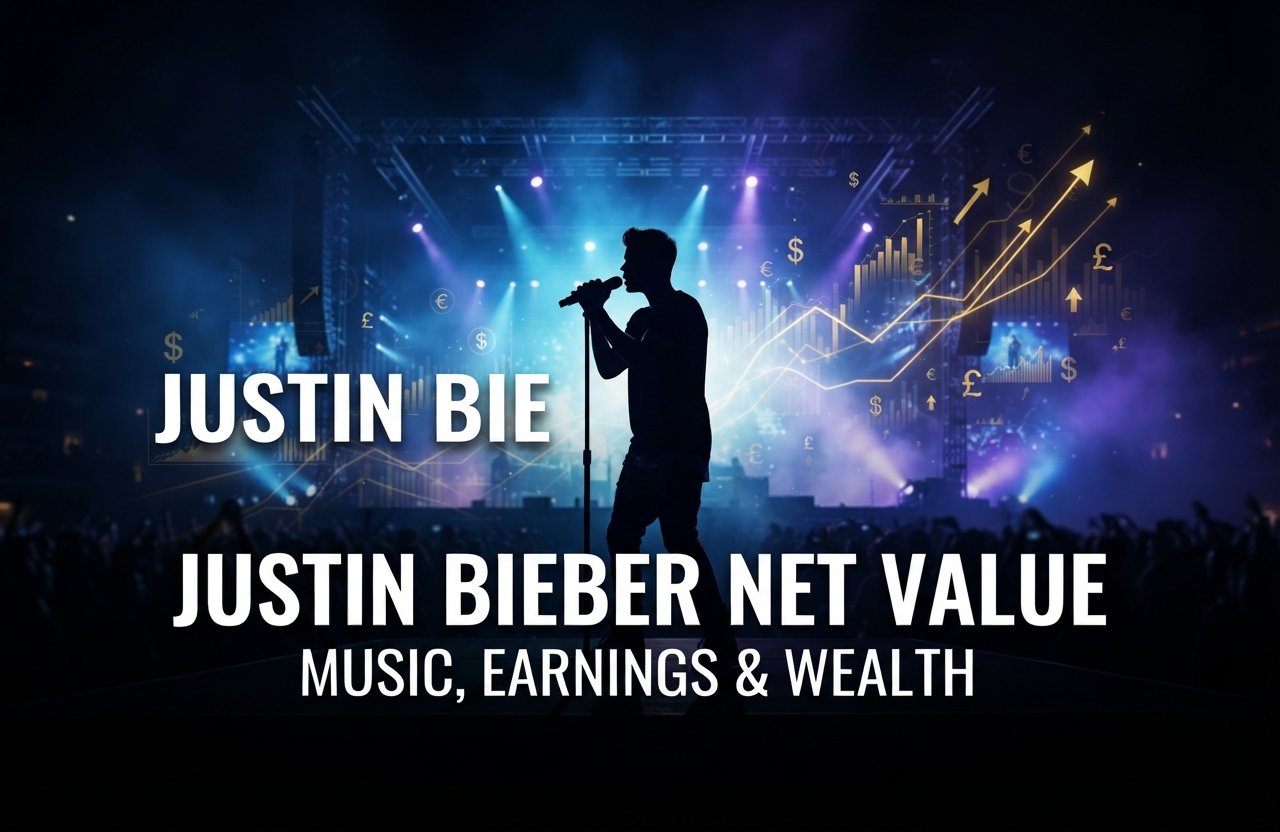
Justin Bieber net worth is a popular topic among fans who want to understand how the Canadian singer turned his early success on YouTube into a global music career and a multimillion-dollar fortune. From chart-topping singles and sold-out tours to music royalties, brand partnerships, and business deals, Bieber has built several potential sources of income over the course of his career. However, estimating his wealth requires more than adding up record sales or concert revenue. His personal assets, business expenses, taxes, contractual obligations, and the terms of major financial transactions all influence how much wealth he may retain.
One important distinction is that net worth is not the same as career earnings. A singer can generate hundreds of millions of dollars in revenue without personally keeping that amount. Similarly, selling rights to music can produce a substantial upfront payment while changing how future royalties are collected. Understanding these differences makes it easier to assess the financial position of one of pop music’s most recognizable artists without treating unverified estimates as confirmed facts.
This article examines his career earnings, music catalog transaction, touring income, royalties, business ventures, and the limits of publicly available financial information. It also explains how celebrity wealth estimates should be interpreted and which facts provide the strongest evidence of his financial success.
Justin Bieber Net Worth in 2026: What Is His Estimated Wealth?
The exact figure for Justin Bieber’s personal net worth in 2026 cannot be established from publicly available information alone. Celebrity wealth websites publish estimates, but those figures are not audited financial statements and may rely on incomplete information about private assets, debts, taxes, and business arrangements.
A major public financial milestone provides useful context. In January 2023, Bieber sold his interests in a large collection of music rights to Hipgnosis Songs Capital. The deal was widely reported to be worth approximately $200 million, although the parties did not publicly confirm the final purchase price in their announcement.
The Associated Press reported that the transaction covered rights associated with roughly 290 songs, including well-known releases such as Baby and Sorry. The deal’s estimated value is significant, but it should not be mistaken for a verified statement of Bieber’s current personal wealth.
To understand the numbers, it helps to separate three different financial measures:
- Career earnings: The money generated by his work over many years, before personal expenses and other deductions.
- Transaction proceeds: Money received from selling an asset, such as music rights, before applicable costs and taxes.
- Net worth: The value of assets he owns minus his liabilities.
These measures answer different questions. A large transaction can demonstrate the commercial value of an artist’s intellectual property, but it does not establish how much money remains in that artist’s bank accounts.
For readers researching Justin Bieber net worth, the most reliable approach is to focus on documented business events and clearly label estimates as estimates.
How Justin Bieber Built His Fortune
7
Justin Bieber’s financial story is closely connected to the way the music industry changed during the late 2000s and 2010s. His career began with online videos, expanded through traditional record deals, and grew into an international entertainment business supported by recorded music, touring, endorsements, and collaborations.
1. Discovering an audience through YouTube
Bieber first attracted widespread attention through videos of himself singing that were uploaded to YouTube. Talent manager Scooter Braun discovered his performances online and helped connect him with the music industry.
This early exposure mattered financially because it demonstrated that an audience could develop before an artist had a conventional recording career. Online attention helped Bieber attract professional management, recording opportunities, and a much larger platform.
His early success also illustrates an important point about entertainment wealth: popularity is an asset, but it must be converted into commercial opportunities to generate income.
An online audience can help an artist sell music, attract concertgoers, secure sponsorships, and build a recognizable personal brand. Yet the amount an artist earns from these opportunities depends on contractual arrangements and the costs of operating the business.
2. The breakthrough of My World
Bieber’s debut release, My World, arrived in 2009. It helped introduce his music to a broad audience and established the foundation for his commercial career.
His subsequent releases strengthened his position as a mainstream pop artist. Songs such as Baby became widely recognized, while albums and promotional appearances helped him reach audiences beyond the original online fan base.
At this stage, several revenue streams began working together:
- Sales of physical albums and digital downloads.
- Royalties associated with recorded music.
- Payments connected to songwriting and publishing, where applicable.
- Concert appearances and promotional events.
- Merchandise and commercial partnerships.
It is important not to assume that every dollar generated by a song went directly to Bieber. Record labels, publishers, distributors, songwriters, producers, and other rights holders can all have contractual interests in a recording or composition.
The financial results of a successful release therefore depend on both audience demand and the ownership structure behind the music.
3. Growing into a global pop star
As Bieber’s career developed, his music reached audiences across North America, Europe, Asia, and other markets. Collaborations with established artists helped him reach different listener groups, while new albums gave fans reasons to continue streaming his work.
Songs such as Sorry, Love Yourself, What Do You Mean?, and Peaches strengthened his catalogue and contributed to his continued commercial relevance.
A successful catalogue has a special financial advantage. Unlike a one-time performance, a recording can continue generating revenue long after its release. It can be streamed repeatedly, licensed for certain uses, and included in playlists that introduce older songs to new listeners.
This creates the possibility of recurring income. However, the income received by an individual artist depends on the rights they own and the agreements governing those rights.
Bieber’s career illustrates how an early hit can become part of a much larger business when it is supported by years of subsequent releases, collaborations, and audience engagement.
The $200 Million Music Catalog Deal Explained
One of the most important financial events in any discussion of Justin Bieber net worth is the sale of his music catalogue interests in 2023.
The transaction drew attention because Bieber was still relatively young and remained an internationally recognized performer. Historically, major music catalogue sales have often involved artists monetizing decades of work later in their careers.
Bieber’s deal demonstrated that a successful modern pop catalogue could be valuable enough to attract major institutional investment.
What did the transaction include?
According to the purchaser’s January 24, 2023, announcement, Hipgnosis acquired Bieber’s interests in publishing copyrights, master recordings, and neighboring rights for more than 290 titles released before December 31, 2021.
These rights represent different ways music can produce commercial value.
Publishing copyrights relate to musical compositions, including the underlying song and lyrics. Depending on the agreement and ownership structure, they can generate income when compositions are performed, reproduced, streamed, or licensed.
Master recording rights concern specific recorded versions of songs. They are distinct from the copyright in the underlying composition.
Neighboring rights can generate payments associated with certain public performances or uses of recordings, depending on the country and the applicable rights framework.
The distinction is important because one song can involve multiple copyrights and several parties with different financial interests.
Was the deal officially worth $200 million?
The reported value was approximately $200 million, with some reports describing the deal as exceeding that amount. However, the purchaser’s public announcement did not disclose the final financial terms.
The figure should therefore be described as a widely reported estimate, not as a confirmed amount of cash deposited into Bieber’s personal accounts.
For the original reporting and transaction details, see the Associated Press report on Bieber’s music catalogue sale.
Does the sale mean Bieber became $200 million richer?
Not necessarily in the way the question might suggest.
A catalogue sale exchanges ownership interests for a payment. The artist receives money in return for giving up specified rights and their associated future income.
The transaction can increase available cash and potentially improve financial flexibility. At the same time, it removes an income-producing asset from the seller’s ownership.
Several factors affect the net financial benefit:
- The final purchase price and payment structure.
- Taxes arising from the transaction.
- Legal, advisory, and other professional expenses.
- Any contractual claims or obligations associated with the rights.
- How the proceeds are retained, invested, spent, or used to settle liabilities.
Without access to Bieber’s private financial records, it is impossible to calculate the exact amount he retained from the deal or determine its precise effect on his present net worth.
Why would a successful musician sell music rights?
The decision can make financial sense when an artist prefers a substantial payment today over uncertain future income spread across many years.
For a purchaser, the appeal is different. An investor may acquire rights in the expectation that future royalties and licensing revenue will justify the purchase price.
This is a form of asset valuation. The purchaser evaluates the likely income stream, its expected duration, its risks, and the price paid to obtain it.
For the artist, the trade-off involves immediate liquidity, future earning potential, ownership, and control. There is no universal rule that selling a catalogue is always better than retaining it.
In Bieber’s case, the deal provides strong evidence that his music had substantial commercial value. It does not, by itself, establish his total wealth in 2026.
Justin Bieber’s Main Sources of Income
A celebrity’s financial position is rarely explained by one source of income. Bieber’s career has included several distinct business activities, each with different earning potential and expenses.
1. Music sales and streaming royalties
Recorded music remains a central part of Bieber’s commercial legacy.
His catalogue includes successful singles, albums, and collaborations that continue to attract listeners. Digital streaming has made it possible for older songs to remain commercially active long after their original release.
However, streaming revenue is not calculated by simply multiplying every play by a fixed amount and assuming the artist receives the total.
Payments depend on factors such as the service, territory, subscription or advertising model, rights ownership, distributor arrangements, and contractual royalty terms.
The money generated by a recording may be distributed among labels, recording owners, publishers, songwriters, performers, and other parties. The exact division varies by the rights involved.
Because Bieber sold certain interests in his pre-2022 catalogue, the income associated with those interests cannot automatically be treated as income he still owns. His financial arrangements for later releases and other projects must be assessed separately.
2. Songwriting and publishing income
Songwriting can provide a different revenue stream from performing a song.
When an artist writes or co-writes a composition, they may hold a share of its publishing income. That income can arise from several uses of the composition, subject to the relevant agreements.
Bieber has songwriting credits on a number of releases, although the specific contribution and ownership share vary from song to song.
A songwriting credit does not necessarily mean that one person owns the entire composition. Collaborations may involve multiple writers, producers, publishers, and other rights holders.
The 2023 catalogue transaction is particularly relevant here because the purchaser acquired Bieber’s interests in publishing copyrights for the covered catalogue. That means pre-sale publishing interests should not be counted as though he continues to own all of them.
3. Concerts and live performances
Concert touring can generate significant revenue for major performers, especially when shows are staged in large venues across multiple countries.
Bieber’s live career has included arena and stadium performances, festival appearances, and international tours. A successful tour can create income through ticket sales, VIP packages, merchandise, and other commercial arrangements.
But gross ticket revenue is not equivalent to the performer’s personal earnings.
Touring expenses can include:
- Venue rental and production.
- Stage construction, lighting, and sound.
- Travel, accommodation, and transport.
- Salaries for musicians, dancers, technicians, and other staff.
- Insurance, security, and event-related costs.
- Promoter arrangements and management commissions.
The artist’s actual compensation depends on the contract and the tour’s financial performance.
A sold-out show can be commercially successful while still involving substantial expenses. Conversely, a well-managed tour may generate significant profit even if its gross revenue is lower than that of a larger production.
For that reason, publicly reported ticket sales or attendance figures cannot independently establish how much Bieber personally earned from touring.
4. Brand endorsements and advertising
Bieber’s global recognition has made him a commercially valuable figure for brands seeking to connect with younger audiences and pop culture.
Endorsements can involve advertising campaigns, sponsored appearances, product collaborations, or agreements to associate an artist’s name and image with a company.
These arrangements can be lucrative, but their terms are usually private. A public campaign does not reveal the exact fee, duration of the agreement, or division of income among the artist, management, and other parties.
Some partnerships may involve cash compensation. Others may include royalties, equity, licensing payments, or a combination of benefits.
A responsible assessment should identify confirmed partnerships where reliable information exists rather than inventing contract values.
5. Merchandise and licensed products
Merchandise is another possible revenue source for an artist with a large and active fan base.
Products can include clothing, accessories, tour merchandise, and items connected to a particular album or release. Merchandise sales may take place at concerts or through online retail channels.
Yet retail sales are not equal to profit.
Manufacturing, distribution, shipping, payment processing, returns, licensing, and retail commissions can all reduce the amount that ultimately reaches the artist or the artist’s business.
Some products may be sold under licensing agreements that pay the artist a royalty. Other arrangements may involve a direct commercial operation with different costs and risks.
Without reliable financial disclosures, it is not possible to assign a precise annual profit to Bieber’s merchandise activities.
6. Business ventures and collaborations
Artists sometimes expand beyond music into fashion, technology, entertainment, consumer products, or other commercial opportunities.
Such ventures can diversify income and create value outside the recording industry. They can also introduce new risks, including operating expenses, uncertain demand, and the possibility that a business fails to meet expectations.
Bieber has participated in various collaborations and commercial projects during his career. However, the existence of a project does not prove that it generated a profit or that he retained a specific ownership percentage.
For a reliable financial analysis, each venture should be evaluated using evidence about its ownership, commercial performance, and the artist’s actual economic interest.
It would be misleading to add the full sales value of a collaborative product to his personal wealth without knowing the underlying agreement.
How Much Money Does Justin Bieber Make Per Year?
There is no dependable public figure for Bieber’s annual personal income in 2026. His earnings can change substantially from one year to another because music releases, touring schedules, licensing arrangements, and commercial partnerships do not produce the same amount every year.
An artist who releases an album and completes a major tour may earn very different amounts from an artist who spends that year working in the studio or taking time away from live performances.
It is also important to distinguish between income earned during a year and the increase in net worth during that period.
For example, an artist could earn a large amount from music and business activities but spend a substantial portion on operating costs, taxes, investments, or personal expenses. Another artist could have relatively modest current income while holding valuable investments that appreciate over time.
Why annual income estimates vary
Celebrity income reports often rely on publicly visible activity, such as touring, album releases, or endorsements. These details can help explain how a performer earns money, but they do not reveal the complete financial picture.
Three issues make annual estimates especially difficult.
First, revenue is not profit. A tour or commercial partnership can generate substantial sales while also creating large expenses.
Second, payment timing matters. A contract may provide an advance, milestone payments, or royalties paid over time. Money received in one year may relate to work performed earlier.
Third, private agreements matter. The percentages paid to managers, labels, publishers, promoters, and other business partners are not always publicly disclosed.
For these reasons, it is more accurate to discuss Bieber’s established income sources than to publish a precise annual salary without reliable supporting evidence.
Justin Bieber Net Worth Compared With His Career Earnings
The difference between lifetime earnings and net worth is one of the most important parts of understanding celebrity finances.
Bieber has generated commercial value through years of music releases, performances, and partnerships. However, total career earnings cannot be calculated simply by adding publicly reported revenue figures.
A meaningful calculation would need to account for income earned across different years, ownership arrangements, business expenses, taxes, investments, debts, and asset sales.
Consider a simplified example.
Imagine an entertainer generates $100 million in gross business revenue over several years. After business costs, contractual payments, taxes, and other obligations, the entertainer retains substantially less. Some of the remaining money may be invested in assets, while some may be spent.
The entertainer’s net worth would depend on the current value of those assets and the outstanding liabilities, not on the original $100 million revenue figure.
The same principle applies to major music rights transactions. A reported $200 million catalogue valuation does not automatically add $200 million to an artist’s net worth because the artist has exchanged rights for money and may have incurred related costs and taxes.
What should be included in a net worth calculation?
A comprehensive estimate would generally consider the following categories.
| Financial category | What it means |
| Cash and deposits | Money held in bank accounts and similar liquid assets |
| Investments | Shares, funds, business interests, and other financial holdings |
| Real estate | Property valued at current market prices, minus associated debt where applicable |
| Music and intellectual property | Rights the artist still owns and their estimated market value |
| Business ownership | The value of the artist’s actual ownership stakes in businesses |
| Personal assets | Other valuable possessions, subject to realistic valuation |
| Liabilities | Mortgages, loans, unpaid obligations, and other debts |
Not every category is publicly documented for Bieber. Some may be difficult to value, and certain assets may be held through companies or other legal structures.
That is why a precise personal balance sheet cannot responsibly be reconstructed from entertainment news alone.
How the Music Catalogue Sale Changes His Financial Picture
The catalogue transaction deserves special attention because it involved the sale of an income-producing asset rather than an ordinary payment for a performance.
Before a catalogue sale, an artist may receive eligible royalties whenever the relevant music generates income. After selling certain rights, the artist generally gives up the income associated with the interests transferred, subject to the terms of the agreement.
The purchaser, meanwhile, takes on the opportunity to earn future income from those rights.
Immediate money versus future royalties
The transaction illustrates a financial choice between receiving money now and retaining an asset that may generate income over time.
For the artist, an upfront payment can provide liquidity. It may create opportunities to invest in other assets, reduce financial risk, or fund new projects.
For the purchaser, the investment makes sense only if the expected future income and other economic benefits justify the price paid.
Neither outcome is guaranteed. Music consumption changes, popular tastes evolve, and the value of a catalogue depends on its ability to continue generating commercial returns.
Bieber’s catalogue was attractive because it included established international hits with a large audience. Nevertheless, its reported sale price should not be confused with the value of every asset he owns.
Does he still earn money from music?
Yes, selling a catalogue does not mean an artist stops earning money from all music-related activities.
An artist may continue earning from new recordings, performances, appearances, songwriting arrangements not covered by the transaction, and other projects. The precise income depends on the rights involved and the contracts in place.
In Bieber’s case, the reported catalogue transaction covered his interests in works released before the end of 2021. It should not automatically be interpreted as a sale of every possible future music-related earning opportunity.
The key question is always which rights were transferred and which economic interests remain with the artist.
The Role of Taxes, Expenses, and Financial Management
Even a performer with substantial income can experience major changes in personal wealth because earning money and retaining wealth are different financial tasks.
Taxes can reduce the amount retained from income and asset sales. The exact amount depends on the nature of the income, the jurisdictions involved, applicable tax rules, deductions, and other circumstances.
International entertainers may work in multiple countries, creating additional tax and reporting considerations. Their financial arrangements can be complex, but the details of Bieber’s private tax position are not publicly established here.
Professional expenses can also be significant.
A major music career may require managers, attorneys, accountants, agents, publicists, security staff, and other professionals. Some of these expenses are associated with business operations, while others may relate to personal activities or separate arrangements.
Investments can either increase or reduce wealth. Real estate may appreciate or lose value. Business ventures may become profitable or require additional capital. Financial investments can rise or fall with market conditions.
Personal spending also affects the final picture, although it would be inappropriate to assign Bieber specific spending amounts without evidence.
These factors help explain why two entertainers with similar career earnings can have very different net worth figures.
Justin Bieber’s Lifestyle and Assets: What Can Be Confirmed?
Celebrity lifestyles often attract as much attention as music careers. Homes, cars, travel, fashion, and luxury purchases can make an entertainer appear extremely wealthy.
However, lifestyle reporting is not a substitute for financial records.
A reported property purchase does not automatically reveal the owner’s present equity. The property may have been financed with a mortgage, sold later, or held through a company. Its current market value may also differ from the original purchase price.
Similarly, photographs of luxury cars or expensive clothing do not establish who owns the items or whether they were purchased, leased, borrowed, or supplied for promotional purposes.
A sound assessment should separate three types of information:
- Documented facts: Transactions or ownership details supported by reliable records.
- Reported estimates: Figures published by credible outlets but not independently confirmed.
- Speculation: Claims about assets, spending, or wealth that lack adequate evidence.
For readers interested in Bieber’s finances, the third category deserves particular caution. Repeated online claims do not become verified facts simply because multiple websites publish similar numbers.
Why Justin Bieber’s Wealth Estimates Differ Across Websites
A quick search for Justin Bieber net worth may produce different estimates from different celebrity finance websites. These differences do not necessarily mean that every publisher has made the same type of mistake.
Often, the estimates are based on different assumptions and incomplete information.
1. Some estimates focus on income rather than assets
A website may use career milestones, reported earnings, or major commercial deals to create a wealth estimate. If it does not adequately account for expenses and liabilities, the result may overstate the artist’s net worth.
2. Music rights can be difficult to value
A catalogue may be valued according to its expected future income, the rights included in the transaction, and market conditions at the time of sale.
The sale price is useful evidence of the value of the transferred rights. It does not determine the present value of every remaining asset held by the seller.
3. Private information is missing
Most entertainers do not publish complete personal balance sheets. Outsiders generally cannot verify all bank balances, investment holdings, business interests, debts, or tax obligations.
Without those details, a precise estimate involves assumptions that may not be visible to readers.
4. Estimates can remain online after circumstances change
A wealth estimate published years ago may continue to appear in search results even after a major transaction, a change in career activity, or a shift in asset values.
A responsible reader should check when an estimate was published, whether its methodology is explained, and whether it accounts for major known events.
How to evaluate a celebrity net worth claim
When comparing estimates, ask these questions:
- Does the article identify the source of its figures?
- Does it distinguish gross revenue from personal wealth?
- Does it explain major asset sales?
- Does it account for expenses and liabilities?
- Does it clearly label uncertain figures as estimates?
If the answer to most of these questions is no, the estimate should be treated cautiously.
The strongest financial analysis is not necessarily the one with the most precise number. It is the one that explains what is known, what is estimated, and what cannot be verified.
How Justin Bieber’s Career Influences His Long-Term Wealth
An artist’s long-term financial position depends on more than current popularity. It also depends on the durability of the work, the ability to attract new audiences, and the decisions made about intellectual property.
Bieber’s catalogue includes songs that became widely recognized during different stages of his career. These recordings can remain culturally relevant even when the artist is not actively touring or releasing new music.
A lasting music catalogue
Popular recordings can continue attracting listeners through streaming platforms, playlists, social media, and film or advertising uses. A song can also gain renewed attention when it becomes associated with a new cultural trend.
However, continued popularity does not mean every recording produces the same income indefinitely. Revenue depends on listener activity, rights ownership, distribution arrangements, and the commercial terms governing each use.
Bieber’s catalogue sale shows that an established body of music can have significant value beyond its original release cycle. It also demonstrates why ownership matters: the person or company holding the relevant rights may receive income generated by future uses.
New releases and collaborations
New recordings can create fresh commercial opportunities. They may generate streaming income, lead to performances, strengthen relationships with brands, and introduce an artist to younger listeners.
Collaborations can also expand an artist’s reach by connecting different fan bases. However, the financial benefit depends on the song’s performance and the agreements between the participants.
It would be premature to predict how much Bieber will earn from future projects without knowing his plans, contractual arrangements, and the commercial results of those projects.
Financial diversification
Diversification means holding different kinds of assets or earning income from different activities rather than relying on a single source.
For entertainers, this might include music, business ownership, investments, property, and licensing opportunities. Diversification can help manage risk, although it does not eliminate the possibility of losses.
Bieber’s public career provides examples of income opportunities across entertainment and commercial partnerships. His complete investment portfolio, however, is not publicly established, so claims about the precise composition of his wealth should remain cautious.
What the Justin Bieber Net Worth Discussion Reveals About Celebrity Finance
Bieber’s financial story offers several useful lessons for anyone trying to understand wealth in the entertainment industry.
First, popularity can create commercial opportunities, but it does not guarantee that an artist owns every asset associated with that popularity. Contracts determine how income and rights are divided.
Second, intellectual property can be a valuable asset. Songs can generate income for years, and established catalogues may attract investors who expect future royalties.
Third, selling an asset changes the composition of wealth. A seller may receive substantial money while giving up future income from the rights transferred. The overall effect depends on the transaction terms and how the proceeds are managed.
Finally, public estimates should never be confused with audited financial statements. A credible article can explain a person’s documented financial milestones without pretending to know every detail of their private finances.
These principles are particularly relevant when evaluating Justin Bieber net worth because his catalogue sale is a major, publicly reported transaction, but his full personal financial position remains private.
Frequently Asked Questions
1. What is Justin Bieber’s net worth in 2026?
Justin Bieber’s exact net worth in 2026 is not publicly verified through a complete, audited personal financial statement. Online estimates should be treated as approximations rather than confirmed figures. His reported music catalogue sale in 2023 provides important context but does not establish his current total wealth.
2. Did Justin Bieber sell his music catalogue for $200 million?
In January 2023, Hipgnosis Songs Capital acquired Bieber’s interests in more than 290 music titles released before December 31, 2021. The deal was widely reported to be worth approximately $200 million, but the final financial terms were not publicly confirmed by the purchaser.
3. How does Justin Bieber make his money?
His career has included recorded music, streaming, songwriting, live performances, merchandise, endorsements, and commercial collaborations. The amount he personally retains from these activities depends on ownership rights, contracts, expenses, taxes, and other financial obligations.
4. Does Justin Bieber still earn money from music after selling his catalogue?
He can continue earning from music-related activities and rights not transferred in the transaction. The 2023 sale covered specified interests in his back catalogue, rather than automatically transferring every possible future earning opportunity.
5. Why do different websites report different wealth estimates for Justin Bieber?
Celebrity wealth estimates often rely on incomplete information about income, assets, expenses, taxes, and liabilities. Websites may also use different valuation methods or outdated figures. Without a verified personal balance sheet, differences between estimates are difficult to resolve conclusively.
6. Was the music catalogue sale Justin Bieber’s total net worth?
No. The reported catalogue price represented the estimated value of the rights transferred in that transaction. It was not a statement of Bieber’s total wealth, and it does not account for his other assets, liabilities, transaction costs, or the subsequent use of the proceeds.
Conclusion
Justin Bieber’s financial success reflects years of commercial achievement in music, international performances, collaborations, and brand-related opportunities. His career demonstrates how an artist can turn early online recognition into a lasting entertainment business.
The 2023 music catalogue transaction is one of the clearest financial milestones in his career. The deal was widely reported to be worth approximately $200 million and covered his interests in a substantial collection of songs released before the end of 2021. However, that reported amount should not be treated as his current net worth or as the exact sum he personally retained.
The most important distinction is between reported transactions, career earnings, and net worth. Each measures something different, and none can independently reveal a person’s complete financial position.
Ultimately, the available evidence supports the conclusion that Bieber has built a highly valuable music career. His precise personal wealth in 2026 remains unverified, and any estimate should acknowledge the limits of publicly available financial information.