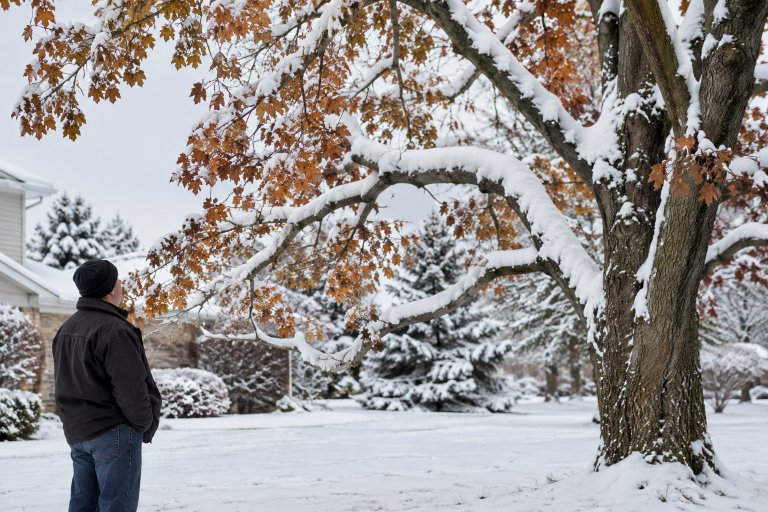
Milwaukee WI Tree Care: Seasonal Guidance for Homeowners
Key Takeaways
- Inspect trees after major weather events and at the beginning of each season.
- Keep mulch shallow and away from the trunk to protect bark and roots.
- Water young trees slowly during dry weather instead of relying on quick surface watering.
- Do not climb damaged trees or work near electrical lines.
- Evaluate mature trees carefully before deciding that removal is the only option.
A healthy, beautiful tree can be one of the most valuable features of a Milwaukee property, but keeping it that way takes more than occasional trimming. From heavy winter snow and spring storms to summer dry spells, compacted soil, and the challenges of urban streets and driveways, local trees face changing conditions throughout the year. Regular inspections and timely maintenance help protect tree health, reduce potential hazards, and preserve the neighborhood canopy for years to come. For professional tree care, risk assessments, pruning, and landscape support, Crawford Tree & Landscape in Milwaukee offers services to help property owners maintain healthy, attractive outdoor spaces while addressing seasonal concerns. Homeowners concerned about ash trees can also learn to recognize the signs of emerald ash borer in Milwaukee to better understand when monitoring, treatment, or removal may be appropriate. By paying attention to changing tree conditions and taking a proactive approach to maintenance, property owners can make informed decisions that support safer yards, stronger trees, and a more attractive Milwaukee landscape. With its range of tree care and landscape services, Crawford Tree & Landscape helps Milwaukee-area property owners address seasonal challenges and make informed decisions about their trees.
Table of Contents
- Why Milwaukee Trees Need Year-Round Attention
- Winter Storm Safety
- Spring Inspections and Root Care
- Summer Watering and Pest Monitoring
- Fall Preparation and Planting
- When to Call for Professional Help
Why Milwaukee Trees Need Year-Round Attention
Milwaukee trees experience sharp seasonal changes. Winter snow and ice can overload branches, spring thaw can expose drainage issues, summer heat can dry shallow soils, and fall winds can reveal weak limbs or poor branch attachments. Street trees and yard trees near pavement often have limited room for roots, while salt spray and reflected heat can add stress.
Lake Michigan shapes growing conditions across the city in ways many homeowners do not expect. Neighborhoods closer to the lakefront can experience stronger winds, more salt-laden air during the winter road treatment season, and sharper temperature swings in spring. Farther inland, heavy clay soils common across parts of the city can hold water after heavy rain and then dry into hard, cracked ground during late summer. Both situations limit root growth and make it harder for trees to recover from a single difficult year. Older boulevard trees along historic streets on the east and west sides often face decades of compacted soil, buried utility lines, and sidewalk repairs that shape their growth.
Protecting large trees matters because a mature canopy cannot be replaced overnight. Wisconsin urban forestry monitoring has found that larger trees provide a substantial share of Milwaukee’s leaf area and the environmental benefits associated with the urban forest. The Milwaukee urban forest monitoring results also underscore why regular observation and timely care can be worthwhile. For many neighborhoods, a single large maple or oak provides shade that cools homes in July, slows stormwater runoff during summer thunderstorms, and gives a block its familiar character.
Winter Storm Safety: Put Safety Before Cleanup
After heavy wet snow, freezing rain, or strong winds, walk around the property from the ground and look for hanging branches, fresh trunk cracks, lifted soil near the base, or a tree that has suddenly started leaning. Pay close attention to limbs over driveways, roofs, sidewalks, and play areas.
Milwaukee winters often bring a mix of heavy, wet snow and repeated freeze-thaw cycles. A layer of ice that forms on branches in the morning can become a serious load by afternoon, and a thaw can then loosen the soil around the roots. Homeowners in neighborhoods with mature maples, oaks, and elms should expect to check trees after each significant storm, especially when branches overhang parked cars, garages, or busy streets.
What Not to Do
- Do not shake ice from branches, as this can cause additional breakage.
- Do not climb a damaged tree or use a ladder against it.
- Do not cut limbs that are bent, suspended, pinned, or under tension.
- Do not approach a tree contacting a utility line. Contact the utility company instead.
Take photos from a safe distance and keep people and pets out of the area. Milwaukee has seen how quickly severe weather can affect the local canopy, including the widespread tree damage reported in coverage of efforts to preserve Milwaukee’s urban trees after severe storms.
Spring Inspections and Root Care
Spring is an ideal time for Milwaukee homeowners to inspect their trees after months of freezing temperatures, heavy snow, ice accumulation, and winter winds. Before leaves fully emerge, the open canopy makes it easier to spot broken branches, deadwood, cavities, loose bark, and narrow branch unions that may be prone to splitting. Check the ground around each tree for exposed roots, pooling water, soil erosion, mushrooms near the trunk, and signs of damage from lawn equipment or construction. Milwaukee’s freeze-thaw cycles and compacted urban soils can affect root health and drainage, so addressing these concerns early can help trees recover and prepare for spring storms. Apply mulch in a wide, shallow ring around the base, keeping it several inches away from the trunk and leaving the root flare visible. Proper mulching helps retain soil moisture, reduce competition from grass, and protect the trunk from accidental damage. Also, check soil moisture regularly and water when necessary, especially for newly planted trees or those growing in restricted spaces.
Spring is also a valuable time to identify ash trees and look for possible signs of emerald ash borer, an invasive insect that can seriously damage or kill susceptible trees. Warning signs include thinning upper-canopy growth, dying branches, bark splits, unusual woodpecker activity, and small, D-shaped exit holes in the bark. Because these symptoms can have other causes, homeowners should seek a professional assessment when an infestation is suspected rather than relying on a single sign. Learning to recognize common signs of emerald ash borer in Milwaukee can help property owners understand when monitoring, treatment, or removal may be appropriate. Throughout the inspection, prioritize trees near homes, garages, sidewalks, and driveways, where damaged branches or structural problems may pose greater risks. Keeping photographs and notes about changes in canopy growth, bark condition, and soil drainage can also make it easier to track tree health over time. By combining regular inspections, proper mulching, suitable watering, and early attention to potential pest problems, Milwaukee homeowners can support healthier trees and prepare their landscapes for the growing season ahead.
Summer Watering and Pest Monitoring
Young trees need particular attention during hot or dry periods because their roots have not yet expanded far beyond the planting hole. Check soil a few inches below the surface before watering. If it is dry, apply water slowly across the root zone so it can soak in rather than run across the lawn or pavement.
Milwaukee summers can swing quickly from humid, thundery weeks to stretches of dry heat. Trees planted in boulevard strips, along narrow driveways, or beside concrete patios may warm faster and lose moisture sooner than trees in open lawns. Watching how a tree responds during these periods gives homeowners useful information before stress becomes visible damage.
Summer Stress Signals
- Leaf edges turning brown or dry.
- Leaves dropping earlier than expected.
- Thin, uneven foliage in one part of the canopy.
- Wilting during relatively mild conditions.
- New dead twigs or branches in the upper canopy.
These symptoms do not point to one single cause. Drought, compacted soil, root injury, insects, disease, and planting problems can look similar from a distance. Fertilizer is not an automatic solution, especially when the underlying issue is drainage, restricted root space, or lack of water.
Fall Preparation and Thoughtful Planting
Fall is the time to address obvious deadwood, clear leaves from drainage areas, refresh mulch, and inspect trees above high-use spaces. Heavy leaf drop can bury curb inlets and storm drains near street trees, so keeping those openings clear helps water move away from the base of the tree. If autumn is dry, continue watering trees that are still establishing. Mark trees that need closer evaluation before winter weather arrives.
If replacing a tree, select it for the site rather than just its appearance. Consider mature height and spread, overhead utilities, sunlight, soil drainage, salt exposure, and the available rooting area. Planting a variety of suitable species can help avoid having too much of the neighborhood canopy vulnerable to the same pest or disease.
When Professional Tree Care Makes Sense
A ground-level inspection is helpful, but it is not a formal risk assessment. Professional guidance is especially appropriate when a tree has a new lean, a major crack, a cavity, repeated branch failure, severe canopy decline, or large limbs over a house, road, or walkway.
Ask for a clear explanation of the tree’s condition, the purpose of the recommended work, reasonable alternatives, and whether monitoring is possible. Pruning, cabling, bracing, treatment, or removal may each be appropriate in different circumstances. The right choice depends on the tree’s structure, health, location, and the potential consequences if it fails.
Conclusion
Milwaukee’s changing seasons make tree care an ongoing responsibility, not a one-time task. By checking trees from the ground, caring for roots and mulch, watering young trees during dry periods, and treating storm damage cautiously, homeowners can spot concerns before they become larger problems. Mature trees deserve careful evaluation because they contribute shade, character, and long-term value to the places Milwaukee residents call home.
Across Milwaukee’s neighborhoods, from lakefront blocks to older streets on the city’s west side, the same practice applies: observe regularly, respond early, and rely on qualified guidance when a tree’s condition is unclear. Taking these steps today helps protect the urban forest that will shade Milwaukee’s streets for generations.