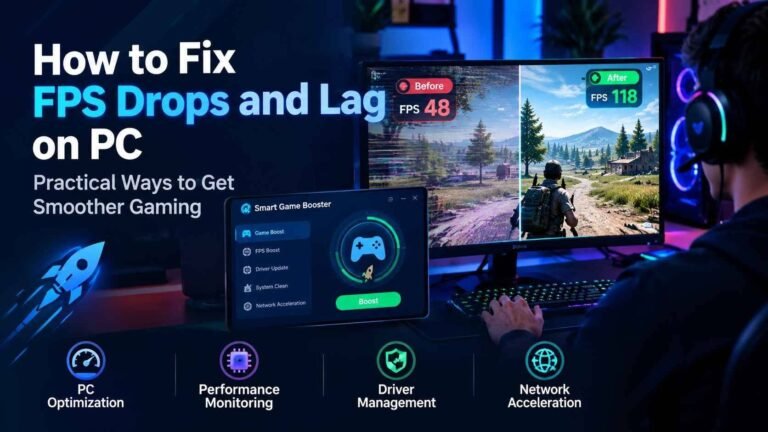
Optimize Your PC Performance with Driver Updates and Gaming Calculators
Building a reliable gaming PC is not just about purchasing expensive hardware. Getting consistent performance also depends on software compatibility, component balance, and proper system configuration. Whether you are planning a new computer build or trying to improve an existing setup, understanding how your hardware works can help you make smarter decisions. Tools that help you update drivers, analyze hardware limitations, and estimate gaming performance can make this process much easier.
Keep Your System Updated for Better Performance
Drivers play an important role in connecting your operating system with hardware components. Graphics cards, network adapters, audio devices, and motherboards all rely on suitable drivers to function correctly. When these drivers become outdated or incompatible, users may experience crashes, connectivity issues, graphical glitches, or reduced system stability.
Regularly choosing to update drivers helps maintain compatibility with newer applications, games, and operating system updates. Graphics drivers are particularly important for gamers because manufacturers frequently release updates that address bugs, improve game support, and sometimes provide performance optimizations.
For example, a newly released game may require a recent graphics driver to work correctly. Installing the appropriate update can resolve certain display issues and improve compatibility. Similarly, updating network drivers may help address connection problems, while audio driver updates can improve support for different sound devices.
Users can manage updates through Windows Update, official hardware manufacturer websites, or trusted driver management utilities. Before installing anything, check that the driver matches your specific hardware model and Windows version. It is also sensible to create a restore point before making significant changes.
Although updated drivers can improve system reliability, they do not guarantee higher FPS in every situation. Hardware limitations, overheating, and insufficient memory may require separate attention.
Understand Hardware Balance with a Bottleneck Calculator
A computer’s performance depends on how effectively its components work together. Sometimes, one component becomes a limiting factor and prevents another from reaching its full potential. This is commonly called a hardware bottleneck.
For example, pairing a powerful graphics card with an older processor may limit performance in games that require substantial CPU resources. On the other hand, a weaker graphics card may struggle to keep up with a high-performance processor when running demanding games at higher resolutions.
A bottleneck calculator helps users estimate whether their main hardware components are reasonably balanced. Most tools allow you to select your CPU, GPU, and screen resolution before generating an estimated result. This information can be useful when planning a gaming PC or deciding which component to upgrade.
Imagine that you already own a capable graphics card but are considering purchasing a faster model. Checking your current processor with a bottleneck calculator may help you understand whether a graphics upgrade is likely to provide meaningful benefits. It can also help identify situations where upgrading the processor or memory may be a better investment.
However, calculator results should not be treated as exact measurements. Actual bottlenecks depend on the game, resolution, graphics settings, memory configuration, and workload. A processor limitation in one game may not appear in another. Real-world benchmarks and performance monitoring provide a more reliable understanding of system behavior.
Estimate Gaming Performance with an FPS Calculator
Frames per second, commonly known as FPS, measures how many individual frames a computer displays every second. Higher and more consistent frame rates generally produce smoother gameplay, which can be particularly important in competitive shooters, racing games, and fast-paced action titles.
An FPS calculator provides estimated frame rates based on selected hardware and gaming settings. Depending on the tool, users can enter their processor, graphics card, resolution, and chosen game to receive an approximate performance range.
This can be helpful before purchasing a new game or investing in hardware upgrades. For example, someone planning to play at 1440p may want to know whether their current graphics card can deliver a comfortable frame rate. An FPS calculator can offer an initial estimate and help compare different hardware combinations.
However, estimated performance is not guaranteed. Actual FPS can change depending on game optimization, driver versions, cooling, background applications, and graphics settings. For a more accurate assessment, compare calculator results with independent benchmarks and test your system using an in-game FPS counter.
Use All Three Tools for Smarter PC Upgrades
These tools serve different purposes but can work together as part of a practical PC maintenance and upgrade routine.
First, update drivers to maintain hardware compatibility and address known software issues. Next, use a bottleneck calculator to evaluate whether your processor and graphics card are appropriately matched. Finally, consult an FPS calculator to estimate how your system may perform in the games you want to play.
After making any changes, test your computer under real-world conditions. Monitor temperatures, frame rates, and system stability to determine whether an update or hardware upgrade has delivered noticeable improvements.
Conclusion
Getting better performance from a gaming PC starts with understanding its hardware and software. Keeping drivers updated supports compatibility, a bottleneck calculator helps identify potential component limitations, and an FPS calculator provides useful gaming performance estimates. Although these tools cannot replace real-world testing, they can help you make informed decisions, avoid unnecessary upgrades, and build a more balanced and dependable computer.