Stormuring: Meaning, Uses, Benefits, and Practical Guide
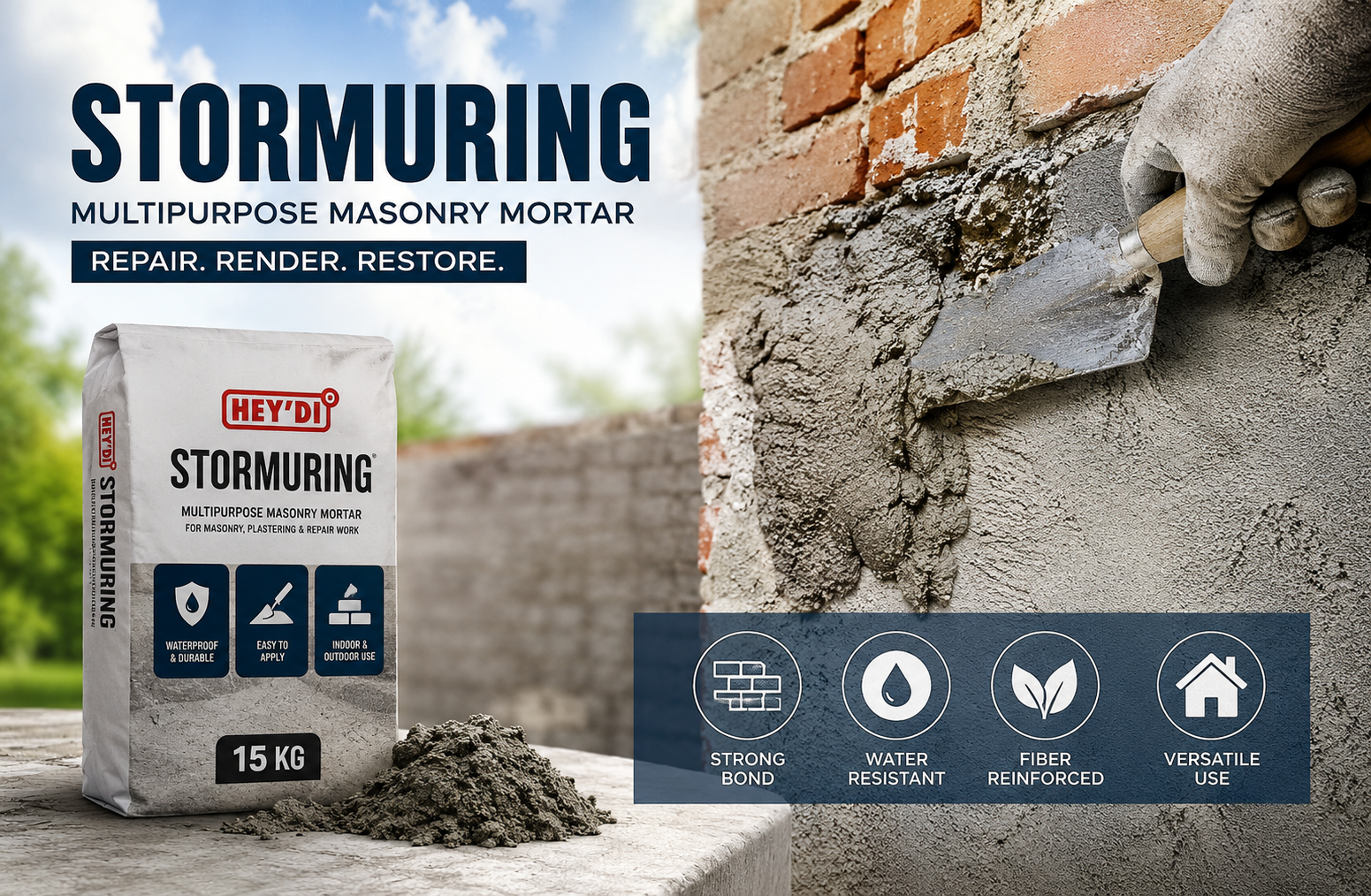
Stormuring is a term that attracts attention because it is associated with a practical construction material as well as several newer interpretations found across the internet. For people researching building materials, Stormuring most notably refers to Hey’di Stormuring, a fiber-reinforced, cement-based multipurpose mortar designed for masonry, plastering, and repair work. It is used on suitable brick, concrete, lightweight aggregate, and masonry surfaces, both indoors and outdoors.
Understanding Stormuring requires looking beyond the name and examining what the product actually does. Its value comes from its ability to support different masonry tasks, accommodate varying application thicknesses, and provide a practical solution for certain repair and rendering projects. However, choosing the right mortar involves more than knowing its advertised benefits. Surface preparation, water measurement, environmental conditions, application technique, and curing all influence the final result.
Another reason people search for this term is that different websites have started associating it with creativity, resilience, business innovation, and problem-solving. These interpretations are not established technical definitions. The documented construction application provides a much clearer starting point for anyone seeking reliable information.
This guide explores the meaning, characteristics, applications, advantages, limitations, preparation requirements, and practical considerations associated with the product. It also explains how to distinguish manufacturer-supported information from unsupported online interpretations.
What Is Stormuring?
Stormuring is the product name associated with a multipurpose masonry mortar manufactured by Norwegian building-materials company Hey’di AS.
Hey’di describes its product as a fiber-reinforced, waterproof multipurpose mortar intended for masonry, plastering, and repair work. It can be applied to several mineral-based construction surfaces, including brick, masonry, lightweight aggregate blocks, and concrete.
Unlike products designed for only one narrow construction task, this material is intended to support different types of masonry work. Depending on the condition of the surface and the requirements of the project, it can be used for repairs, rendering, and certain thicker mortar applications.
The product is supplied as a dry mixture that must be combined with water before use. Once prepared, it creates a workable mortar that can be applied using appropriate masonry tools.
Its main characteristics include:
- Fiber reinforcement for the intended mortar applications.
- Water-resistant properties described by the manufacturer as waterproof.
- Suitability for indoor and outdoor applications.
- Compatibility with several common masonry and concrete surfaces.
- Application in both thin and relatively thick layers.
- A working time of approximately one hour after mixing.
These characteristics make it a useful option for selected renovation, maintenance, and construction projects.
However, it is important to understand that multipurpose does not mean universal. The material should only be used on suitable surfaces and for applications supported by its technical documentation.
The Background and Meaning of Stormuring
The word Stormuring has become more visible in online searches, but its meaning depends on the context in which it appears.
In construction, the established reference is Hey’di Stormuring. It is a commercial product name associated with masonry and repair mortar.
The Norwegian company behind the product provides technical information, product documentation, and safety information. This gives the construction-related meaning a verifiable foundation.
Why the Term Creates Confusion
Some online publishers use Stormuring as a label for concepts that have little or nothing to do with construction.
These interpretations include:
- A supposed structured brainstorming technique.
- A personal resilience philosophy.
- A business innovation strategy.
- A general approach to managing uncertainty.
- A metaphor for adapting to difficult situations.
Although these ideas may sound reasonable individually, there is no established evidence that they form one officially recognized Stormuring methodology.
A useful distinction is to separate a documented commercial product from an informal concept created through online writing.
For example, a construction professional looking for mortar specifications needs manufacturer documentation. Someone encountering the word in a motivational article may be reading an author’s personal interpretation instead.
This distinction matters because unfamiliar terminology can easily acquire different meanings when websites repeat claims without checking their origins.
Main Characteristics of Hey’di Stormuring
Understanding the product’s technical characteristics helps buyers and construction professionals decide whether it is suitable for a particular task.
1. Fiber-Reinforced Composition
One of the important features is its fiber-reinforced formulation.
Fiber reinforcement is used in construction materials to support the physical performance of the mortar. Depending on the formulation and application, fibers can help improve cohesion and contribute to resistance against certain forms of cracking.
However, fiber reinforcement should not be interpreted as a guarantee that cracks will never develop.
Cracking can still occur because of:
- Movement in the underlying structure.
- Poor surface preparation.
- Incorrect water proportions.
- Rapid moisture loss.
- Unsuitable application conditions.
- Inadequate curing.
The condition of the substrate and the quality of installation remain essential.
2. Waterproof Properties
The manufacturer describes the material as a waterproof multipurpose mortar.
This characteristic makes it relevant to certain masonry and concrete applications where moisture resistance is important.
For example, it may be considered for suitable exterior rendering and repair work where surfaces are exposed to rain and changing weather conditions.
Nevertheless, waterproof mortar should not automatically be treated as a complete basement waterproofing system.
Water entering through structural cracks, joints, hydrostatic pressure, or poorly designed drainage systems may require additional engineering measures.
The source of moisture must be identified before choosing a repair material.
3. Flexible Application Thickness
Another useful characteristic is the ability to apply the mortar in different thicknesses.
According to the manufacturer, the material can be installed in layers of up to approximately 8 to 10 centimeters in one operation.
This provides flexibility for certain larger masonry repairs and restoration tasks.
However, the maximum stated thickness should not be treated as a recommendation for every situation. Actual application requirements depend on the substrate, geometry, environmental conditions, and product instructions.
4. Indoor and Outdoor Suitability
The product is designed for suitable interior and exterior masonry applications.
Indoor projects may include repairing damaged masonry or plaster surfaces. Outdoor projects may involve rendering and restoring appropriate brick or concrete structures.
The surrounding conditions still matter.
For instance, applying mortar to a very hot wall under strong direct sunlight can cause moisture to evaporate too quickly. The manufacturer specifically advises against applying it as render to hot masonry in strong sunshine.
5. Workability
Workability is another important consideration.
The manufacturer describes the mixture as manageable and relatively easy to apply with a masonry trowel, brush, or suitable board.
Good workability can make repair and rendering tasks more convenient, particularly when the application involves different surface shapes or thicknesses.
Still, workability depends on correct mixing. Adding too much water can change the mortar’s consistency and potentially affect its performance.
Common Applications of Stormuring
The practical value of a construction material becomes clearer when its applications are examined.
Stormuring is designed for several types of masonry and repair work.
Masonry Repairs
Damaged masonry can develop because of moisture exposure, weathering, aging, and physical deterioration.
Small areas of damaged mortar or masonry may require restoration to improve surface condition and maintain the integrity of the repair.
A suitable repair mortar can help restore missing or deteriorated sections after loose material has been removed and the underlying surface has been properly prepared.
Before beginning work, the extent of damage should be assessed. If deterioration is associated with structural movement or persistent water penetration, the underlying problem needs attention rather than simply covering the damaged area.
Brick Wall Restoration
Brick walls can experience deterioration over time.
Common problems include damaged surfaces, weakened mortar, localized cracking, and areas where previous rendering has separated.
A compatible mortar may be used for appropriate restoration and plastering tasks.
Surface preparation is especially important because dust, loose particles, old coatings, and other contaminants can interfere with adhesion.
The existing masonry should also be checked for movement and moisture problems.
Concrete Surface Repairs
Concrete structures can develop surface damage through weather exposure, physical wear, and deterioration.
A suitable cement-based repair material may help restore certain damaged areas.
However, not every concrete defect should be repaired with ordinary mortar.
Exposed reinforcement, deep structural cracks, corrosion, or major concrete deterioration may require specialized repair systems and professional assessment.
Choosing the material according to the nature of the damage is more important than selecting a product simply because it is described as multipurpose.
Exterior Rendering
Exterior rendering helps create a more uniform surface over suitable masonry substrates.
Stormuring can be used for supported rendering applications on appropriate walls.
The quality of the final finish depends on several factors:
- The condition of the underlying wall.
- Surface cleanliness.
- Correct mixing.
- Application thickness.
- Weather conditions.
- Proper moisture management.
A properly prepared substrate provides a better starting point for achieving a consistent result.
Interior Plastering
Interior masonry surfaces may require plastering during renovation or construction.
A multipurpose mortar can be useful for selected jobs involving brick, concrete, and compatible lightweight aggregate surfaces.
However, it is important to consider the intended finish. A repair mortar is not automatically a substitute for every fine finishing plaster, decorative coating, or interior wall compound.
The final surface treatment should be selected according to the project’s requirements.
Transitions Between Different Construction Surfaces
The manufacturer also identifies its use for creating curved transitions, known in Norwegian construction terminology as hulkil, between concrete, masonry, and rock.
Such transitions can be important in selected construction details.
They help create a shaped connection between adjoining surfaces, although the correct design and waterproofing approach must depend on the specific project.
Benefits of Using Stormuring
A construction product should be evaluated according to its practical performance rather than marketing language alone.
Several characteristics make this material useful for suitable applications.
Multiple Uses in One Product
One advantage is its intended use across different masonry activities.
Instead of selecting a separate product for every compatible repair or rendering task, users may be able to use the same mortar for several parts of a project.
This can simplify material planning.
It may also reduce the number of different products that need to be stored and handled.
However, compatibility should always be checked before extending the product to an application outside the manufacturer’s recommendations.
Useful Application Thickness
The stated ability to apply layers up to approximately 8 to 10 centimeters in one operation provides flexibility for certain repair tasks.
This can be helpful when dealing with larger surface irregularities or thicker masonry applications.
The appropriate thickness should still be determined by the project requirements and technical instructions.
Suitable for Different Environments
Its indoor and outdoor suitability makes it relevant to both renovation and exterior construction.
This gives the product a wider range of possible applications than materials intended exclusively for interior use.
Nevertheless, outdoor installation requires attention to temperature, rain, sunlight, and moisture conditions.
Convenient Mixing Process
The material is supplied in a dry bag and prepared by adding water.
This format allows users to measure and mix the quantity needed for a particular task.
The manufacturer recommends using a drill with a mixing paddle for a consistent mixture.
Smaller quantities may also be mixed by hand when appropriate.
Established Manufacturer Documentation
A significant advantage when evaluating any building material is the availability of technical and safety information.
Hey’di provides product documentation for its mortar, including application details and technical specifications.
This makes it easier for professionals and homeowners to check the intended applications and preparation requirements before starting work.
Technical Specifications and Product Information
Technical information is essential when planning a construction project.
The following details are based on manufacturer product documentation.
| Specification | Manufacturer information |
| Product name | Hey’di Stormuring |
| Product category | Multipurpose masonry mortar |
| Manufacturer | Hey’di AS |
| Product number | 211 |
| Packaging | 15 kg bag |
| Reinforcement | Fiber-reinforced |
| Water requirement | Approximately 2.7 liters per 15 kg |
| Working time | Approximately 1 hour |
| Maximum grain size | 1 mm |
| Approximate finished volume | 9 liters per bag |
| Plaster consumption | Approximately 1.7 kg per m² per mm |
| Application tools | Trowel, brush, or suitable board |
| Maximum stated application thickness | Approximately 8 to 10 cm in one operation |
| Minimum application temperature | +6°C |
These specifications are useful for preliminary planning, but the technical information supplied with the actual product should always take priority.
Understanding the Water Requirement
The recommended water quantity is approximately 2.7 liters for a 15 kg bag.
This proportion provides a starting point for preparing the mixture.
The manufacturer allows some adjustment depending on the intended application, but adding excessive water is not advisable.
An overly wet mixture may become difficult to control and can affect the finished material.
The objective is to achieve a consistent, workable mixture without compromising the recommended proportions.
Understanding Material Consumption
The manufacturer lists plaster consumption at approximately 1.7 kilograms per square meter per millimeter of thickness.
For example, a surface measuring 5 square meters with a 10 mm plaster layer would require an estimated 85 kilograms of material.
The calculation is:
5 × 10 × 1.7 = 85 kg.
This estimate does not include additional material that may be required because of uneven surfaces, waste, or application losses.
Actual consumption should be checked against the condition and shape of the wall.
How to Prepare and Apply Stormuring
Correct installation plays a major role in determining the quality of any mortar application.
Even a suitable product may produce unsatisfactory results if the surface is poorly prepared or the mixture is incorrectly handled.
The following process explains the general preparation and application approach described in the manufacturer’s documentation.
Step 1: Inspect the Surface
Begin by examining the area that requires repair or rendering.
Identify:
- Loose or damaged masonry.
- Existing cracks.
- Dust and surface contamination.
- Previous coatings that may affect adhesion.
- Signs of persistent moisture.
- Areas showing movement or structural deterioration.
The purpose of this inspection is to establish whether the surface is suitable for the intended application.
Structural problems and active water penetration should be addressed before cosmetic or surface repairs begin.
Step 2: Clean the Substrate
Remove loose material, dirt, and other contaminants.
The surface must provide a suitable base for the mortar to adhere properly.
A weak layer beneath the repair can cause the new material to separate from the wall.
Do not simply cover deteriorated material with fresh mortar.
Where necessary, remove unstable sections and prepare the surface according to the manufacturer’s instructions.
Step 3: Pre-Wet the Surface
The manufacturer recommends cleaning and pre-wetting the substrate.
After applying water, allow it to penetrate the surface before installing the mortar.
The purpose is to prepare the mineral substrate for application.
However, the surface should not be left with uncontrolled standing water.
The condition of the substrate should be suitable for the intended mortar application.
Step 4: Measure the Water
For a full 15 kg bag, the recommended water quantity is approximately 2.7 liters.
Measure the water rather than estimating it.
Accurate measurement helps maintain consistency between different batches.
If the project requires multiple bags, consistent preparation becomes particularly important.
Step 5: Mix Thoroughly
Add the dry mortar to the measured water according to the product instructions.
Use a drill fitted with a suitable mixing paddle for best results.
The manufacturer recommends mixing for approximately two minutes until the material becomes uniform and free from lumps.
Smaller quantities may be mixed manually when appropriate.
Avoid introducing unnecessary water during mixing.
Step 6: Apply the Mortar
The prepared material can be applied using a masonry trowel, brush, or suitable board.
Choose the appropriate tool according to the shape and size of the area.
Work carefully to achieve an even application.
For thicker layers, follow the manufacturer’s limits and ensure the application method is suitable for the substrate.
Step 7: Manage Environmental Conditions
Temperature and weather conditions can influence the installation process.
The manufacturer’s stated minimum application temperature is +6°C.
When temperatures approach freezing, additional precautions are necessary. The manufacturer describes measures such as keeping bags at room temperature, using lukewarm mixing water up to 30°C, adding the specified frost additive, and covering the work area.
In hot weather, moisture loss may happen quickly.
The manufacturer advises avoiding application as render on hot masonry in strong sunshine. It also recommends after-watering once the mortar has hardened sufficiently in hot conditions.
Step 8: Allow the Material to Set
The approximate working time after mixing is one hour.
This means the prepared mixture should be managed within its stated usable period.
Avoid preparing more material than can reasonably be applied during that time.
For subsequent decorative plastering, the manufacturer indicates that the relevant Hey’di decorative plasters can be applied the following day.
If painting is planned, additional waiting time may be necessary. The paint manufacturer’s instructions should be followed.
Challenges and Limitations to Consider
Although Stormuring offers several useful characteristics, it is not suitable for every construction problem.
Understanding its limitations helps prevent unnecessary repairs and material misuse.
Surface Preparation Cannot Be Ignored
A common mistake in masonry work is applying new material over a weak or contaminated surface.
Dust, loose mortar, and unstable coatings can interfere with adhesion.
Even if the repair initially looks satisfactory, a poor underlying surface may cause separation later.
Proper cleaning and inspection should always come first.
Incorrect Water Measurement
Adding water without measuring can create inconsistent mixtures.
Too much water may affect the material’s handling and final performance.
Too little water may make application difficult and prevent the desired consistency.
Following the manufacturer’s recommended water proportions is a simple way to reduce this risk.
Limited Working Time
A working time of approximately one hour requires sensible preparation.
Users should organize tools, surface preparation, and materials before mixing.
Preparing a large quantity without considering the size of the repair can lead to unnecessary waste.
Weather-Related Problems
Temperature and sunlight can affect mortar installation.
Strong sunlight may accelerate moisture loss, while cold conditions can interfere with normal setting and hardening.
Rain and unsuitable environmental conditions may also affect the work.
The product’s temperature requirements and relevant protection measures should be followed.
Not a Universal Structural Repair Material
Another important limitation is that a multipurpose mortar should not be treated as a solution for every structural defect.
Examples include:
- Major structural cracks.
- Significant foundation movement.
- Corroded reinforcement.
- Severe concrete deterioration.
- Persistent water pressure.
- Unstable masonry walls.
These conditions may require specialist materials, structural investigation, or a designed waterproofing system.
The correct response depends on the source and severity of the problem.
Stormuring Compared With Other Mortar Products
Construction projects often involve choosing between different types of mortar.
The correct choice depends on the required application rather than the general reputation of a particular product.
Multipurpose Mortar
A multipurpose mortar is intended to support several compatible construction tasks.
This makes it useful when a project involves more than one type of masonry or surface repair.
Stormuring belongs to this category.
Traditional Masonry Mortar
Traditional masonry mortar is commonly used for joining bricks and masonry units.
Its composition and performance characteristics depend on the product type and intended application.
It may be more suitable for certain bricklaying tasks where a specialized multipurpose repair mortar is unnecessary.
Repair Mortar
Repair mortars are designed for restoring damaged surfaces.
Some products are intended for small repairs, while others are developed for larger restoration work or specific concrete conditions.
Selecting the correct repair mortar requires considering the depth of damage, substrate, exposure conditions, and structural requirements.
Finishing Plaster
Finishing plaster is generally selected when a smooth decorative or paint-ready surface is required.
A multipurpose repair mortar may provide a suitable underlying layer without being the ideal final finish.
The finishing material should be selected separately when necessary.
Choosing Between Different Options
The following questions can help guide the selection process:
- Is the task primarily bricklaying, plastering, or repair?
- What material forms the existing surface?
- Is the work indoors or outdoors?
- Will the surface face regular moisture exposure?
- How thick does the repair layer need to be?
- Does the project require a fine decorative finish?
- Are there structural or waterproofing concerns?
Answering these questions helps narrow down the appropriate product category.
Safety and Handling Considerations
Cement-based construction materials require appropriate handling.
The safety documentation for Hey’di Stormuring identifies cement-based dry mortar as the product’s composition category.
When cement-based materials are mixed with water, they can become alkaline and cause skin or eye irritation and chemical burns.
Users should take reasonable precautions throughout preparation and installation.
Use Appropriate Protective Equipment
Recommended precautions include:
- Wear suitable protective gloves.
- Use safety glasses to protect the eyes.
- Avoid direct contact with wet mortar.
- Wear appropriate work clothing.
- Use suitable respiratory protection when handling dusty dry material.
- Wash exposed skin promptly after accidental contact.
Avoid Eye Contact
If material enters the eyes, rinse immediately with plenty of clean water and follow the safety data sheet’s first-aid instructions.
Seek medical attention when necessary.
Store the Product Correctly
The manufacturer recommends storing the material in dry conditions.
Moisture entering an unopened or damaged bag can affect the quality of a dry cement-based mixture.
Check packaging condition and product information before use.
The manufacturer also identifies the best-use period as approximately one year from the production date when stored under the specified conditions.
How to Evaluate Whether Stormuring Is Right for Your Project
Choosing a construction material should begin with the actual problem rather than the product name.
A useful evaluation process involves five considerations.
1. Identify the Substrate
Determine whether the surface consists of brick, concrete, masonry, or compatible lightweight aggregate material.
The product documentation identifies these as intended application surfaces.
If the material is different, additional compatibility checks are necessary.
2. Identify the Type of Work
Establish whether the project involves rendering, masonry repair, or another supported application.
A material designed for general masonry repairs may not be the correct option for specialized waterproofing, fine finishing, or structural restoration.
3. Estimate the Required Quantity
Calculate the surface area and approximate application thickness.
Use the manufacturer’s stated consumption figure as an initial estimate.
Include a reasonable allowance for uneven surfaces and application losses.
4. Check Environmental Conditions
Confirm that the temperature and surrounding conditions are suitable.
Consider sunlight, moisture, and protection from unfavorable weather.
This is especially important for exterior work.
5. Review Technical and Safety Documentation
Before purchasing or applying the material, check its current technical data sheet and safety data sheet.
These documents provide more reliable information than general descriptions on third-party websites.
The manufacturer’s product page is the appropriate starting point for checking specifications and available documentation.
Understanding the Online Interest in Stormuring
The growing online visibility of unusual terms can sometimes create confusion about their origins.
Stormuring is an interesting example because its documented construction application exists alongside several newer interpretations.
Some websites present it as a method for handling difficult situations or improving business performance.
Others connect it with brainstorming and innovation.
The difficulty is that these interpretations do not share a clearly established origin, formal methodology, or recognized body of research.
Why Unfamiliar Terms Attract Search Interest
People frequently search for unfamiliar words after encountering them in articles, social media posts, advertisements, or discussions.
When a term has multiple explanations, curiosity increases because readers want to understand which interpretation is accurate.
Search interest alone, however, does not establish that a word represents a proven method or scientific concept.
The Difference Between a Product and a Concept
A commercial product can be evaluated through its manufacturer, packaging, specifications, intended uses, and technical documentation.
An emerging concept requires a different kind of evidence.
For example, a proposed business methodology should have a clear explanation, defined procedures, credible examples, and measurable results.
Without those elements, it is more accurate to describe it as an informal interpretation rather than an established framework.
Why Accurate Information Matters
Publishing unsupported claims can mislead readers, especially when the subject involves construction or other practical decisions.
A person searching for waterproof mortar needs useful technical information, not an invented explanation of a business philosophy.
Separating verified product details from speculative interpretations makes information more useful and trustworthy.
Frequently Asked Questions About Stormuring
1. What is Stormuring?
Stormuring is the name associated with Hey’di Stormuring, a fiber-reinforced, cement-based multipurpose mortar used for suitable masonry, plastering, and repair applications.
2. Who manufactures Hey’di Stormuring?
Hey’di AS, a Norwegian building-materials manufacturer, produces the product. It is supplied in a 15 kg bag.
3. What is Stormuring used for?
It is used for selected masonry repairs, plastering, rendering, and concrete surface applications. The manufacturer identifies brick, masonry, lightweight aggregate, and concrete as suitable substrates.
4. Is Stormuring waterproof?
Yes, the manufacturer describes Hey’di Stormuring as a waterproof mortar. However, it should not automatically be considered a complete solution for structural leaks, hydrostatic pressure, or major basement waterproofing problems.
5. How much water is required for a 15 kg bag?
Approximately 2.7 liters of water are recommended for a 15 kg bag. The mixture should be prepared according to the manufacturer’s instructions.
6. How long does mixed Stormuring remain usable?
The stated working time is approximately one hour after mixing. Users should prepare manageable quantities to avoid wasting material.
7. Can Stormuring be used indoors and outdoors?
Yes. The manufacturer identifies both indoor and outdoor applications on suitable masonry, brick, lightweight aggregate, and concrete surfaces.
8. How thick can Stormuring be applied?
The manufacturer states that it can be applied in layers up to approximately 8 to 10 centimeters in one operation. Actual application requirements should be checked against the project conditions.
9. Is Stormuring a recognized business or brainstorming method?
There is no established evidence that Stormuring is a formally recognized business or brainstorming methodology. Such interpretations appear in online content, but they should not be confused with the documented construction product.
10. What is the approximate coverage of a 15 kg bag?
The manufacturer states that one 15 kg bag produces approximately 9 liters of mixed mortar. For plastering, the stated consumption is around 1.7 kg per square meter per millimeter of thickness. Actual coverage depends on the application.
Conclusion
Stormuring is best understood through its documented construction application as Hey’di’s fiber-reinforced multipurpose mortar. It is designed for suitable masonry, plastering, and repair work involving materials such as brick, concrete, masonry, and lightweight aggregate blocks.
Its main advantages include versatility, indoor and outdoor suitability, manageable application, and the ability to accommodate different layer thicknesses. The manufacturer’s technical information also provides useful guidance about water requirements, working time, material consumption, and environmental conditions.
However, successful results depend on selecting the right application, preparing the substrate correctly, measuring water accurately, and following appropriate installation and safety procedures. Its waterproof properties should also be understood within the limits of the intended application rather than treated as a universal solution for every moisture or structural problem.
There is also a distinction between the established construction product and the various informal meanings appearing online. Readers should evaluate unfamiliar interpretations carefully and prioritize verifiable information when making practical decisions.
Ultimately, understanding the product’s real characteristics and limitations provides a much stronger foundation for selecting suitable construction materials and planning reliable masonry work.