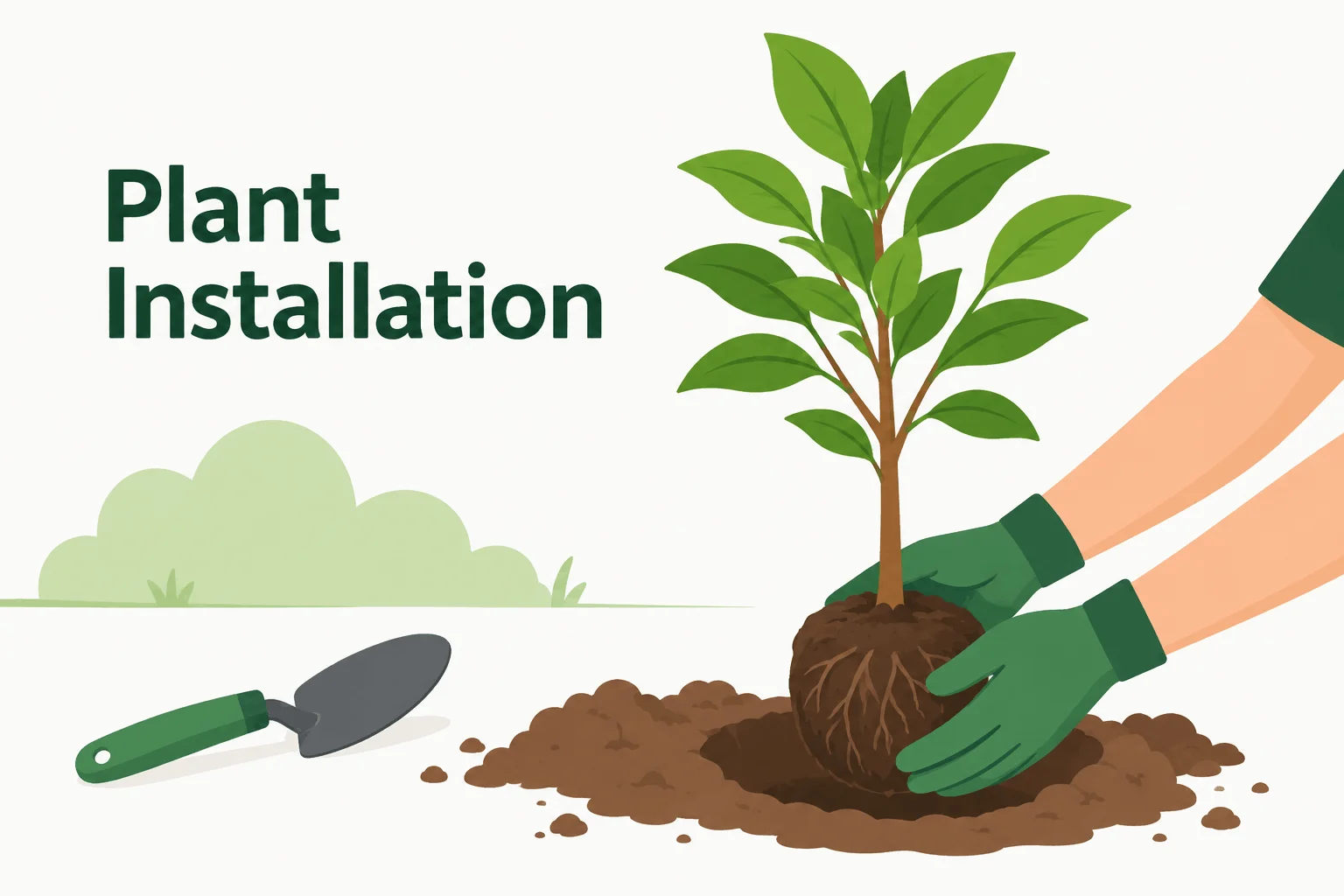
Plant Installation: A Practical Guide to Creating Healthy, Attractive, and Sustainable Green Spaces
Creating a healthy and attractive landscape involves much more than selecting a few plants and placing them in the ground. Every plant has specific requirements related to sunlight, soil, water, spacing, drainage, temperature, and long-term growth. When these factors are considered carefully, newly installed plants have a stronger opportunity to establish healthy root systems and become an attractive part of the landscape. When they are overlooked, plants may struggle with transplant stress, poor growth, disease, excessive water consumption, or premature decline. Understanding the fundamentals of professional planting can therefore make a significant difference in the appearance and longevity of outdoor spaces.
Whether the project involves a small residential garden, a larger landscape, commercial grounds, or a newly developed outdoor area, successful planting begins with preparation. The soil needs to be evaluated, suitable plants should be selected, and the installation area should be prepared before anything is placed in the ground. Proper techniques can help reduce stress on plants and create conditions that support healthy establishment. A thoughtful approach also makes ongoing landscape care more manageable because plants are positioned according to their mature size and environmental requirements rather than simply being arranged according to their appearance at the time of installation.
Understanding the Importance of Proper Plant Installation
Professional Plant Installation is an important part of creating a landscape that remains healthy and visually appealing over time. A plant that is installed incorrectly may experience problems even when it receives adequate water and sunlight afterward. Planting too deeply, damaging the root ball, compacting soil around the roots, or failing to provide proper drainage can interfere with root development and reduce the plant’s ability to absorb water and nutrients.
Correct installation gives plants a strong starting point. It involves preparing the planting area, positioning the plant at an appropriate depth, backfilling carefully, watering thoroughly, and providing suitable aftercare. The process should also account for the mature size of each plant so that roots and branches have enough room to develop.
Proper planting can also support efficient landscape management. Plants that are appropriately spaced and matched to their environment often require fewer corrective measures later. They may need less frequent relocation, excessive pruning, or emergency replacement. Investing effort during installation can therefore contribute to healthier landscapes and more predictable maintenance requirements.
Selecting Plants for the Right Environment
Plant selection should always begin with an understanding of the conditions available at the installation site. Different areas of the same property can have dramatically different environments. One section may receive direct sunlight throughout the day, while another may remain shaded for long periods. Some areas may have well-draining soil, while others may retain moisture after rainfall.
Sunlight is one of the most important factors to consider. Plants that require full sun may not perform well in heavily shaded locations, while shade-tolerant varieties can struggle if exposed to intense sunlight. Understanding the light conditions throughout the day helps ensure that plants are placed where they can meet their natural requirements.
Soil characteristics are equally important. Soil texture, drainage, organic matter, and nutrient availability can all affect plant development. Some plants prefer well-drained soil, while others can tolerate or even prefer consistently moist conditions. Matching plants to existing soil conditions can reduce the need for extensive amendments and ongoing corrective care.
Climate and seasonal conditions should also influence plant selection. Choosing varieties that are appropriate for the expected environmental conditions can improve survival and reduce stress. Plants should not be selected solely because they look attractive at the nursery; their long-term suitability for the planting site is much more important.
Preparing the Planting Area
Preparation is one of the most important stages of a successful planting project. The installation area should be cleared of weeds, debris, unwanted vegetation, and other materials that could interfere with root development. Existing plants that are being retained should be protected from unnecessary disturbance.
The soil should be evaluated before planting begins. If it is severely compacted, roots may have difficulty expanding through it. Compacted soil can also interfere with drainage and reduce the amount of air available around the root system. Loosening the soil within the appropriate planting area can create a more favorable environment for new roots.
Soil amendments should be used thoughtfully rather than automatically. Adding excessive organic material or fertilizer to an individual planting hole can sometimes create conditions that encourage roots to remain concentrated in the amended soil rather than extending into the surrounding ground. A broader approach to improving soil structure may be more appropriate when significant soil problems exist.
The planting area should also be checked for underground utilities, irrigation lines, drainage systems, and other infrastructure before digging. Knowing what lies beneath the surface helps prevent accidental damage and allows the installation to proceed safely.
Choosing the Correct Planting Depth
Planting depth is a critical factor that is sometimes overlooked. The top of the root system should generally be positioned appropriately relative to the surrounding soil rather than being buried excessively deep. Planting too deeply can reduce oxygen availability around the roots and may contribute to moisture-related problems.
The root flare of woody plants should be visible and positioned correctly. The root flare is the area where the trunk begins to widen as it transitions into the major roots. Burying this portion of the plant can create long-term problems for some trees and shrubs.
The planting hole should generally provide sufficient width for the root system to expand rather than simply being a narrow deep hole. Roots need access to surrounding soil, water, air, and nutrients. A properly prepared planting space gives them an opportunity to establish beyond the original container or root ball.
Handling Plants Before Installation
Plants should be handled carefully before they are placed in the ground. Damage to roots, stems, branches, or foliage can increase transplant stress. Plants should not be left exposed to extreme conditions for unnecessarily long periods before installation.
Container-grown plants may have roots that have become tightly concentrated around the outside of the root ball. Depending on the plant and condition of the roots, these may need to be carefully loosened or corrected before planting. However, excessive disturbance can also damage healthy roots, so handling should be appropriate to the specific plant.
Balled-and-burlapped plants require careful handling as well. The root ball should remain intact during transportation and placement. Lifting a heavy plant by its trunk or branches can cause damage. Proper lifting and placement techniques help protect the root system and reduce unnecessary stress.
Installing Trees and Shrubs Correctly
Trees and shrubs often become major structural elements of a landscape, so their installation deserves particular attention. They should be positioned with enough room to accommodate their mature size. Planting large trees too close to buildings, sidewalks, driveways, utility lines, or other structures can create conflicts as they grow.
The planting hole should be prepared appropriately, and the tree or shrub should be positioned upright before backfilling. Soil should be placed around the root ball carefully to eliminate large air pockets without excessively compacting the surrounding ground.
Staking is not always necessary, and excessive or rigid staking can interfere with natural trunk movement. If support is required because of wind exposure, unstable soil, or the size of the plant, the support system should allow appropriate movement and should be removed when it is no longer needed.
Mulch can be applied around trees and shrubs to help moderate soil temperature, conserve moisture, and reduce competition from weeds. However, mulch should not be piled directly against the trunk or stems. A clear space around the base helps reduce moisture-related problems and discourages certain pests.
Installing Flowers and Smaller Plants
Smaller plants, flowers, grasses, and ground covers require careful spacing as well. Plants should be positioned according to their expected mature size rather than their initial appearance. Crowding plants may create competition for sunlight, water, and nutrients while also reducing airflow.
Seasonal flowers can provide immediate visual interest, while perennial plants can return for multiple growing seasons. Combining different plant types can create a landscape with changing colors, textures, and forms throughout the year.
When installing smaller plants, the root system should be positioned at an appropriate depth. Soil should be firm enough to provide stability but not so heavily compacted that water and air cannot move through the root zone. Thorough watering immediately after installation helps settle the soil around the roots and reduces air pockets.
Watering After Installation
Watering is one of the most important elements of early plant care. Newly installed plants have not yet established extensive root systems, so they may require more consistent moisture than established vegetation.
The exact watering frequency depends on plant type, soil, weather conditions, season, and drainage. The goal is to provide enough moisture to support root establishment without creating persistently saturated soil. Overwatering can be just as harmful as underwatering, particularly for plants that require well-drained conditions.
Deep and appropriate watering encourages roots to establish within the surrounding soil. Frequent shallow watering may not provide the same benefit and can encourage roots to remain concentrated near the surface.
Monitoring soil moisture is more reliable than following a rigid schedule without considering environmental conditions. Newly planted areas should be checked regularly so that watering can be adjusted when temperatures, rainfall, or soil conditions change.
Using Mulch Effectively
Mulching can be a useful part of landscape installation when applied correctly. Organic mulch can help conserve soil moisture, moderate temperature fluctuations, and reduce weed competition. It can also contribute organic material to the soil as it gradually decomposes.
However, excessive mulch can create problems. A thick layer placed directly against a tree trunk or plant stem can retain excessive moisture and create conditions that encourage decay or pest activity. Mulch should therefore be distributed evenly and kept away from the base of plants.
Different landscape situations may call for different types of mulch. The material should complement the landscape while serving a practical purpose. Regardless of the type used, proper depth and placement are more important than simply adding as much mulch as possible.
Fertilization and Soil Nutrition
Newly installed plants do not always require immediate heavy fertilization. In many situations, the priority should be root establishment rather than rapid top growth. Excessive fertilizer can damage roots or encourage soft, rapid growth that may be less resilient.
Soil testing can provide useful information when nutrient deficiencies are suspected. Instead of applying fertilizer based on guesswork, testing can help determine whether particular nutrients are actually needed.
When fertilizer is appropriate, it should be selected and applied according to the plant’s requirements and the product’s instructions. Slow-release products may sometimes be preferable because they provide nutrients gradually, but the correct approach depends on the plant and soil conditions.
Protecting Plants During Establishment
Newly planted vegetation can be vulnerable during its first weeks and months. Strong winds, extreme temperatures, foot traffic, animals, pests, and competition from weeds can interfere with establishment.
Temporary protection may be appropriate for certain plants, particularly in exposed areas. However, protective materials should be used carefully and inspected regularly so that they do not restrict growth or create additional problems.
Weeds should also be controlled before they become established around new plants. Weeds compete for water, nutrients, and sunlight. Removing them carefully can help newly installed plants establish more successfully.
Regular observation is valuable during this period. Changes in leaf color, wilting, unusual growth, pest activity, or damaged stems may indicate that a plant is experiencing stress. Early identification gives property owners a better opportunity to correct the problem.
Avoiding Common Installation Mistakes
One of the most common planting mistakes is installing vegetation without considering its mature size. A small shrub may appear appropriately positioned when first planted but become overcrowded within a few years. Trees can also cause problems when their eventual canopy or root system is not considered.
Another common mistake is planting too deeply. This can create unfavorable conditions around the root system and may contribute to long-term health problems. Poor drainage is another concern, particularly when plants are placed in areas where water naturally collects.
Failing to water consistently during establishment can also lead to plant loss. Conversely, excessive watering can suffocate roots or contribute to disease. The goal is to create a balanced moisture environment that supports healthy root development.
Choosing plants solely for appearance is another mistake. A plant that looks attractive in a nursery may not be suitable for the conditions of a particular property. Environmental compatibility should always be considered alongside aesthetic preferences.
Long-Term Care After Installation
Successful planting does not end when the soil is placed around the roots. The establishment period is crucial because plants need time to develop stronger root systems and adapt to their new environment.
Routine inspections should continue after installation. Watering needs can change as plants become established, and maintenance requirements may shift as vegetation grows. Pruning should generally be performed for a clear purpose rather than simply cutting plants to maintain an arbitrary shape.
Trees and shrubs should be monitored for structural problems, damaged branches, pests, and signs of stress. Smaller plants should be observed for disease, overcrowding, and competition from weeds.
As plants mature, some may need to be relocated, divided, pruned, or replaced if their original position becomes unsuitable. Thoughtful installation reduces the likelihood of these problems, but landscapes are living systems that naturally change over time.
When Professional Help Is Valuable
While homeowners can handle many planting projects themselves, professional assistance can be valuable for larger or more complex landscapes. Professionals can help evaluate planting conditions, select suitable vegetation, prepare soil, determine spacing, and install larger trees or shrubs safely.
Professional services may be particularly useful when heavy equipment is required, difficult soil conditions are present, drainage needs to be addressed, or mature trees are being installed. Experienced landscape professionals can also identify potential conflicts with buildings, utilities, irrigation systems, and other infrastructure before planting begins.
A professional approach can save time and reduce the risk of expensive mistakes. More importantly, it can help ensure that plants are installed according to their biological and environmental requirements rather than simply according to visual preference.
Final Thoughts
Successful plant installation begins with careful planning and continues through consistent aftercare. Selecting appropriate plants, evaluating the soil, preparing the planting area, positioning roots correctly, providing sufficient water, and protecting both immediate appearance and future growth. Plants need adequate space, suitable environmental conditions, and access to the resources required for healthy development. When these needs are considered before installation, landscapes can become more properly installed plants can establish stronger root systems, adapt more effectively to their surroundings, and contribute to a healthier landscape over time. Avoiding common mistakes such as incorrect planting depth, poor spacing, new vegetation during establishment all contribute to long-term landscape health.
A well-designed planting project should consider both immediate appearance and future growth. Plants need adequate space, suitable environmental conditions, and access to the resources required for healthy development. When these needs are considered before installation, landscapes can become more attractive while also being easier to maintain.
The value of professional installation extends beyond the first day. Properly installed plants can establish stronger root systems, adapt more effectively to their surroundings, and contribute to a healthier landscape over time. Avoiding common mistakes such as incorrect planting depth, poor spacing, excessive watering, and unsuitable plant selection can make a significant difference in long-term results.
Whether the project involves a few garden plants or an extensive landscape, attention to detail is essential. Plant Installation should be viewed as the beginning of a plant’s life in its new environment rather than the final step of a landscaping project. With suitable preparation, careful installation, and consistent maintenance, newly planted vegetation can develop into a valuable and lasting part of the outdoor space.
A successful landscape ultimately depends on creating the right relationship between plants, soil, water, sunlight, and available space. By understanding these requirements and giving new plants the care they need during establishment, property owners can create outdoor environments that remain healthy, functional, and visually appealing for years. Thoughtful planning today can reduce maintenance challenges tomorrow and provide a stronger foundation for a thriving landscape.