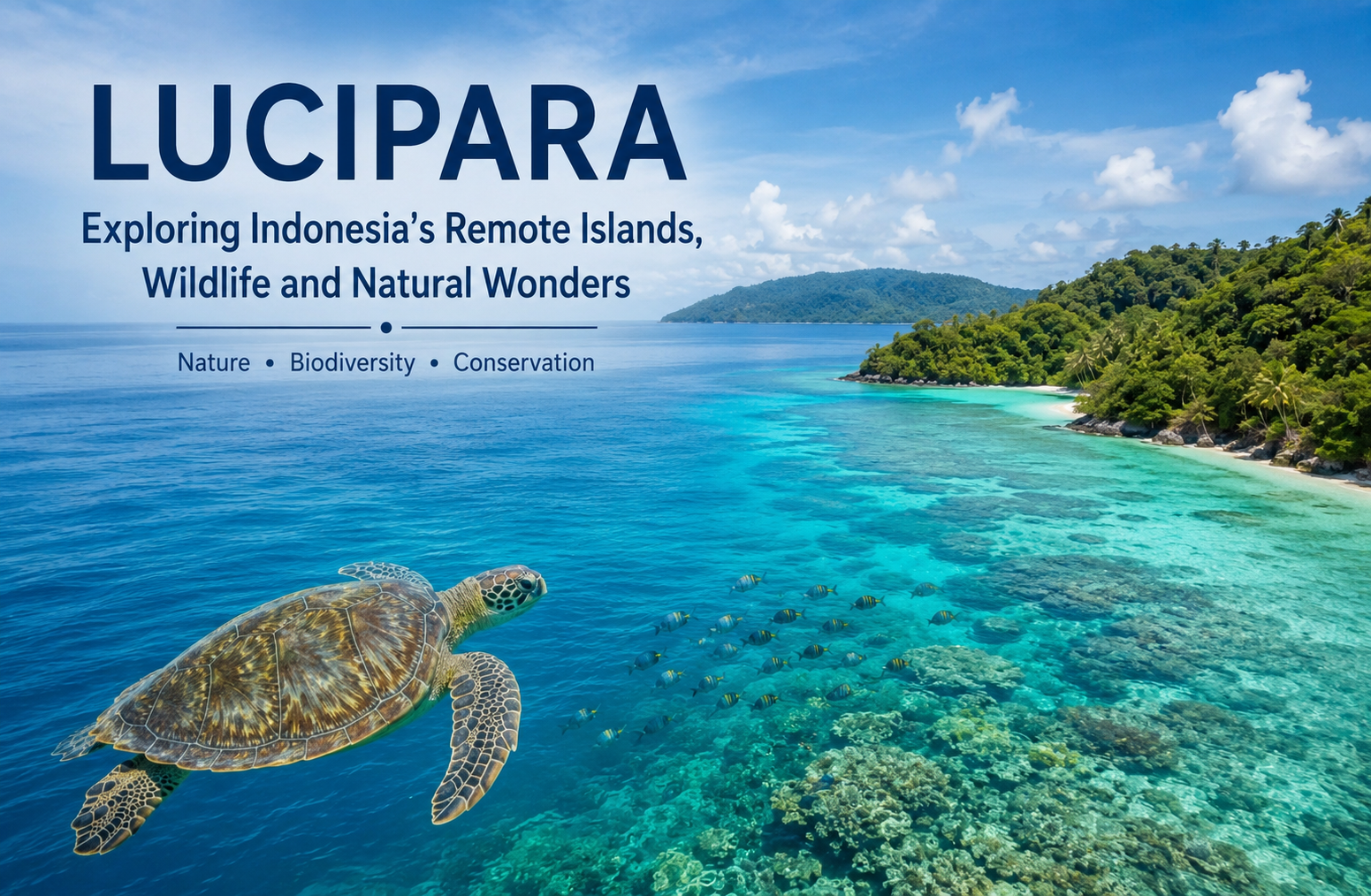
Lucipara: Exploring Indonesia’s Remote Islands, Wildlife and Natural Wonders
The name Lucipara is associated with a fascinating part of Indonesia’s natural world. It refers to the remote Lucipara Islands in the Banda Sea, a remarkable island group in the Maluku region, known for its marine environment, coral reefs and sea turtle habitats. The name also appears in biological classification, particularly in Euplexia lucipara, a moth commonly known as the Small Angle Shades. Understanding these different uses helps explain why the term attracts interest from people researching geography, marine conservation, wildlife and natural history.
Although Lucipara is not a commonly used English word, its real-world connections are worth exploring. The Indonesian islands represent an important marine environment, while the moth provides an interesting example of how scientific names preserve information about species and their characteristics. Both subjects demonstrate the importance of accurate identification and reliable information when researching unfamiliar names.
This guide examines the documented meanings of the term, the geographical characteristics of the islands, their ecological importance, the wildlife associated with the surrounding waters, and the scientific identity of the moth. It also explores conservation challenges, research opportunities and practical considerations for anyone interested in learning more about this relatively little-known name.
What Is Lucipara?
Lucipara has more than one documented use, so its meaning depends on the context in which it appears. Its best-known geographical reference is the Lucipara Islands, a remote group of islands and reefs located in Indonesia’s Banda Sea. The area forms part of the wider Maluku island region, which is internationally recognised for its marine biodiversity and historical importance.
The name also appears as the species epithet in Euplexia lucipara. This is the scientific name of the Small Angle Shades moth, an insect belonging to the family Noctuidae.
These two meanings should not be confused.
- Geographical meaning: The Lucipara Islands are a remote Indonesian island group surrounded by tropical marine waters.
- Biological meaning: Euplexia lucipara is a recognised moth species.
- Historical meaning: Older geographical and historical records contain alternative spellings, including Lucepara.
- Conservation meaning: The islands are relevant to discussions about marine ecosystems, biodiversity and the sustainable management of natural resources.
An important distinction is that there is no established evidence that the island group and the moth share a historical or cultural origin simply because their names are similar.
Understanding this distinction provides a more reliable starting point for exploring the subject.
Where Are the Lucipara Islands Located?
Pulau Lucipara | Young Generation Creative
younggenerationcreative.wordpress.com
The Lucipara Islands are located in the Banda Sea, within the Indonesian province of Maluku. This part of Indonesia consists of numerous islands separated by deep channels, open ocean and complex marine environments.
The island group lies south of the Manipa Strait and near Seram Island. Its remote position makes it less accessible than Indonesia’s major tourism destinations.
The surrounding region is geographically interesting because it connects different parts of the Indonesian archipelago. Ocean currents move through the surrounding waters, influencing marine habitats and the distribution of nutrients.
Understanding the Geographical Setting
Indonesia is an enormous archipelagic country containing thousands of islands. Its eastern regions include some of the most biologically diverse marine environments in the world.
The Banda Sea is particularly interesting because of its deep waters, underwater formations and connections to surrounding seas.
The Lucipara Islands form part of this wider geographical environment.
Several characteristics help explain their importance:
- Their location in a tropical marine region supports diverse marine habitats.
- The surrounding waters contain coral reef ecosystems.
- Nearby islands provide geographical connections to the wider Maluku region.
- The remote setting limits easy access and creates logistical challenges for research.
- The surrounding marine environment supports wildlife and fishing activities.
The geographical position also makes the islands relevant to scientific studies of ocean conditions, marine biodiversity and ecosystem management.
Why Their Remote Location Matters
Remote islands often have different environmental pressures from heavily populated coastal destinations.
Limited infrastructure can reduce certain forms of development, but remoteness also makes environmental monitoring more difficult.
For example, researchers may need specialised boats, experienced crews, fuel supplies and reliable communication equipment to reach isolated marine locations.
These requirements can increase the cost of scientific surveys and conservation activities.
Consequently, understanding the geography of the islands is essential before discussing their ecological importance.
The Natural Environment of Lucipara
One of the most interesting aspects of the Lucipara Islands is their surrounding natural environment. The islands are not simply isolated pieces of land. They form part of a marine landscape containing coral reefs, underwater structures, coastal habitats and waters that support a variety of marine organisms.
The tropical conditions of the Banda Sea create an environment where different forms of marine life can coexist.
Coral Reef Ecosystems
Ambon & Spice Islands Luxury Cruise | Aqua Expeditions
Coral reefs are among the most valuable natural ecosystems in tropical oceans. They provide shelter, feeding grounds and breeding habitats for numerous marine organisms.
The reefs surrounding remote Indonesian islands are particularly important because they can support complex ecological relationships.
Different organisms perform different functions within these environments:
- Hard corals create the physical structure of reef habitats.
- Small reef fish use coral formations for shelter.
- Larger fish depend on smaller marine organisms for food.
- Sea turtles use coastal and marine environments for feeding and movement.
- Invertebrates contribute to nutrient cycling and the wider food web.
These relationships help maintain the ecological balance of tropical marine environments.
Healthy coral reefs also provide indirect benefits to human communities. They support fisheries, contribute to coastal protection and create opportunities for responsible marine tourism.
However, coral ecosystems are sensitive to environmental changes. Rising ocean temperatures, pollution, destructive fishing practices and physical damage can weaken reef structures.
For this reason, monitoring coral health is an important part of long-term marine conservation.
Underwater Mountains and Marine Habitats
The marine landscape around Lucipara is also interesting because of its underwater geological formations.
Seamounts are underwater mountains that rise from the ocean floor without reaching the surface. These formations can influence water movement and create conditions that support marine productivity.
Their presence can affect how nutrients move through surrounding waters.
This may create feeding opportunities for different marine organisms, depending on local ocean conditions.
Seamounts can also provide habitats for fish and other organisms that are adapted to particular depths and environmental conditions.
The relationship between underwater geography and marine biodiversity is an important subject for ocean researchers.
Rather than examining individual species in isolation, scientists study how geological formations, water circulation, food availability and environmental conditions work together.
Why Biodiversity Matters
Biodiversity refers to the variety of living organisms found in a particular environment.
In marine ecosystems, biodiversity includes fish, corals, marine mammals, turtles, crustaceans, molluscs and microscopic organisms.
The importance of biodiversity extends beyond the number of species present.
A diverse ecosystem can contain multiple ecological relationships that help maintain environmental stability.
For example, predators influence the populations of smaller animals, herbivorous fish help regulate algae, and coral organisms create structures that provide habitats for other species.
When these relationships become disrupted, the entire ecosystem can be affected.
This makes biodiversity research especially important in remote marine locations such as the Lucipara region.
Marine Wildlife Found Around Lucipara
Green Turtle Chelonia mydas Swimming out in the Blue, Banda Sea, Indonesia
The surrounding waters are particularly interesting because of their association with marine wildlife.
Sea turtles, reef fish and other marine organisms are important components of the wider ecological environment.
Although the presence of a particular species at a location can vary with season, habitat and environmental conditions, the marine ecosystem provides several important wildlife research opportunities.
Sea Turtles
Sea turtles are among the most recognisable marine animals associated with tropical Indonesian waters.
They spend much of their lives in the ocean but depend on particular coastal environments for important stages of their life cycle.
Depending on the species, these stages may include:
- Feeding in shallow marine habitats.
- Travelling between different feeding areas.
- Migrating across large ocean distances.
- Nesting on suitable sandy beaches.
- Returning to productive marine environments.
Sea turtles are important because they contribute to marine ecosystem processes.
For example, some species feed on seagrass, helping maintain the condition of underwater vegetation. Others consume jellyfish or different marine organisms.
Their presence can also indicate the ecological value of an area.
However, sea turtles face numerous threats, including accidental capture in fishing equipment, marine pollution, habitat disturbance and illegal harvesting.
Protecting their habitats requires cooperation between conservation organisations, government authorities, researchers and coastal communities.
Reef Fish
Reef fish represent another important component of the marine environment.
Different fish species occupy different ecological roles. Some feed on algae, others consume plankton, and larger species act as predators.
Their populations can provide useful information about the condition of coral reef ecosystems.
For example, a reef with a balanced fish community may contain herbivorous species that help control algae growth.
If certain fish populations decline because of excessive fishing, the ecological relationships within the reef can change.
Researchers therefore examine fish diversity, population sizes, biomass and species distribution when evaluating reef conditions.
Fish biomass is particularly useful because it measures the total weight of fish within a defined area.
It provides a different perspective from simply counting the number of species.
A reef may contain many species but still have relatively low fish biomass if large individuals and important predators have disappeared.
Sharks and Other Predators
Sharks are important predators in many tropical marine environments.
Their ecological role varies according to species, size and feeding behaviour.
Some sharks consume smaller fish, while others feed on different marine organisms.
Healthy predator populations can contribute to balanced food webs.
However, sharks face considerable conservation pressures in many parts of the world. Fishing pressure, habitat degradation and accidental capture can affect their populations.
Their protection is therefore relevant to broader discussions about marine biodiversity.
Lucipara and Marine Conservation
The ecological importance of remote islands becomes clearer when their conservation challenges are considered.
Marine conservation involves protecting aquatic ecosystems while ensuring that human activities remain compatible with their long-term health.
In the Lucipara region, this subject is particularly relevant because the surrounding waters support marine habitats, wildlife and activities connected to local livelihoods.
Conservation should not be understood simply as preventing people from using natural resources.
Effective management requires a balanced approach that considers ecological conditions, economic needs, local knowledge and long-term environmental sustainability.
Why Marine Protection Is Important
Marine protected areas are geographical regions where human activities are managed through specific conservation rules.
Depending on their objectives, these areas may restrict certain fishing practices, protect important habitats or establish zones where particular activities are prohibited.
A well-designed marine protected area can provide several benefits:
- Habitat protection: Sensitive coral reefs and other ecosystems receive greater protection from damaging activities.
- Wildlife conservation: Important feeding, breeding and migration areas can be managed more effectively.
- Fisheries management: Sustainable fishing rules can help maintain fish populations.
- Scientific research: Protected locations can provide opportunities to study ecosystem changes.
- Community involvement: Local people can participate in conservation planning and monitoring.
However, simply declaring an area protected does not guarantee successful conservation.
Effective management requires funding, monitoring, enforcement and cooperation.
The Role of Local Communities
Local communities are essential to successful conservation because they often have long-standing relationships with surrounding marine environments.
Fishing, transportation and other activities can depend directly on healthy coastal and marine ecosystems.
A conservation programme that ignores these relationships may struggle to achieve long-term results.
Community involvement can improve conservation through:
- Sharing traditional knowledge about local marine conditions.
- Reporting illegal or destructive activities.
- Participating in wildlife monitoring.
- Supporting sustainable fishing methods.
- Helping develop responsible tourism activities.
- Taking part in environmental education.
Local knowledge can also help researchers understand seasonal changes, wildlife movements and historical environmental conditions.
The most effective approach combines scientific research with practical knowledge from people who regularly interact with the environment.
Conservation Challenges in Remote Areas
Remote marine environments face several challenges that can make conservation difficult.
Limited accessibility
Reaching isolated islands requires boats and careful logistical planning. This can make regular environmental monitoring expensive.
Fishing pressure
Unsustainable fishing practices can affect fish populations and damage sensitive habitats.
Marine pollution
Plastic waste and other pollutants can travel long distances through ocean currents before reaching remote islands.
Climate change
Rising sea temperatures and ocean acidification can place additional pressure on coral reefs and other marine organisms.
Limited monitoring resources
Conservation authorities may not have enough staff, vessels or equipment to monitor large marine areas consistently.
Addressing these challenges requires long-term planning rather than short-term conservation campaigns.
The Scientific Meaning of Lucipara: Understanding the Small Angle Shades Moth
lepinet.fr – Euplexia lucipara – La Luisante
Beyond its geographical association, Lucipara also appears in the scientific name Euplexia lucipara.
This species is commonly known as the Small Angle Shades moth.
It belongs to the order Lepidoptera, which includes butterflies and moths, and the family Noctuidae.
The species was originally described by Carl Linnaeus in 1758.
Its scientific name provides an opportunity to explore insect classification, moth identification and the importance of scientific naming systems.
What Is the Small Angle Shades Moth?
The Small Angle Shades is a nocturnal moth recognised by its brownish forewings and distinctive markings.
Its appearance can vary slightly between individuals, which is common among many moth species.
The markings help distinguish it from other insects, although accurate identification is best performed by comparing several physical characteristics.
Its common name reflects its relationship to the broader group of angle shades moths.
The species is particularly interesting to naturalists because it can be found in different habitats, including gardens, woodland environments and areas containing suitable vegetation.
Physical Characteristics
The Small Angle Shades has several characteristics that help with identification.
These include:
- A relatively compact moth body.
- Brown and darker markings on the forewings.
- Contrasting pale areas that help create its characteristic appearance.
- Pattern variations between individual specimens.
- A resting posture that can make the insect resemble surrounding vegetation.
The wingspan is generally reported at approximately 27 to 35 millimetres, although measurements may vary between references and specimens.
Unlike brightly coloured butterflies, many nocturnal moths have relatively muted patterns.
These patterns can provide camouflage when the insects rest on vegetation, tree surfaces or other natural backgrounds.
Habitat and Distribution
The Small Angle Shades occurs across parts of Europe and the wider Palearctic region.
Its habitat preferences include environments where suitable food plants are available for its larvae.
Examples include:
- Gardens.
- Woodland edges.
- Parks.
- Scrubland.
- Areas containing ferns and other vegetation.
Its distribution demonstrates how a relatively small insect can occupy a range of habitats rather than depending on one particular environment.
However, local abundance can vary with climate, habitat condition and seasonal factors.
Feeding Habits and Life Cycle
Like other moths, the Small Angle Shades passes through four major stages of development:
- Egg.
- Larva or caterpillar.
- Pupa.
- Adult moth.
The female lays eggs on suitable vegetation.
After hatching, the caterpillar feeds on plant material and grows through several developmental stages.
The larval stage is important because the availability of suitable food plants influences successful development.
Bracken and other ferns are among the documented food plants associated with this species. Other plants may also be used.
When the larva has completed its development, it enters the pupal stage.
During this period, the insect undergoes the transformation that eventually produces the adult moth.
The adult emerges with developed wings and begins its reproductive stage.
Why Scientific Names Matter
Scientific names provide a standardised method of identifying organisms.
Common names can differ between languages and regions. In some cases, the same common name may refer to different organisms.
Scientific classification helps researchers communicate more precisely.
For example, the name Euplexia lucipara identifies a particular moth species rather than a general category of insects.
Scientific names are especially useful in:
- Biodiversity surveys.
- Ecological research.
- Museum collections.
- Wildlife conservation.
- International scientific publications.
- Species identification databases.
The word Lucipara should therefore be interpreted according to its scientific or geographical context.
It is not, by itself, a complete scientific classification.
The Origin and Interpretation of the Name Lucipara
The origin of unfamiliar names can be difficult to establish, particularly when they appear in different scientific and geographical contexts.
Lucipara is a good example because it appears in historical geographical references and biological terminology.
Historical Geographical Spellings
Older geographical records sometimes use alternative spellings for island groups.
This can happen when sailors, explorers and mapmakers record unfamiliar names according to different languages or pronunciation systems.
Lucepara is one historical spelling associated with the Lucipara Islands.
Such variations are useful to historians because they help connect older geographical descriptions with modern place names.
They also demonstrate why researchers should examine historical context rather than assuming that different spellings always identify different locations.
The Latin Association With Light
In the scientific name Euplexia lucipara, the second element has been associated with Latin terminology relating to light.
The Laurence Sterne Trust has discussed this interpretation in connection with the Small Angle Shades moth.
The name is sometimes explained through the appearance of the insect’s pale wing markings.
However, this interpretation should not be treated as a universal dictionary definition of the geographical name.
The scientific use of a species epithet and the historical naming of an island group are separate matters.
There is no reliable basis for assuming that the islands received their name because of the moth’s appearance or that the moth was named after the Indonesian location.
Separating documented linguistic explanations from speculation is important when researching unfamiliar terms.
Historical Background of the Lucipara Islands
The history of the Lucipara Islands is connected to the wider maritime history of Indonesia.
The Maluku region has long been important because of its geographical position and natural resources. Its islands and surrounding waters formed part of maritime networks that connected different communities across Southeast Asia.
Historical records provide evidence that the Lucipara Islands were known to travellers and maritime observers centuries ago.
Early Geographical References
The islands appear in historical geographical literature under the name Lucipara and alternative spellings such as Lucepara.
Nineteenth-century travel accounts also provide information about the region.
One historical reference is the travel writing of American diplomat Edmund Roberts, whose published account describes places visited during his journeys in Southeast Asia.
These historical references are valuable because they help researchers understand how remote island groups were recorded before modern mapping and satellite technology.
However, historical references should be interpreted carefully.
A description in an old travel account does not automatically establish the full history of settlement, ownership or traditional rights associated with an island.
Those subjects require additional historical, geographical and local evidence.
Connections With the Wider Maluku Region
Maluku has an important place in Indonesian history.
Its islands have long been associated with maritime trade, fishing and the movement of people across surrounding seas.
The region’s natural resources attracted outside interest during different historical periods.
Its geographical position also made it relevant to navigation between islands and neighbouring maritime regions.
Lucipara forms part of this wider geographical story.
Understanding its historical context helps explain why even a small and relatively isolated island group can have geographical and cultural significance.
Traditional Connections and Local Interests
Remote islands should not be considered completely disconnected from human communities.
People living on nearby islands may have historical relationships with surrounding marine areas.
These relationships can include fishing activities, resource collection and traditional claims.
In the case of Lucipara, historical accounts mention connections between nearby communities and the islands.
These relationships are relevant to conservation because environmental management should recognise existing local interests.
A successful conservation strategy needs to consider both ecological protection and the people whose livelihoods and histories are connected to the surrounding waters.
Real-World Importance of Lucipara
The importance of Lucipara extends beyond its geographical location.
Its marine environment, wildlife associations and scientific relevance make it an interesting subject for several fields.
Marine Biology and Scientific Research
Marine biologists study ecosystems to understand how organisms interact with their environments.
Remote island groups can provide valuable opportunities to examine relatively isolated marine habitats.
Researchers may investigate:
- Coral species and reef condition.
- Fish diversity and biomass.
- Sea turtle habitats.
- Marine food webs.
- Underwater geological formations.
- Changes in ocean conditions.
Such research can improve understanding of how tropical marine ecosystems function.
It can also provide information for conservation planning.
For example, surveys of reef fish populations can help identify areas where fishing pressure may be affecting ecological balance.
Similarly, monitoring coral condition can help researchers detect changes associated with warming waters or other environmental pressures.
Sustainable Tourism
Marine tourism can create economic opportunities for island regions.
Activities such as snorkelling, diving and wildlife observation attract people interested in experiencing natural environments.
However, tourism in remote marine locations requires careful planning.
Visitors should understand that beautiful underwater environments can be environmentally sensitive.
Responsible tourism should prioritise:
- Avoiding physical contact with coral.
- Maintaining a safe distance from marine wildlife.
- Avoiding the collection of shells and marine organisms.
- Preventing plastic and other waste from entering the ocean.
- Using responsible boat operators.
- Respecting local communities and conservation rules.
Tourism should support environmental protection rather than create additional pressure on vulnerable habitats.
For remote islands, safety and accessibility are equally important.
A destination may be attractive for experienced divers but unsuitable for inexperienced visitors if currents, weather or emergency facilities create significant risks.
Environmental Education
Lucipara can also serve as an educational subject.
Its geographical and biological associations make it useful for explaining several environmental concepts.
Students can explore the relationship between island geography, marine biodiversity, wildlife conservation and human activities.
For example, studying coral reefs can help explain how different species depend on one another.
Studying sea turtles can introduce the subject of migration and habitat protection.
Examining the Small Angle Shades moth can demonstrate insect development, scientific classification and the importance of accurate species identification.
This makes the subject relevant to geography, biology and environmental studies.
Challenges Facing the Lucipara Region
Although remote marine environments can contain valuable natural resources, they are not automatically protected from environmental threats.
Several pressures can affect the long-term condition of the surrounding ecosystem.
Climate Change and Coral Bleaching
Climate change is one of the major long-term threats facing tropical coral reefs.
Corals have a close relationship with microscopic algae that live within their tissues.
These algae contribute energy through photosynthesis and help give corals much of their colour.
When environmental stress becomes severe, corals may lose these algae.
This process is called coral bleaching.
Bleached corals are not necessarily dead, but prolonged stress can increase their risk of mortality.
Higher sea temperatures are an important cause of mass coral bleaching.
Ocean acidification also creates additional challenges because changing seawater chemistry can make it more difficult for many marine organisms to build calcium carbonate structures.
These effects are important considerations when assessing the future condition of tropical reefs.
Unsustainable Fishing
Fishing provides food and income for many coastal communities.
However, excessive fishing can reduce fish populations and disrupt marine food webs.
Some fishing methods can also damage the physical structure of coral reefs.
Sustainable fisheries management involves balancing resource use with the ability of fish populations to recover.
This may require catch limits, seasonal restrictions, protected breeding areas and improved monitoring.
The needs of local fishing communities should remain part of the discussion.
Plastic Pollution
Plastic pollution is a serious problem for marine environments.
Plastic materials can enter the ocean through rivers, coastal settlements, shipping activities and poorly managed waste systems.
Ocean currents can transport this waste over considerable distances.
Marine animals may become entangled in discarded fishing equipment or mistake plastic materials for food.
Over time, larger plastic objects can break into smaller particles known as microplastics.
Reducing marine pollution requires better waste management, responsible fishing practices and cooperation between coastal communities and government authorities.
Limited Infrastructure
Remote islands often have limited infrastructure.
This can affect transportation, research activities, emergency response and environmental monitoring.
Conservation teams may need to arrange specialised equipment and vessels before conducting fieldwork.
Poor communication coverage can also create additional risks.
These limitations demonstrate why conservation planning must consider practical conditions alongside environmental objectives.
How to Research Lucipara Using Reliable Information
Because the name appears in different contexts, readers should identify the subject they are researching before relying on online information.
A simple research process can prevent confusion.
Step 1: Identify the Context
First, determine whether the reference concerns geography, wildlife or scientific classification.
If the information mentions the Banda Sea, Maluku or Indonesian islands, it is likely referring to the Lucipara Islands.
If it mentions Noctuidae, Lepidoptera or Small Angle Shades, it is referring to the moth.
Step 2: Check Scientific Names
When researching the moth, use its complete scientific name.
Searching for Euplexia lucipara is more precise than searching for the word alone.
This helps distinguish it from other organisms that may contain the same species epithet.
Step 3: Examine Historical Sources
Historical references can help establish how the island group’s name appeared in older geographical records.
Compare spelling variations and publication dates.
Do not assume that every historical description is equally reliable.
Step 4: Look for Conservation Research
When researching the marine environment, prioritise sources that provide information about:
- Survey locations.
- Research dates.
- Species identification methods.
- Reef monitoring results.
- Conservation objectives.
- Government management plans.
This makes it easier to distinguish actual scientific findings from general descriptions.
Step 5: Separate Verified Facts From Speculation
Unfamiliar names sometimes attract online descriptions that are not supported by historical or scientific evidence.
Be cautious when an article describes Lucipara as an ancient ritual, mysterious spiritual practice or established modern trend without identifying credible sources.
A reliable explanation should provide specific details that readers can independently verify.
Step 6: Check Current Information
Environmental protection plans, tourism access and local regulations can change.
Older articles may describe a proposed conservation programme without reflecting its latest status.
For current developments, readers can consult established news organisations and official environmental authorities.
One useful starting point is this ANTARA News report on Lucipara’s marine conservation and local communities, which discusses research and conservation activities in the region.
Practical Considerations for Visiting the Lucipara Islands
The remote location of the islands makes travel planning different from visiting a developed tourist destination.
Anyone considering a visit should understand the practical challenges before arranging transportation or accommodation.
Transportation and Accessibility
Access to remote island groups generally requires marine transportation.
The availability of suitable boats, experienced crews and reliable weather information is essential.
Travellers should not assume that regular public transport or conventional tourist infrastructure is available.
Before arranging a journey, it is important to confirm:
- Whether a licensed operator offers the journey.
- Whether the operator has appropriate safety equipment.
- Whether the vessel is suitable for the expected sea conditions.
- Whether emergency communication equipment is available.
- Whether local permissions are required.
- Whether weather conditions allow a safe journey.
These checks are especially important when visiting isolated marine environments.
Weather and Sea Conditions
Weather can influence marine travel significantly.
Strong winds, changing currents and rough seas can affect boat operations.
A journey that appears straightforward on a map may become difficult when actual sea conditions are considered.
Travellers should follow local maritime advice and avoid relying on fixed travel schedules without checking current conditions.
Responsible Wildlife Observation
Wildlife observation should never interfere with natural animal behaviour.
Visitors should avoid touching coral, feeding wild animals or attempting to approach sea turtles too closely.
Divers should maintain buoyancy control and avoid damaging reef structures with their equipment.
These practices help reduce the environmental impact of recreational activities.
Safety and Emergency Planning
Remote marine destinations require additional safety preparation.
Visitors should ask about emergency evacuation arrangements, first-aid resources and communication systems.
They should also ensure that the operator has suitable insurance and a clear safety procedure.
For inexperienced divers, training and appropriate supervision are essential.
The natural appeal of a remote destination should never take priority over basic safety requirements.
Why Lucipara Deserves More Scientific Attention
Remote marine locations are valuable for understanding environmental conditions that may receive less attention than those of major tourist destinations.
Lucipara provides an interesting case for examining the relationship between geography, biodiversity and conservation.
Its surrounding marine environment offers opportunities for further research into coral reef health, fish populations and wildlife habitats.
Long-term monitoring would be particularly useful.
A single survey provides information about environmental conditions at a particular time.
Repeated surveys can reveal whether ecosystems are improving, declining or remaining relatively stable.
The Value of Long-Term Monitoring
Long-term monitoring helps scientists identify environmental changes.
For example, researchers can compare fish biomass measurements from different years to understand whether fish populations are changing.
Coral surveys can provide information about bleaching, physical damage and reef recovery.
Wildlife observations can help identify patterns in species distribution.
Combining these findings provides a more complete understanding of ecosystem health.
Combining Local Knowledge With Scientific Research
Scientific equipment is valuable, but it does not replace local knowledge.
People familiar with an area may have observations about seasonal fishing patterns, marine wildlife and environmental changes that are not captured in occasional research surveys.
Combining local observations with systematic scientific studies can improve the quality of conservation planning.
This approach also helps build trust between researchers and local communities.
Conservation as a Long-Term Responsibility
Protecting a marine environment requires more than identifying its ecological importance.
Conservation programmes need clear objectives, adequate resources and regular evaluation.
They must also recognise the economic and social realities of nearby communities.
The long-term future of Lucipara depends on understanding these connections rather than treating the islands as an isolated natural attraction.
Frequently Asked Questions About Lucipara
1. What is Lucipara?
Lucipara is the name of a remote island group in Indonesia’s Banda Sea. It is also used as the species epithet in Euplexia lucipara, the scientific name of the Small Angle Shades moth.
2. Where are the Lucipara Islands located?
The islands are situated in the Banda Sea, in Indonesia’s Maluku region. They lie south of the Manipa Strait and near Seram Island.
3. What makes the Lucipara Islands special?
Their remote geographical position, tropical marine environment, coral reefs and association with sea turtle habitats make them ecologically interesting. The surrounding waters are also relevant to marine biodiversity research and conservation.
4. Is Lucipara a type of moth?
The name appears in the scientific classification Euplexia lucipara, commonly known as the Small Angle Shades. It is a nocturnal moth belonging to the family Noctuidae.
5. What does Lucipara mean?
The term does not have one universally established English dictionary meaning. Geographically, it identifies an Indonesian island group. In the moth’s scientific name, the species epithet has been associated with Latin terminology relating to light.
6. Can tourists visit the Lucipara Islands?
The islands’ remote location makes travel challenging. Access, transportation, permissions and suitable weather conditions should be confirmed with reliable local authorities or experienced marine operators before planning a visit.
7. Why is marine conservation important in this region?
Marine conservation helps protect coral reefs, fish populations, sea turtle habitats and other marine organisms. It also supports the long-term sustainability of fisheries and the livelihoods of communities connected to the surrounding waters.
8. Is the Small Angle Shades moth related to the Indonesian islands?
There is no established evidence of a direct relationship between the moth and the island group. Their names appear in different geographical and biological contexts.
Conclusion
Lucipara is an interesting subject because it connects two different areas of natural history: the geography of Indonesia’s remote Banda Sea islands and the scientific classification of the Small Angle Shades moth. The island group is notable for its tropical marine environment, coral reef habitats, wildlife associations and importance to conservation discussions.
Its geographical position also highlights the challenges associated with managing remote marine environments. Limited accessibility, environmental pressures, changing ocean conditions and the needs of local communities all influence conservation efforts.
The biological use of the name provides another perspective. Euplexia lucipara demonstrates how scientific naming helps researchers identify and study individual species while avoiding confusion between common names and taxonomic classifications.
Ultimately, understanding this subject requires separating documented facts from unsupported interpretations. Historical records, scientific research and reliable conservation information provide a stronger foundation than speculative online descriptions. By examining its geographical, ecological and biological connections separately, readers can develop a clearer understanding of the name and its genuine significance.